Overall grocery inflation in Great Britain rises to 2.3%, as Ocado and Lidl gain market share
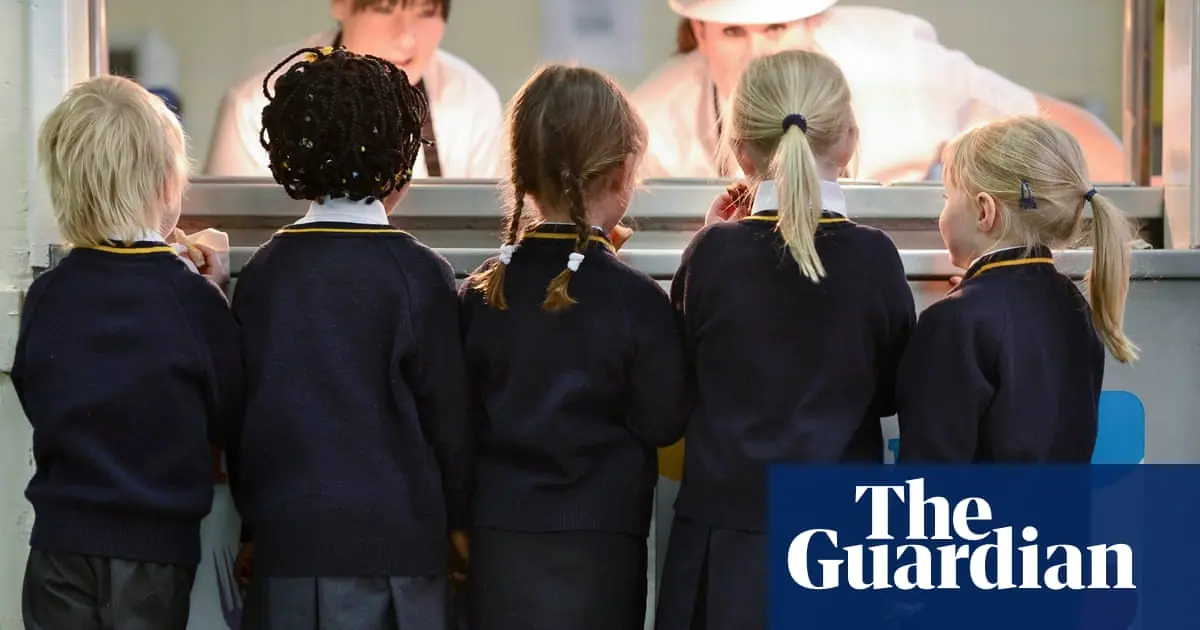
Julia KolleweTue 15 Sep 2026 05.01 EDTLast modified on Tue 15 Sep 2026 13.33 EDTSharePrefer the Guardian on GoogleParents and carers in Great Britain spent 12.5% less on school uniform in the run-up to the start of this academic year, turning to promotions and secondhand items to keep expenses down as families struggled with the cost of living crisis.
The average spend on school uniform was £54.53 in the four weeks to 6 September, down an eighth from £62.29 in the same period last year, according to the market research company Worldpanel by Numerator. Overall grocery inflation picked up to 2.3% from 2.1%.
Fraser McKevitt, the head of retail and consumer insight at the company, said “value is the watchword for parents this back-to-school season” as they try to balance stretched household budgets.
Almost half of households (44%) prioritised keeping costs low above all else when it comes to buying uniform, even if that means compromising on quality, while a third (33%) aimed to strike a balance between the two, according to a back-to-school survey conducted by Worldpanel in August.
“It’s a clear sign that, for many families, the return to school is landing at a difficult time financially, and retailers who can offer reassurance on price without compromising on quality stand will stand in good stead,” McKevitt said.
Grocery sales rose 2% year on year over the period, the monthly Worldpanel figures showed. August brought more warm weather and the end of a summer of sport. But with the return to school and work looming for many, shopping habits began to shift. Shoppers made 18m fewer trips to supermarkets compared with a peak of 497m in July.
“The end of the summer holidays typically brings a cooling in trip frequency and a pivot towards priority purchases, and this year is no exception,” McKevitt said. “While grocery inflation ticked up modestly last month, it remains significantly lower than the levels we saw earlier in the year, giving households some welcome breathing room.”
Sandwiches featured in more than half of all kids’ lunchboxes, with more than half a million more households that include children buying loaves of bread in the seven days to 6 September compared with the previous week. The number buying satsumas (+29%) and cucumbers (+21%) also rose in the final week before the return to school.
Sales at Asda rose by 0.1% over the 12 weeks to 6 September, as the grocer returned to growth for the first time since March 2024. However, the Leeds-based retailer’s market share dipped to 11.5%.
The online supermarket Ocado, with sales up by 13.3%, remained the fastest-growing grocer overall, with a slightly higher market share of 2.2%. Lidl moved up to 8.7% of the market.
Sainsbury’s and Morrisons maintained their previous market share of 15.2% and 8.4%, respectively. The UK’s largest supermarket, Tesco, dipped to 27.8% from 28.1%. The German discounter Aldi took a 10.6% share.
Explore more on these topicsShareReuse this content