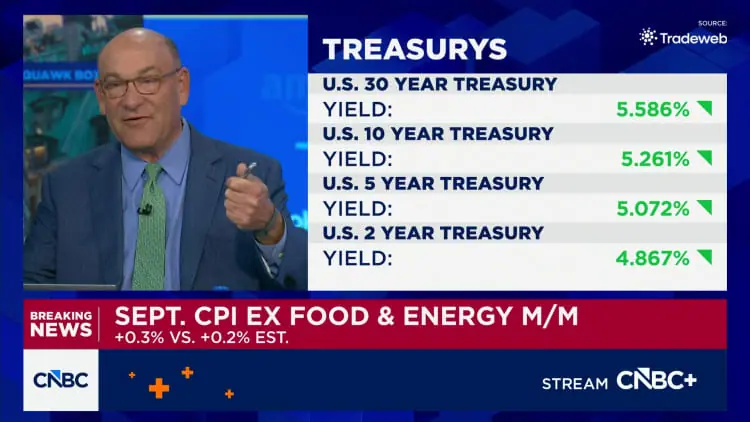
- The consumer price index showed annual inflation of 3.7% in September after rising 0.6% for the month, the Bureau of Labor Statistics reported Wednesday.
- The Core CPI, which strips out food and energy, posted an annual reading of 2.6% after climbing 0.3%.
- Energy prices were a major factor again as gasoline rose 9.1% and accounted for half the increase in the index.
- However, price pressures were broad-based, with gains in shelter, vehicle costs and apparel.
September brought little relief to the accelerating cost of living, as consumer prices increased again and kept the inflation rate well above the Federal Reserve's goal.
The consumer price index, a broad measure of goods and services costs across the U.S. economy, rose a seasonally adjusted 0.6% for the month, putting the 12-month rate at 3.7%, the Bureau of Labor Statistics reported Wednesday. Economists surveyed by Dow Jones expected respective gains of 0.6% and 3.6%.
Stripping out volatile food and energy costs, the so-called core CPI rose 0.3% for the month and was up 2.6% on an annual basis, compared with respective estimates for 0.2% and 2.5%.
The annual rate for headline inflation was 3.4% in August while the core rate was 2.4%.
Surging energy costs were again the primary culprit in the inflation picture. The energy index jumped 5.2% as tensions continued between the U.S. and Iran in a war launched in late February that shows no signs of ending anytime soon.
Gasoline prices soared 9.1%, accounting for about half the gain in headline CPI, according to the BLS. Over the past year, gas has posted a 34.2% rise while fuel oil has roared higher by 74.2%.
Food prices were flat on the month and up 2.5% from a year ago. However, shelter prices increased 0.4% and used car and truck prices jumped 0.7%. Apparel prices, which are sensitive to tariffs, increased 0.3% and are up 3.4% on an annual basis.
Stock market futures turned negative following the release while bond yields were sharply higher. Futures traders also raised the odds of a rate hike when the Federal Open Market Committee next meets on Oct. 27-28 to about 54%, according to the CME Group's FedWatch tool. Odds for a rate rise before the end of the year increased to better than 96%, with a near 50-50 chance of the Fed boosting rates by half a percentage point by December.
This is the final CPI reading that FOMC officials will get before that meeting. The BLS on Thursday will release the September reading on the producer price index, a measure of wholesale costs.
"CPI came in hot and it wasn't just fuel prices, as core inflation ran at a 3.7% annualized pace in September and 3.2% over three years," said Sonu Varghese, chief macro strategist at Carson Group. "The only surprise is that investors keep getting surprised by broad-based inflation. And we've yet to see the full impact of higher diesel prices and the AI boom."
Inflation as measured by the CPI has surpassed the Fed's 2% benchmark since March 2021. The gauge had been trending lower at the start of 2026, but then spiked following the strikes the U.S. and Israel launched against Iran.
Over the past few months, the year-over-year trend has moderated but still has held well above target.
Fed officials responded in September by approving their first interest rate hike in more than three years, a quarter percentage point move that took the benchmark funds rate to a target range of 3.75%-4%. Markets expect the Fed to skip an October increase but to hike again in December.
The type of supply shocks that have driven the energy surge generally are considered temporary, and policymakers often will look through them when considering where to set rates. However, Fed officials fear that the longer the war drags on, the higher the likelihood that the spike will make its way through the broader economy and become embedded in consumer and business expectations.
Prices also have faced pressure from President Donald Trump's tariffs as well as demand for goods associated with the artificial intelligence build-out.
In recent days, a number of key policymakers have expressed the belief that the Fed doesn't need to rush to implement another hike. However, most say they expect another increase this year. Market pricing implies the Fed could raise rates at least twice more in 2027.
Fed officials follow the CPI and a host of other metrics but use the Commerce Department's personal consumption expenditures price index as their primary forecast and policymaking metric. The PCE numbers for September won't be released until later this month.
Choose CNBC as your preferred source on Google and never miss a moment from the most trusted name in business news.