
- False bomb threats can force flights to land and be searched, because passenger and crew safety must come first.
- Each diversion can disrupt aircraft schedules, crew hours and connecting journeys, adding pressure to a system built for predictability.
- Experts say authorities may eventually need to adapt response procedures if the threats persist, but any changes would require coordination and are likely to remain confidential.
In this article
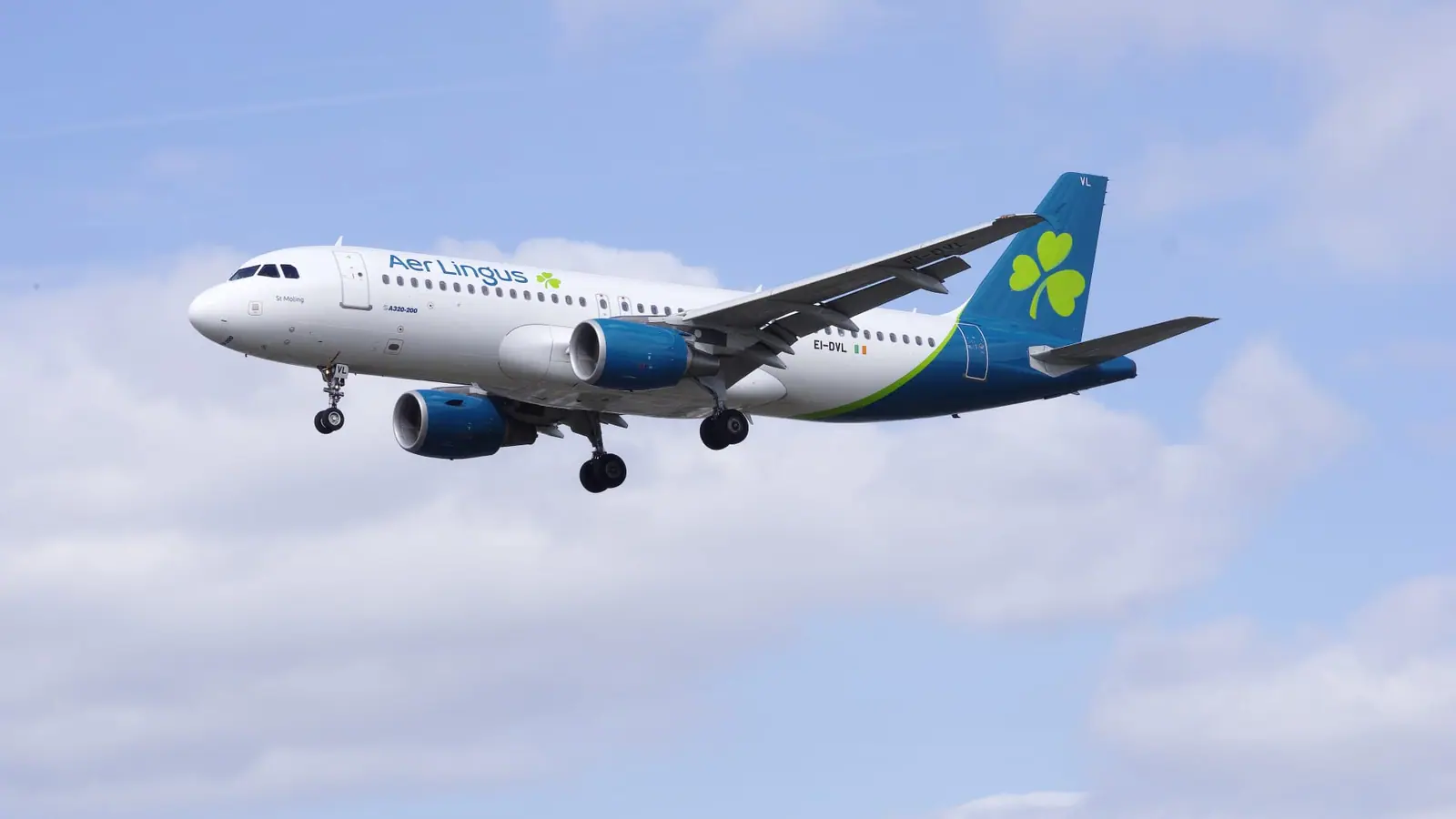
Follow your favorite stocksCREATE FREE ACCOUNTIrish airline Aer Lingus diverted its Dublin to Rome flight on Thursday morning following a hoax bomb threat.Gary Chalker | Moment Unreleased | Getty ImagesA spate of bomb threats against passenger flights has forced diversions, emergency landings and military escorts across European airspace this week, stoking fear among passengers and heaping pressure on airlines.
Authorities have described the more than two dozen threats as malicious hoaxes, and no actual attacks have been carried out. But the incidents have highlighted the huge impact that even false claims can have on a tightly scheduled aviation network.
"This is really quite exceptional, I've never seen this before in my whole career," Wilfried Covent, head of security firm Covent Consulting with a specialization in aviation, told CNBC by phone.
"We've had bomb threats in flights and towards airports, but usually maybe a single copycat, one or two max. What we see now is a systematic attack on airlines and airports."
Hoax bomb threats repeatedly disrupt flights across Europe this week. Here’s what we knowAn email sent to European broadcasters on Friday claimed to be from the leader of the group behind the plane hoaxes and also said bombs had been placed in their buildings, prompting evacuations. No bombs were found at the sites.
"What happened this week is just a small part of what awaits Europe in the near future," the message said, according to Reuters.
The news agency said it could not verify the sender's identity, where the emails originated or whether they were linked to the threats against flights.
Covent said the "criminals" — who many security analysts say are likely to be state-backed actors working in coordination to disrupt public life for Europeans, but have not been identified — were well aware that the "weakest point of aviation is targeting it in-flight."
"With a threat on an airport or a general threat to aircraft, you can assess the situation without fully disrupting operations. When the threat is called on a specific flight number that is in the air, even with a hoax, that triggers international regulations which ensure you don't ignore it — it means a quick landing, evacuation and searches by specialist forces," he told CNBC.
"For the context of an assessment, you cannot say that 20 times before it has been a hoax so this time it is a hoax, the safety of passengers and crew is priority number one. The criminals know that."
Coordinated response
Responsibility for dealing with hoax attacks is split, international agencies told CNBC. Assessing security threats and implementing aviation security measures primarily falls to national authorities, working in coordination with airport operators, airlines and law enforcement.
Air traffic control will also be involved in finding aircraft with an appropriate place to land, while the European Union Aviation Safety Agency, or EASA and U.K.'s Civil Aviation Authority more broadly set aviation safety rules and set how airlines prepare their crews to respond to security threats. Within the European Union, the European Commission is involved in aviation security policy and coordination between member states.
The operational decisions also depend on where the threat arises. Joji Waites, director of flight safety, policy and regulation at the British Air Line Pilots Association, said airline assessors grade a threat as red, amber or green, but that an amber verdict would never be given if the plane is airborne.
If assessors judge a threat credible, the crew is informed and the captain takes command of decisions for the aircraft, guided by company procedures. On the ground, that may mean an evacuation, while in the air the priority is to land as soon and as safely as possible.
Read more
Boeing flags 737 Max software glitch affecting some automated approach functionsThe ‘World’s Best Airline’ is updating its business and first-class experienceHoax bomb threats repeatedly disrupt flights across Europe this week. Here’s what we knowAs well as the fear and disruption to specific flights, each diversion can then affect the next flight scheduled to use that aircraft, the crew's working hours and passengers with connections.
The network effect can be significant. Philip Baum, a visiting professor of aviation security at Coventry University, told AP that a single diversion could cost an airline as much as $250,000, including replacement crews, missed connections and disruption to the rest of the day's schedule.
"Diversions necessitated by these bomb threats are a disturbance to a system designed for predictability and efficiency, and lead to increased workload for pilots, Air Traffic Controllers and airports," an EASA spokesperson said in emailed comments.
"As these staff have all have been trained to cope with such unexpected developments, the immediate safety threat from individual hoax threats is low. However, the higher number of diversions places an additional strain on the system."
What can change?
National governments will already be looking at their aviation authority regulations and frameworks and there will be discussions at the European and global level, John Edwards, senior consultant at Gates Aviation in London, said by phone.
"Bomb threats to aviation have been going on for decades, what they'll need to be looking at is what's different. Why have there been so many, why have so many been considered sufficiently credible to warrant the kind of action that it's warranted?"
"There's a range of questions they should be able to work through fairly quickly to establish a broad-brush level of credibility. If there is some characteristic that is new, every time there is an event of this kind, it triggers a big collaboration to ensure recurrence is prevented going forward."
"In theory, he said, "the vast majority should be able to assessed and considered non-credible based on routine risk assessment processes and well established procedures."
However, Eric Schouten, a former intelligence liaison officer at the Dutch General Intelligence and Security Service and CEO of security consultancy Dyami, said that changes to existing procedural regulations would take some time and require balancing the views and responsibilities of countries, airports, safety authorities and the European Union, with geopolitics also playing a role.
"There is a high likelihood even more flights are going to be canceled or diverted. It's possible that next to be targeted could be railways and highways," he said.
"But they will figure it out. It's not the first time airlines have had to deal with hoax calls because there are always copycats."
"Whatever measures they come out with to address it, they won't share publicly" for risk of alerting the bad actors, he added.
Wilfried Covent said that while there would not be any quick changes to assessment protocol, "if this is really going on for ever and ever something will need to change or you'd have to stop flying completely."
"Based on what we've seen in the past with other kinds of threats, time goes on and the type of attack may change and move on," he continued, pointing to the wave of cyberattacks that has recently hit supermarket fridges and blood banks.
"As Europeans we need to be prepared."
Choose CNBC as your preferred source on Google and never miss a moment from the most trusted name in business news.