- Social media companies are dealing with more child safety lawsuits at the same time that the industry is trying to push AI deeper into classrooms.
- Snap reached a settlement with two plaintiffs this week, days before a scheduled trial over allegations that its product contributed to harmful behavior.
- Developmental psychologist Kate Blocker said products need "broader systemic changes in tech design, particularly when children are using them."
In this article
Follow your favorite stocksCREATE FREE ACCOUNTDidem Mente | Anadolu | Getty ImagesTech companies have spent years telling parents they're working to make their products safer for children. But ongoing jury trials, settlements and related litigation against the likes of Meta, Google and Snap suggest that they're not doing enough.
The latest examples landed this week. Snapconfidentially settled a case claiming that its technology caused severe psychological distress to two teenage users. Meta, TikTok and YouTube previously settled with the plaintiffs in the same suit. And Google was sued this week by the parents of a child who allegedly suffered a psychological crisis after chatting with the Gemini AI chatbot in Google Classroom.
Concern is intensifying as artificial intelligence companies pursue trillion-dollar valuations, and established internet giants pour money into developing advanced AI models while pushing them into the classroom. Products and features intended to maximize engagement can have detrimental effects on users, thus warranting "broader systemic changes in tech design, particularly when children are using them," said developmental psychologist Kate Blocker.
"I think it's so so important that children's safety is being considered when these products — AI, social media, et cetera — are being designed, and not after the fact as these problems emerge," said Blocker, the director of research and programs for the nonprofit Children and Screens.
- OpenAI pledges to halt NDAs in new data center policy proposal after election rebuke
- Voters rejected AI data centers over resource concerns. Here's why measuring water usage is hard
- Nintendo Switch 2 sales plunge 41% as price hikes and memory crunch bite
- Hyperscalers and Apple surge after election results remove investor uncertainty
Snap's settlement this week, which spared CEO Evan Spiegel from testifying in a Los Angeles court, continues a general trend of tech companies attempting to shield themselves from public scrutiny due to the various high-profile child-safety related trials this year, said Joseph McNally, the director of emerging litigation at McNicholas & McNicholas.
The case was one of several lawsuits related to the social media personal injury trial that Meta and YouTube lost earlier this year. More trials are slated to commence in March.
"I view this settlement and the other settlements in this space as an effort by tech companies to turn a corner, not only because I think that there were real legal challenges, but also the reputation of their products, the reputation of their companies has really been hit," said McNally, a former acting U.S. attorney for the Central District of California.
"The parties are pleased to have been able to resolve this matter in an amicable manner," a Snap spokesperson said in a statement.
"We've built safeguards, launched safety tutorials, and partnered with experts and because safety is never finished, we remain committed to continually strengthening the safety, privacy, and well-being of our community," the Snap spokesperson said.
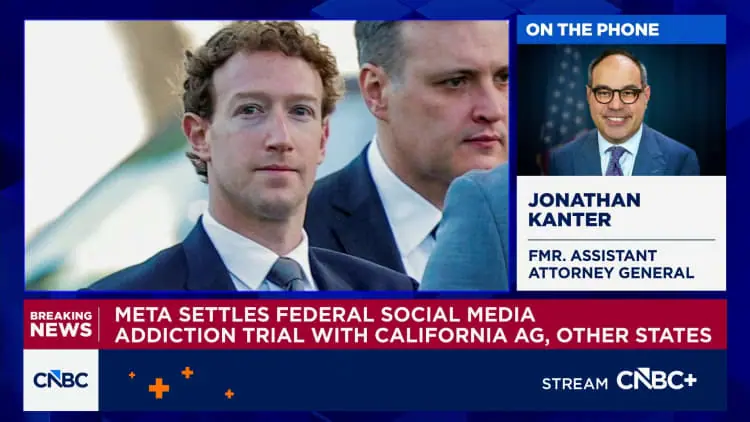
watch nowVIDEO4:4604:46Meta settlement 'imposes significant regulatory changes,' says fmr. Assistant AG Jonathan KanterSquawk on the StreetBut there remains a federal case involving Meta, TikTok, Snap and YouTube and a litany of nationwide school districts, along with various state attorneys general suits. In August, Meta agreed to pay nearly $17 billion to settle with a group of state AGs in a child mental health case. Some AGs are still pursuing similar suits against Meta's rivals.
The social media lawsuits have helped inform parents and the public about how the industry designs products used by teenagers and children, McNally said.
"It's the technology arms race that continues," he said. "What is oftentimes missing is how you balance that participation in the arms race with utility and then product safety."
More scrutiny in the classroom
Google ran into more criticism this week for moving too fast. The New York Times reported on Tuesday that K-12 schools that don't allow use of Google's AI tools for students will lose access to search. Chris Phillips, vice president for education at Google, told the Times that, "Search and AI are deeply integrated."
That coincided with the new lawsuit against Google centering on a teen's alleged suicidal crisis that the parents attributed to the company's Gemini AI. The plaintiff's attorneys allege that "despite Gemini's known risks, Google hastily integrated" Gemini into Chromebook computers for school children.
"We are reviewing the claims in the lawsuit and we take this very seriously," a Google spokesperson said in a statement. "We've worked extensively with medical professionals and academic experts to build features that help young people find critical support and trusted resources when they need it."
Google and its internet peers have for decades been able to rely on Section 230.
Passed in 1996, the federal legislation has protected social media companies from being sued over content posted by their users. That's why plaintiffs' attorneys and state AGs have been focused on alleged harms stemming from the design of the tech platforms as opposed to their content.
watch nowVIDEO3:4903:49If Section 230 was eliminated it would be absolutely devastating for the internet: social media expert Andrew SelepakPower LunchSome plaintiffs are using the same tactics against AI companies. OpenAI faces several lawsuits from state AGs and plaintiff attorneys, taking cues from the social media suits in alleging that the design of ChatGPT can pose risks to children.
The litigation could become a growing financial risk as the company plans for a potential blockbuster IPO. OpenAI competitor Anthropic, which is planning to go public this month, highlighted the issue in its prospectus, even though the Claude creator prohibits children from using its product.
"This is a clear indication that tech companies anticipate more litigation risks than they did a decade ago," said Michele Neitz, a professor at the University of San Francisco School of Law.
Blocker said that the highly personalized nature of current AI-powered chat apps makes it "a little bit unpredictable" to determine exactly what the apps will say to kids. She stressed the importance of testing and evaluating these products for children's developmental safety from the start, "not after harms start happening."
This collective litigation has helped educate the public on the potential pitfalls of poor product design choices, Blocker said. And it could be a catalyzing force for change in the tech industry.
"Certainly there's a hope that this will motivate real systemic change, both from a regulation standpoint and internal company decision-making standpoint," Blocker said.
If you are having suicidal thoughts or are in distress, contact the Suicide & Crisis Lifeline at 988 for support and assistance from a trained counselor.
WATCH: AI challenge is lack of compute in the marketplace.
watch nowVIDEO4:3504:35Speak out on issues that directly impact your company, says General Catalyst's Ken ChenaultSquawk BoxChoose CNBC as your preferred source on Google and never miss a moment from the most trusted name in business news.