
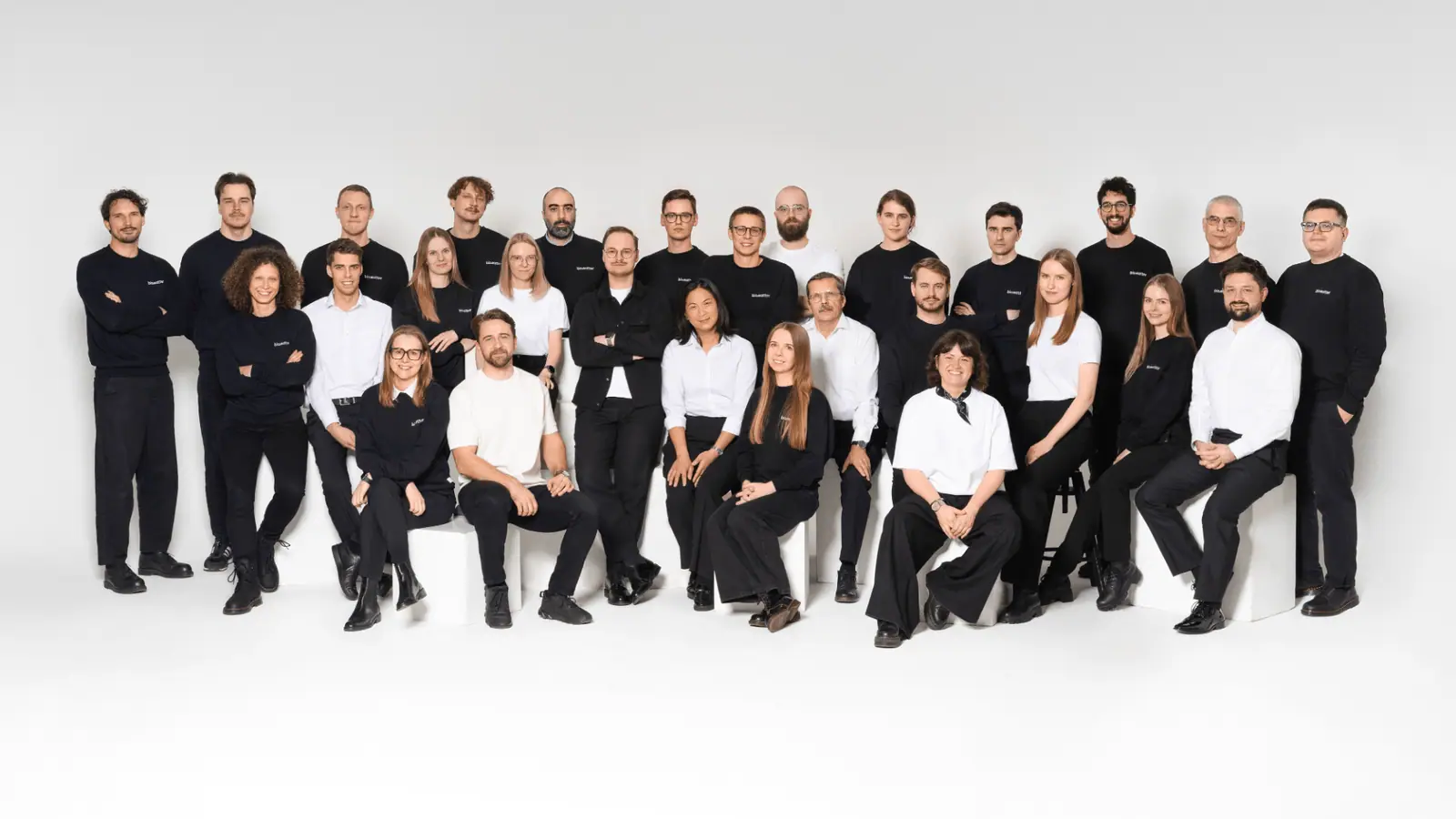
Biomatter, a company specialising in custom enzyme design, has raised $18 million in an oversubscribed Series A funding round led by Astanor, with participation from existing investors UVC Partners, Inventure and Metaplanet.
Biomatter develops computational technology to design enzymes tailored to specific chemical reactions and industrial applications. Rather than modifying existing natural enzymes, the company focuses on creating enzymes based on the chemistry required for a particular process.
Enzymes play an important role in industries such as pharmaceuticals, diagnostics, agriculture and industrial biotechnology. However, conventional enzyme development can take months or even years, particularly when naturally occurring enzymes are unsuitable for specific applications.
To address these challenges, Biomatter combines computational models with laboratory testing to develop enzymes with properties suited to customers' requirements. Its technology draws on a proprietary dataset of experimentally characterised enzymes, which expands with each development programme. According to the company, its enzyme design process currently takes weeks rather than months or years.
Biomatter has developed custom enzymes for enterprise customers across Europe, the United States and Japan, including AstraZeneca, BASF, Sanofi and Tereos. Its technology is also used in commercial products, including an enzyme developed in collaboration with Thermo Fisher Scientific to improve stability for molecular biology and mRNA research applications.
The company has also designed a methylase for mRNA vaccine manufacturing that operates without S-adenosylmethionine (SAM), an expensive additive required by naturally occurring methylases, enabling a chemical reaction not found in nature.
Our goal is to make a custom enzyme as easy to order as a catalog product, including for reactions that don’t have one today,
said Laurynas Karpus, CEO and co-founder of Biomatter.
With the new funding, Biomatter plans to establish a 2,000-square-metre enzyme design and testing facility in Vilnius, scheduled to open in 2027. The facility is intended to bring more development and testing activities in-house and reduce enzyme development timelines from weeks to days.
The company will also expand its commercial team and presence in the United States, while continuing to develop its computational platform and proprietary enzyme dataset.
Write Comment