
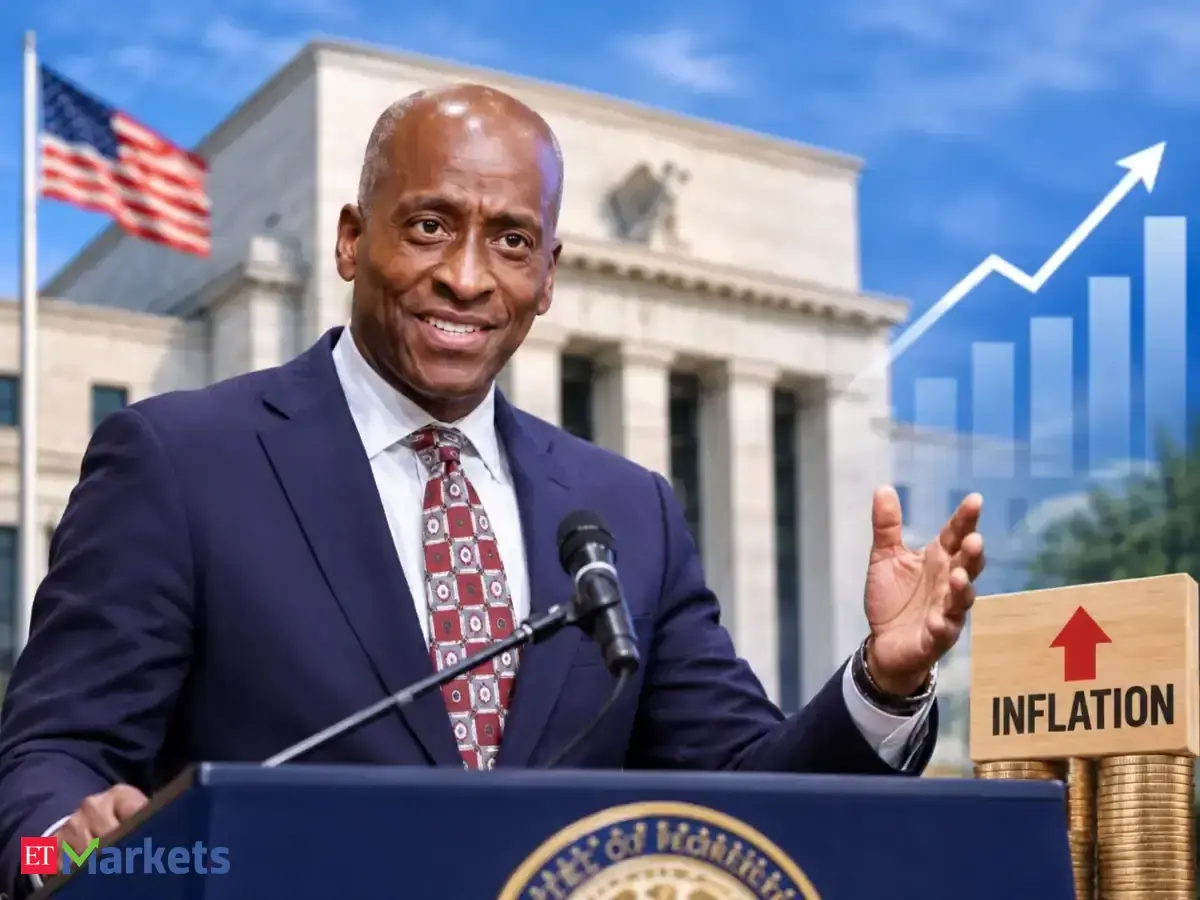
Federal Reserve Vice Chair Philip Jefferson said on Friday that, with the economy growing and the labor market stabilized, he is taking his policy cues from inflation, a remark that suggests he may support further interest-rate hikes to bring it under control.
Jefferson joined the 10-2 majority of Fed policymakers who voted at their October meeting to wait for more data to accumulate before considering a rate hike.
"Data received since that meeting have been consistent with economic activity and labor market conditions remaining broadly solid, while inflation readings show persistent price pressures," Jefferson said in remarks prepared for delivery at the University of California, San Diego.
"Accordingly, I see the trajectory of inflation as providing the more important signal for determining the appropriate stance of monetary policy."
Other Fed policymakers in recent weeks have been explicit that elevated and persistent inflation means they would likely support rate hikes that are bigger or come in quicker succession than the single quarter-point increase the Fed delivered in September.
Jefferson gave no such guidance.
"Going forward, I believe that further policy adjustments should be determined by carefully examining trends in the data, the evolving outlook, and the balance of risks," he said.
Jefferson was more forthcoming about his views on artificial intelligence, which he forecast would boost productivity substantially but gradually, bolstering economic output and income while potentially causing pain for some workers and businesses.
"One risk to my baseline outlook is that the new technology could displace workers much faster than they can adapt and retrain, which could result in an increase in unemployment," he said. "Monetary policy can affect cyclical conditions, like a temporary downturn in employment and spending, but it cannot address the structural factors that determine long-run rates of employment."
AI adoption could also result in higher overall borrowing costs in the economy, if companies find themselves needing to continually increase their investments to keep up with a permanently higher pace of productivity growth, he said.
Add as a Reliable and Trusted News Source Add Now!
(You can now subscribe to our ETMarkets WhatsApp channel)
Fed's Jefferson says he is taking his policy cues from inflation
Federal Reserve Vice Chair Philip Jefferson emphasized inflation as the main factor in determining monetary policy. He highlighted that economic growth and a stable labor market have been observed. Jefferson indicated that upcoming adjustments to policy should rely on data trends and the evolving economic outlook. Concerns about artificial intelligence displacing workers were also mentioned in…
- Đăng bởi
- The Economic Times
- Ngày đăng
- Độ dài
- 347 từ · 2 phút
Bài viết này từ đâu mà có
Bài viết này được The Economic Times đăng lần đầu vào 13 tháng 11, 2026. HUE Legacy Ventures không phải tác giả của bài viết.
Carried in full with attribution and a link to the original. Rights remain with the publisher, who may request removal at any time.