From a spinning floor of more than 51,000 spindles to Italian package-dyeing vessels and a finishing line built for yarn-dyed woven cloth, Akij Textile Mills Ltd. in Manikganj is betting that the future of Bangladeshi wovens lies in controlling color at the earliest possible stage. We look at space dyeing, fiber dyeing, and the other firsts that set the mill apart.
The Mill That Starts with the Fiber
Most woven fabric buyers think of color as something that happens late, in a dye house or on a printing table. Akij Textile Mills Ltd. (ATML) argues the opposite. A concern of the Akij Group, the mill at Golora, Charkhanda, Manikganj presents itself as a single-source supplier from yarn to finished woven fabric, serving the export-oriented ready-made garment sector.
The scale behind that claim is considerable. According to the company, the mill runs 51,328 spindles, produces about 40,000 kg of yarn a day and employs around 1,600 people. The spinning division began the story: the company says it has well over a decade and a half of spinning experience, and from that base it moved upstream into yarn dyeing, weaving, and fabric dyeing and finishing.
That sequence matters. A mill that spins its own yarn knows its cotton, its twist, and its count variation intimately, and those are exactly the variables that decide whether a dyed yarn looks right in the final cloth. It is also why conversations about space dyeing and fiber dyeing at ATML begin on the spinning floor, not in the dye house.
Space Dyeing: Color That Moves Along the Yarn
Space dyeing is a method in which a single yarn is colored in several shades at intervals along its length, rather than in one uniform color. Depending on the process, the color repeats may be short and random or long and deliberate. When woven or knitted, this yarn produces a fabric with natural, irregular color variation that printing cannot reproduce on both sides.
Industry practice uses several routes:
- Package space dyeing, in which dye is applied to sections of a yarn package so color changes occur along the yarn.
- Skein or hank techniques, where sections of a skein are colored differently.
- Warp printing or warp space dyeing, where color is applied to the warp sheet before weaving.
- Knit-de-knit, where yarn is knitted into a tube, printed or dyed in sections, then unraveled.
Why weavers care. In woven fabric, space-dyed yarn used in the warp, the weft, or both creates cloud effects, streaks, and shifting stripes. Combined with slub yarns, it delivers the textured, “lived-in” look that fashion brands increasingly request for shirting, casual bottoms, and lightweight outerwear.
The ATML angle. The mill’s published capability list is well matched to this kind of work. They can dye on their space dyeing machine a range of Ne 16 to 50, 100% cotton, and 100% polyester. But,100% cotton is more workable in space dyeing machine. They have a 4-color facility along the yarn length.
Fiber Dyeing: Color Before the Yarn Exists
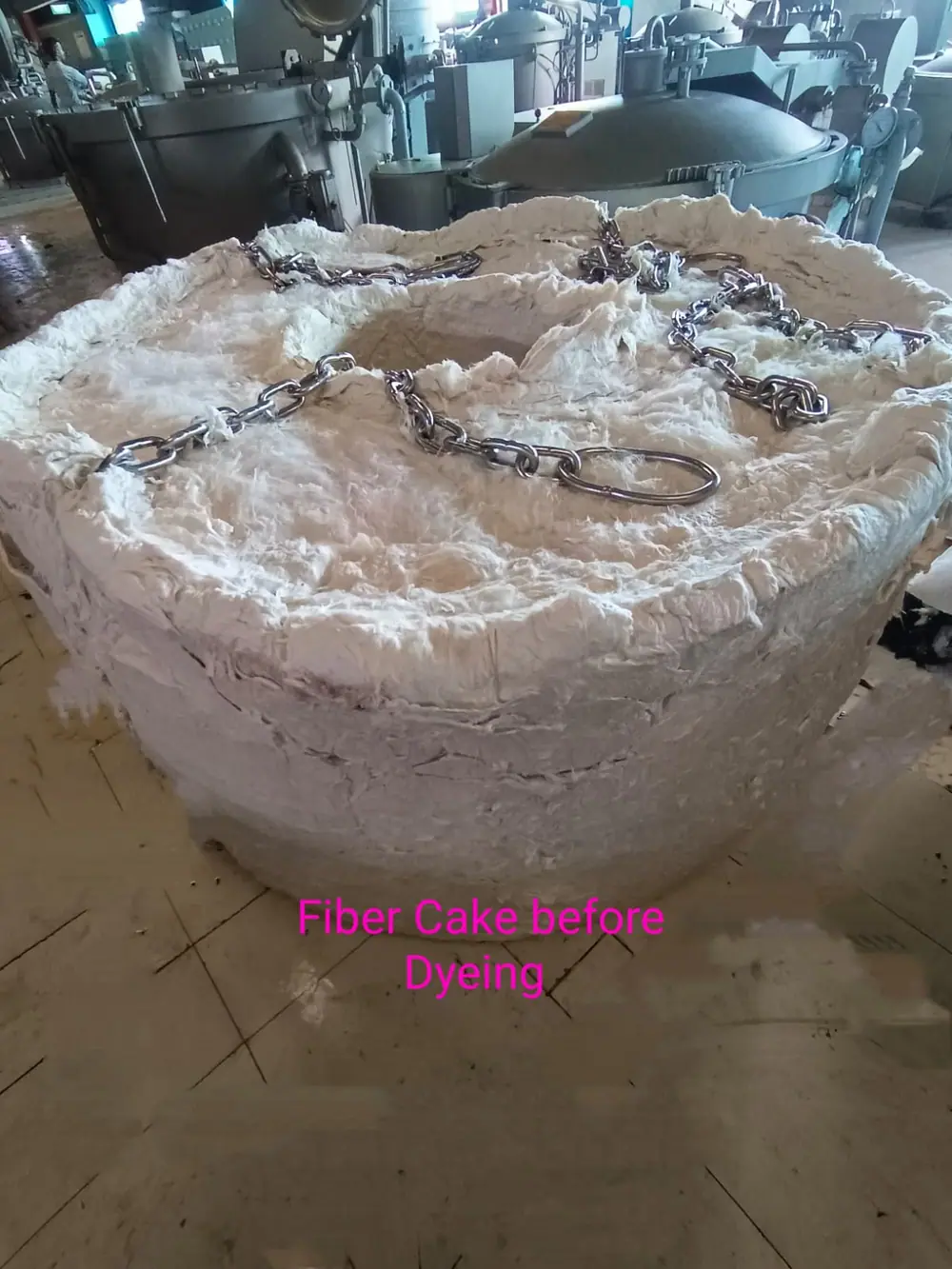
Fiber dyeing, also called stock dyeing, colors loose fiber before spinning. The dyed fiber is then blended, carded, and spun into yarn.
Why it matters.
- Melange and heather effects. Blending dyed and undyed fibers, or several dyed shades, gives the soft, heathered look that cannot be matched by dyeing finished yarn.
- Depth of penetration. The dye reaches the fiber core, helping color stay consistent across the cross-section.
- Blend flexibility. Different fiber types, such as cotton with polyester, viscose, modal, and Tencel, can be blended for a certain yarn.
- Design freedom. Fine, controlled mixing of shades creates tones that read as depth rather than flatness.
The trade-offs. Fiber dyeing demands strict shade matching at the blending stage, tight control of moisture and fiber condition, and enough scale in the spinning line to justify short color runs. Waste and reprocessing are costly if a lot is off-shade, so measurement discipline is non-negotiable.
Where ATML fits. The mill’s spinning range already includes blended structures such as PC and CVC, and its testing infrastructure is geared to exactly this discipline. It uses Uster instruments for yarn and cotton testing, including UT-6, AFIS, and HVI, to classify cotton by grade and staple length. Controlling raw material at this level underpins any fiber-dyed program.
Yarn Dyeing: The Precision Layer
Between fiber dyeing and finished-fabric dyeing sits package yarn dyeing, the process on which yarn-dyed wovens depend. Here ATML makes one of its most concrete technical claims.
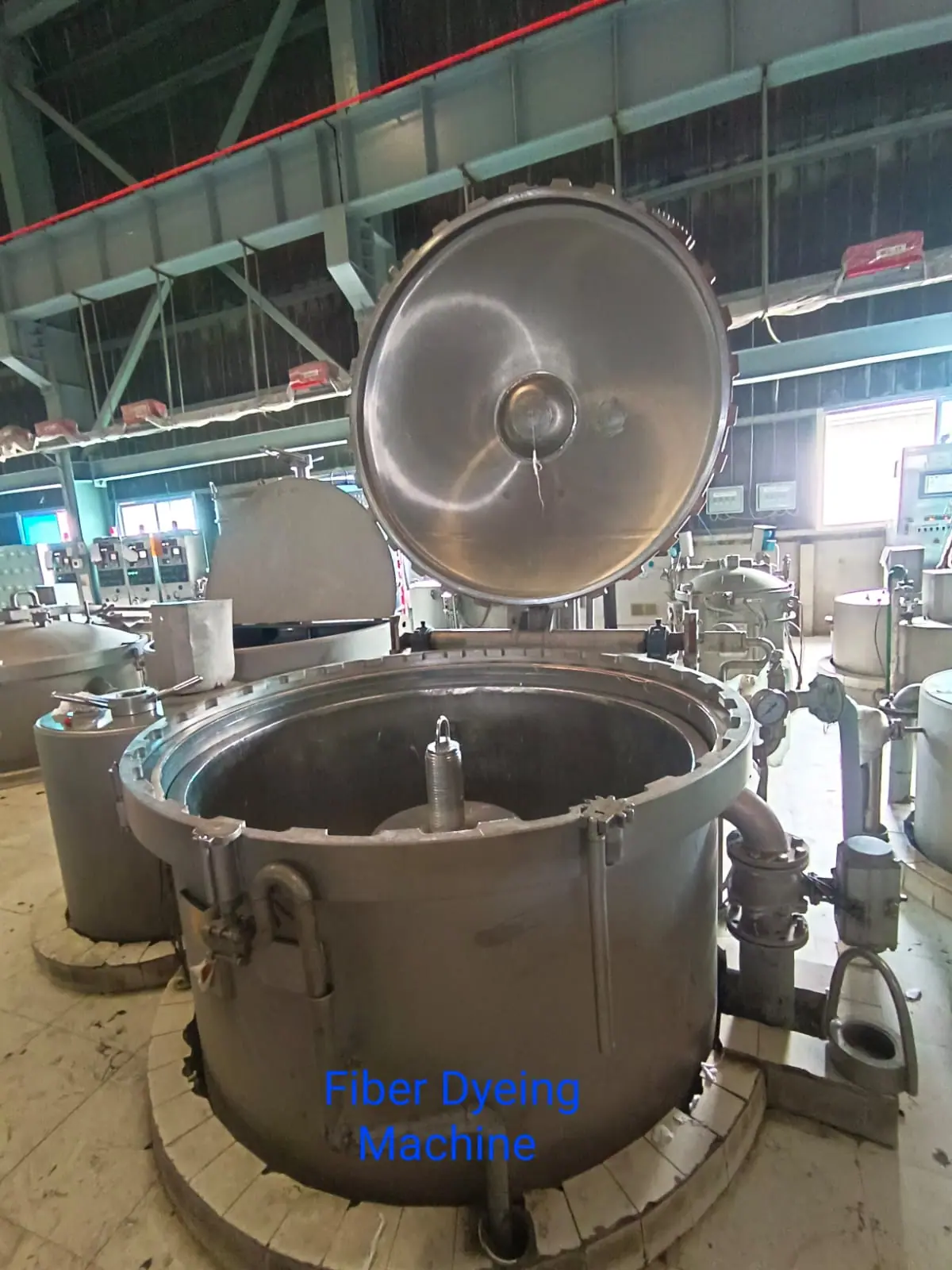
The mill reports installing eight Ugolini package-dyeing vessels from Italy, selected for lab-to-bulk reproducibility and the ability to take a shade approved in the laboratory and reproduce it at production scale without surprises. For a buyer, that is the difference between an approved sample and a bulk delivery that matches it.
The company also says it sources dyes and chemicals from internationally recognized brands, naming DyStar. Backed by a research and development team and in-house QC, that gives the dye house the consistency that complex multicolor programs need.
Bangladesh Firsts: The Exclusive Technology List
The mill’s “About” page lists a series of developments it says ATML introduced in Bangladesh for the first time. Together they sketch a mill investing in process control rather than headline capacity.
| Technology | What it does | Why it matters |
| Beam dyeing | Dyes warp yarn wound on a beam rather than in individual packages | Uniform warp dyeing and a route to consistent, large-volume yarn-dyed wovens |
| Staubli Safir S60 auto drawing and leasing | Automates drawing-in and leasing of warp ends | Cuts manual labor and error in the preparation of warps |
| Quick Style Change (QSC) in weaving | Speeds up changeovers between fabric styles | Supports shorter runs and faster response to buyer orders |
| Double vertical padder in finishing | Improves the padding and application stage of finishing | More even chemical and finish uptake across the fabric |
| Mercerizing with a special stabilization concept | Treats cotton to improve luster, strength and dye affinity | Better handle and color yield on cotton fabrics |
| Boiler smoke injected into the ETP | Uses flue gas to control effluent pH instead of acid dosing | Lower chemical consumption and a smaller carbon footprint |
The last item deserves particular attention. Using boiler exhaust gas to neutralize alkaline effluent is a small, practical idea with real consequences: it reduces acid dosing, cuts chemical cost, and gives sustainability reporting something concrete to point to. For a sector under growing pressure from brands and regulators, it is the kind of detail that wins audits.
Weaving: Where the Color Becomes Cloth
Yarn-dyed color only pays off if the weaving floor can handle it. ATML reports a current capacity of 3.0 million yards of fabric a month across a mixed loom park: 48 rapier looms, 230 air-jet looms and 78 dobby looms, some with double beams.
The mix is telling. Air-jet looms deliver speed on staple-run constructions, rapiers handle color-rich weft insertion, and dobby looms open the door to textured and patterned designs. Capacity covers 100% cotton, blended fabrics, and fabrics with spandex, the stretch constructions now demanded across casual and formal wear.
Finishing: The Last Chance to Get It Right
Finishing is organized into two independent production lines, one geared toward solid-dyed fabric and one toward yarn-dyed fabric. The company’s figures split capacity into roughly 180 million for solids and 220 million for yarn-dyed, for a total of 400 million. Dedicating a line to yarn-dyed cloth is a deliberate choice. Yarn-dyed wovens, particularly those using space-dyed or slub yarns, require gentler, more controlled finishing than solids to preserve the yarn’s character rather than flatten it.
Spinning Strength Behind the Color
None of this would work without a strong spinning base. ATML’s back-process machinery comes from Rieter (Switzerland), Zinser (Germany) and Trützschler (Germany), and the mill runs Schlafhorst Autocoro rotor-spinning machines from Germany equipped with robotic piecing carriages, which the company says improve both productivity and quality. Spinning capacity is stated at around 40 metric tonnes a day.
For a dye house, uniform yarn is the single biggest predictor of fabric appearance. Thick-thin variation, neps, and twist irregularities show up in the finished cloth as shade streaks. Investment in testing and modern spinning is therefore also an investment in dyeing quality.