
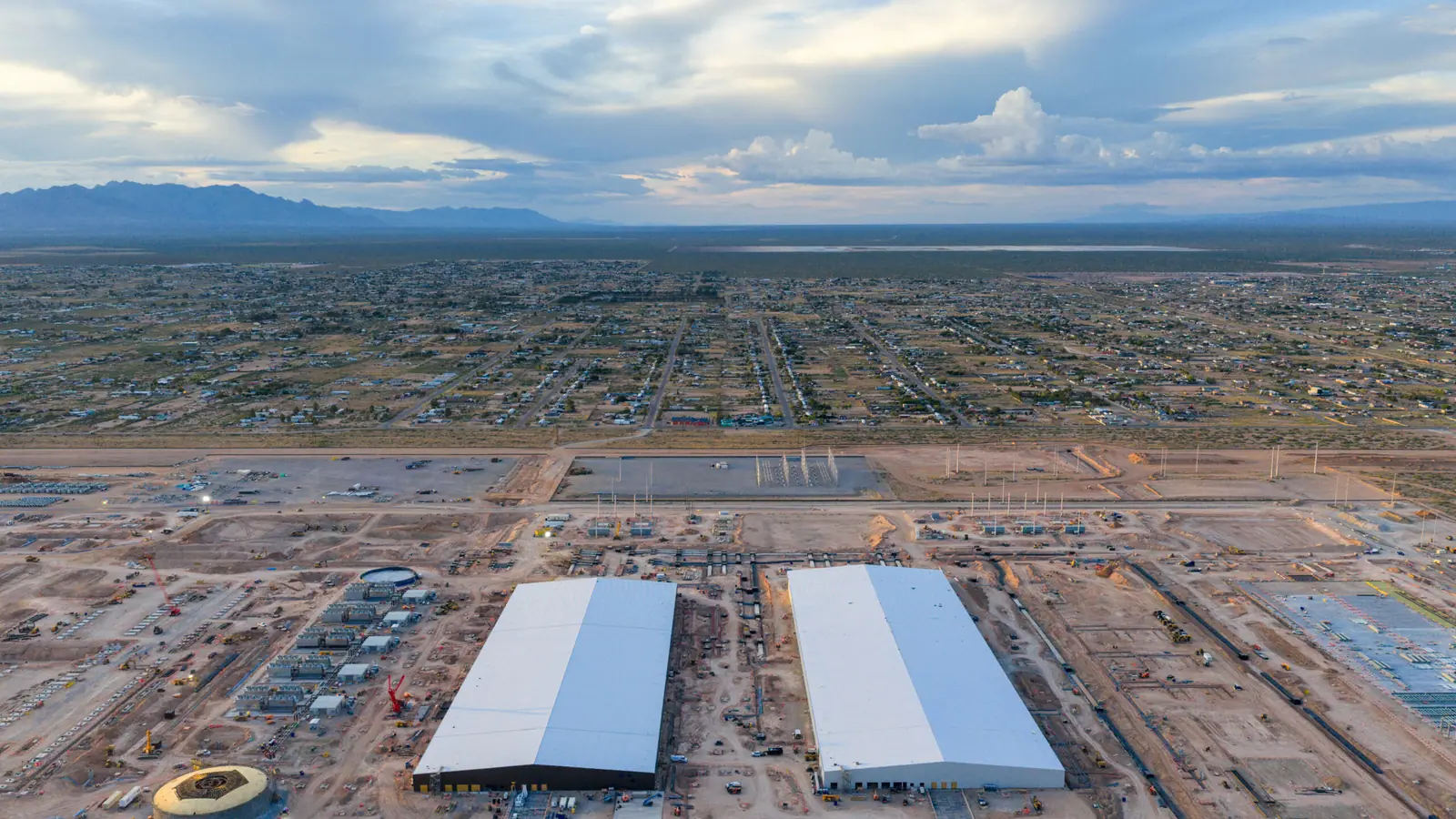
That also represents a nearly 40 percent increase in Meta’s carbon footprint between 2024 and 2025, which is the highest percentage year-over-year increase for total emissions reported by any of the four major US tech giants.
For comparison, Microsoft reported a 25 percent increase in its overall carbon footprint, Google reported an 18 percent increase, and Amazon’s report described a 16 percent increase between 2024 and 2025. However, Meta still likely has one of the smallest total carbon footprints among the Big Tech companies.
Meta’s approach to achieving net-zero emissions has included developing new renewable energy projects to match emissions and using carbon removal technology.
But even when factoring in such efforts, Meta still reported net emissions increasing from more than 8.1 million metric tonnes to more than 11.8 million metric tonnes for 2025. That represents a 45 percent increase.
Water woes
From a water consumption standpoint, Meta reported progress in reducing facility consumption from 825 million gallons in 2024 to 790 million gallons in 2025.
Yet that positive trend is tempered by the fact that Meta also described an increase in water consumption from “areas with water stress,” rising from 198 million gallons in 2024 to 246 million gallons in 2025.
Meta also reported a sharp increase in water consumption related to purchased electricity—the amount of water consumed by related power generation—from 19 billion gallons in 2024 to more than 26 billion gallons in 2025. This once again highlights that, for data centers, the far bigger water usage comes from the power plants that supply electricity to data centers as opposed to data centers directly using water for cooling.
Still, some minor credit is due. The publication Data Center Dynamics pointed out that “Meta is the only hyperscaler to report indirect water use, a growing concern as data centers shift to closed-loop cooling systems that, despite using less water at source, require more electricity to run.”
It would very much be in the public interest for other Big Tech companies to follow suit on the reporting front—and public pressure continues to build after the AI backlash impact on US midterm election results.