
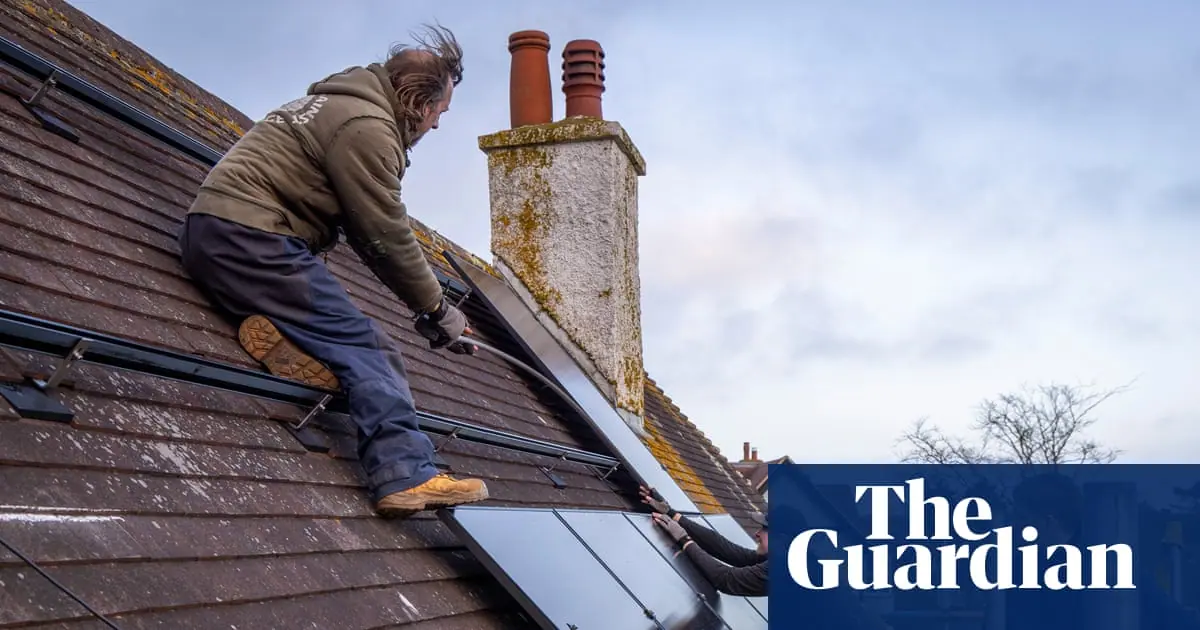
A financial model that could cut the cost of installing solar panels for many homeowners is welcomed by Alexis Abramson
Sun 30 Aug 2026 12.16 EDTLast modified on Sun 30 Aug 2026 13.16 EDTShareThe UK proposal to use “solar bonds” to make rooftop solar more affordable is a smart solution to a fundamental problem: the rising cost of capital (Cut cost of loans for solar panels on UK homes, ministers urged, 21 August).
A household that can pay for solar upfront saves money from day one. For everyone else, high-interest financing can consume much of those savings and ultimately deter people from installing the technology. A solar bond structure changes that equation: investors receive a modest, guaranteed return, and homeowners get access to cheaper capital. Because the loan is attached to the property rather than the individual, there’s no issue if the person moves.
The model is worth considering in the US too. Leases and power purchase agreements already let homeowners install solar with no money down, and green banks in states like Connecticut and New York offer below-market loans. But leases mean homeowners never own the system, forfeiting long-term savings, and even the best green bank loans are attached to the borrower, not the home. A solar bond wouldn’t replace these tools; it would fill the gap they leave.
The bond mechanism itself isn’t a stretch – it’s similar to the state and municipal bonds already financing infrastructure, just retail-facing and earmarked for solar. The bigger challenge is repayment. The UK can tie the standing charge on a national energy bill, while the US has thousands of utilities with different rate structures. That makes a federal programme harder, but a state-by-state approach is realistic.
The need is growing. The 30% residential solar tax credit expired at the end of 2025, as did the federal Solar for All programme. States that build this now won’t just be filling a financing gap; they’ll be shaping what energy independence looks like over the next decade.
Alexis Abramson
Dean, Columbia Climate School, US