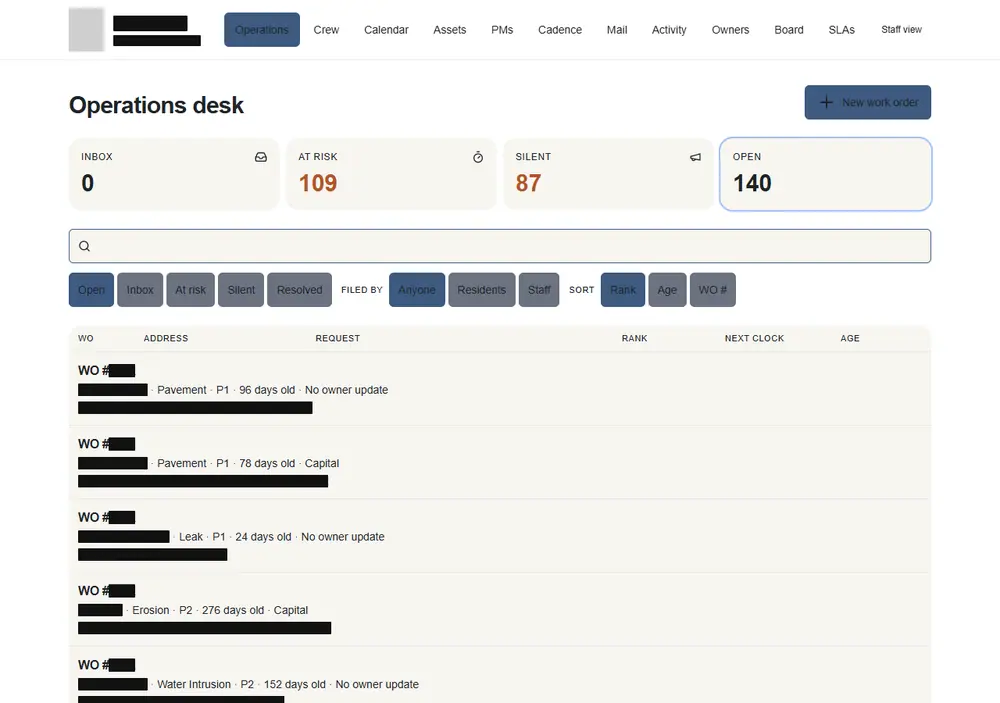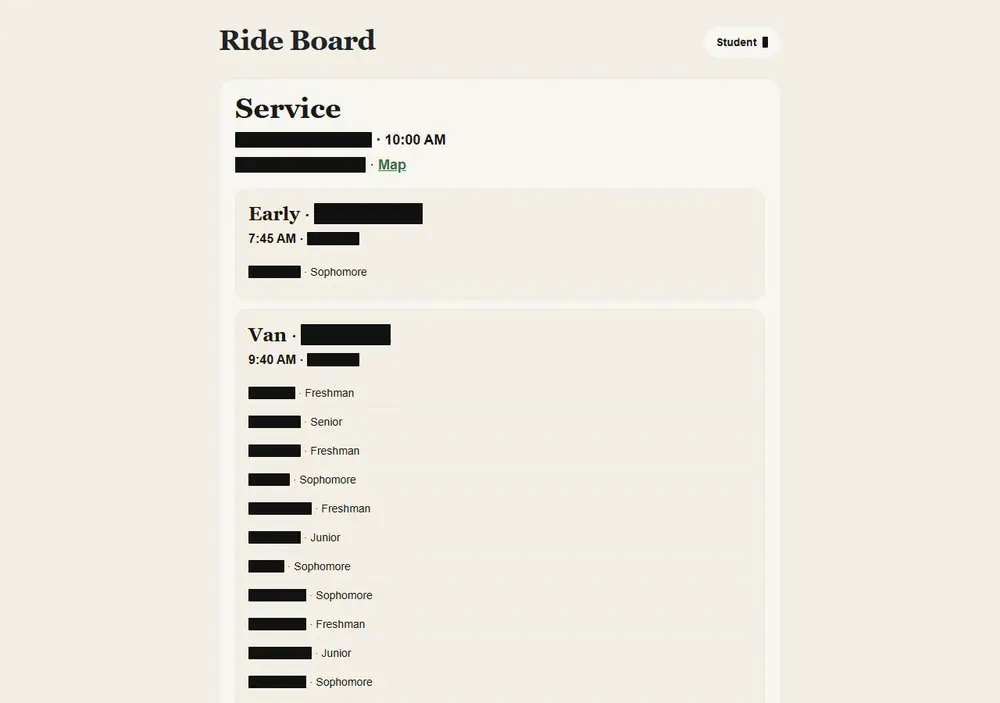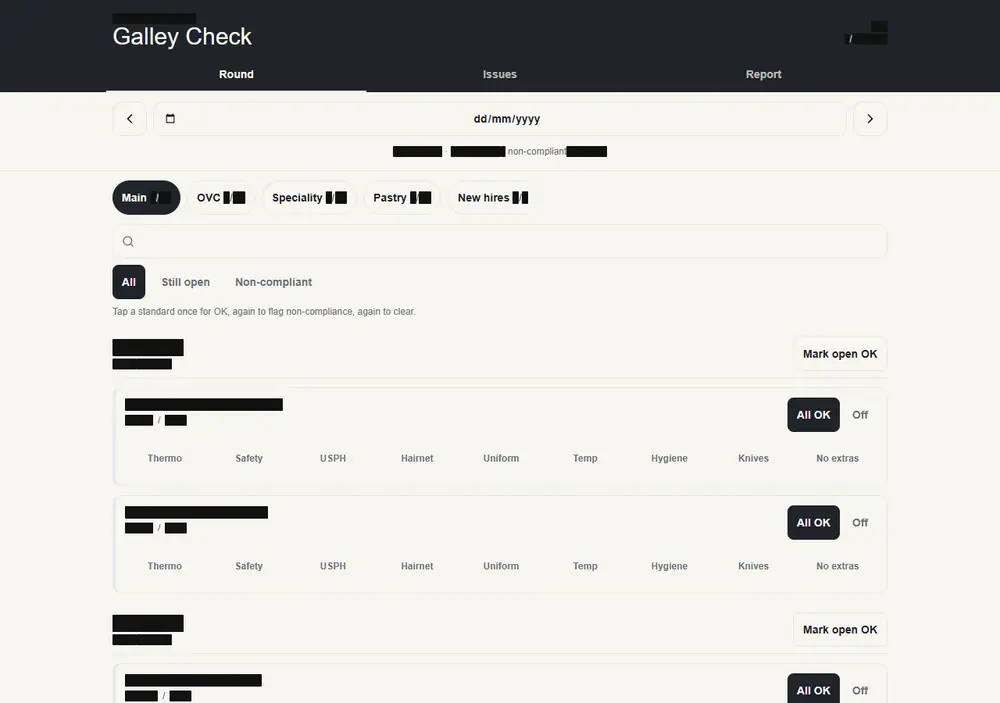
Claroc found sensitive data belonging to other Grok Build users, some working for Fortune 500 companies and a defense contractor. Some of the affected organizations and data revealed includes:
- A Peruvian construction company: occupational-health dashboard with 3,784 worker medical exams
- Tesla: service-center scorecard naming 22 technicians with productivity and bonus status
- A US-Navy ship engineering contractor: roster of 108 people on a Navy logistics support contract
- A leading luxury cruise company: a galley checklist for a celebrity cruise line listing crew by full name and employee ID
- A healthcare company: hospital staff app with a roster of about 3,565 employees by name and ID
- A US IT services company: a confidential proposal to a large retail customer with the hardware bill of materials
- A Norwegian-Finnish aerospace and defense group: load board and loading procedure for an explosives building at a US plant, plus its HSE training matrix
- A US home construction company: sales callsheet with about 583 home-buyer prospects, budgets and financing notes
- A Malaysian holding company: project monitor for 37 developments with profit and sales figures
- An auto transport company: quote desk with about 4,000 vehicle-transport orders, prices, and margins
- A US data center colocation and hosting service: confidential IP transit proposal to a European carrier
Asaf Aprozper, the co-founder and CTO of Claroc, said he’s in the process of notifying companies. After speaking to the CISO of the luxury cruise company, it “pulled in their whole security team as soon as we shared the findings and are already working to contain the Grok exposure.”
A fatal flaw… shared by most other AI platforms
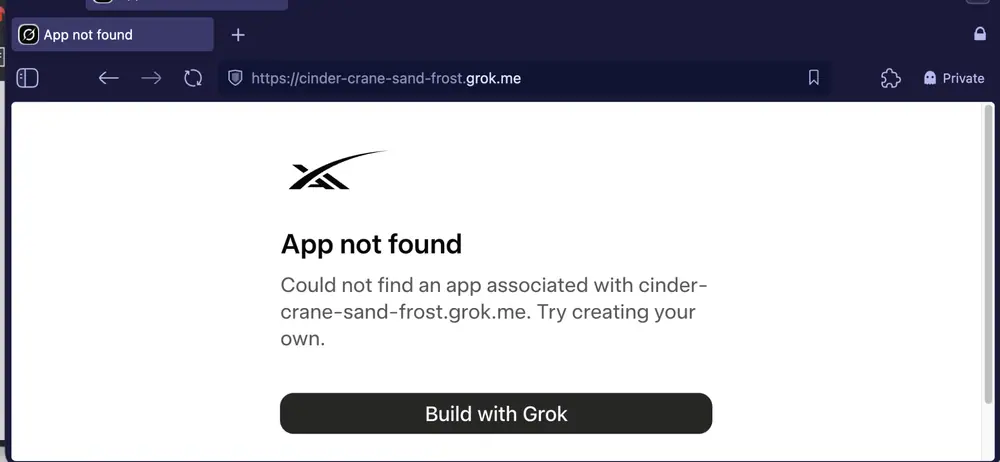
Link sharing for Grok Build is intended to streamline the process of developing and deploying apps. A user can input speech or text and have a working app ready for internal testing within minutes. The links are designed to give developers a way to get the app in front of authorized users quickly. The very left of the URLs contain two or more “dice words,” meaning randomly generated phrases such as “failing chassis traders,” although users can modify them. The rightmost portion of the link is grok.me. The URL for an X ads campaign plan was: https://cinder-crane-sand-frost.grok.me.
The scheme is intended to prevent links from being easily guessable. When done correctly, a phrase comprising three dice words has roughly 38 bits of entropy, amounting to billions of possible combinations. The idea—sometimes called capability-based access control—is that possession of the URL serves as authorization to the resources behind it. Google has long used this technique to make URLs easy to share but hard to guess. A URL share on that platform might look like: https://docs.google.com/document/d/1BxiMVs0XRA5nFMdKvBdBZjgmUUqptlbs74OgvE2upms/edit
There’s a fatal flaw in the way SpaceXSI has implemented the mechanism. Instead of being to the right of the domain—as is the case with Google links—the randomness for Grok Build links is positioned to the left of it. That allows the links to be easily enumerated using passive DNS services. These services monitor central DNS lookup servers. When a server lookup requests the IP address of a previously never-before-seen URL, the transaction is captured in a publicly searchable database. Had Grok followed Google’s approach, the links would have been invisible to passive DNS searchers. Muse, the Meta agent that CEO Mark Zuckerberg said was built from the ground up for security, recently suspended a link-sharing feature after it too was found leaking sensitive data.