- Published2 hours ago
Floorplans. Air duct diagrams. Heat pump specifications. Most people in the market for a new heating system probably don't want to think about this level of detail.
But, perhaps surprisingly, some do want to think about those things. In extreme depth.
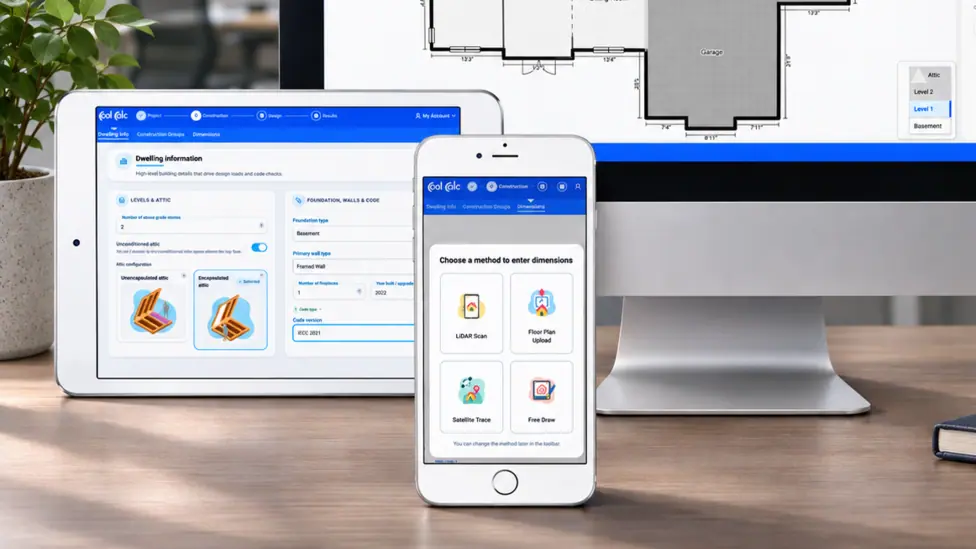
Every day, roughly 150 new users sign up to an app called Cool Calc, which works out the heat requirements of properties in the US.
Just over one third of those new users are not tradespeople but private homeowners, says founder and chief executive Bill Fiore.
When choosing a heating system, people can find themselves bombarded with information – how powerful a heat pump do they need, for example? It isn't always easy to take a tradesperson at their word.
"As an overall trend, we are seeing homeowners be more informed," explains Fiore. "They want to do a calculation on their own."
A heat loss calculation is a figure, usually measured in watts, that defines how much heat a home loses during cold weather. It's worked out room by room and is a key part of designing an efficient heating system.
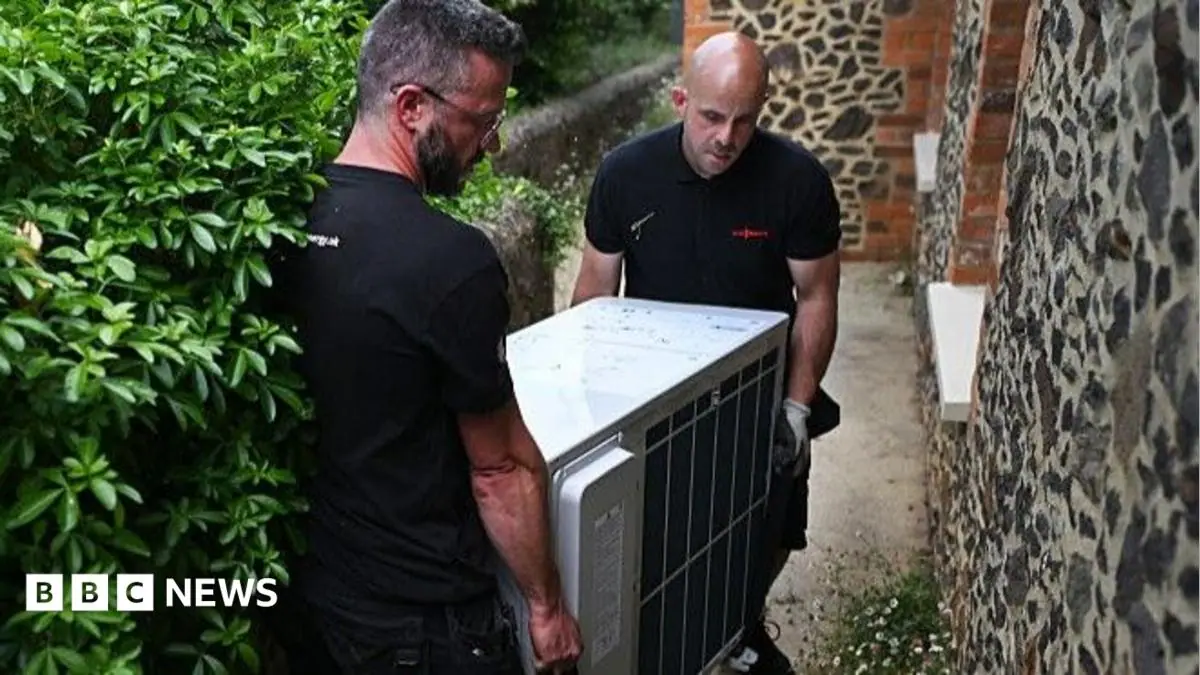
This estimate is especially important to get right when installing a heat pump, which is sized fairly precisely, according to the projected heat loss.
Should that calculation be off, the heat pump will likely perform poorly. You could be left with an underpowered device that struggles to warm your property, for example. Given the costs involved, homeowners are often anxious to ensure installers avoid such mistakes.
Certain new technologies are not, for the moment, helping, adds Fiore. "People are going to AI and they're getting a lot of misinformation because it's not backed by anything credible," he says. Cool Calc is planning to integrate with AI chatbots to try and improve the quality of the advice they spew out.
It is probably a good idea to be cautious about your new heating system's design, says Kevin Kircher at Purdue University. He and colleagues recently conducted a study, yet to be published, examining the heat loss calculations provided by tradespeople to roughly 75 US homeowners.
"We were surprised," says Kircher. "The heat loss calculations often led to overestimating the design heat loads by a factor of two or more." That would result in oversized systems that use much more power than necessary.
Not only that, some people reported charges of more than $1,000 (£745) – and in one case as much as $2,500 – just for a heat loss survey, adds Kircher.
Besides using excessive amounts of energy, an oversized heating system can also feel uncomfortable, says Dan Dempsey, a former senior engineering fellow for a major heating and cooling provider in the US.
Dempsey, who took part in Kircher and his colleagues' study, lives in Indiana. He says it is his retirement hobby to monitor the performance of heating and cooling systems in the homes of friends and family members, by analysing data from their smart thermostats.
"I spent five years manually downloading everything, every week," he says. He points out that oversized systems tend to cycle a lot, meaning they switch on and off again in quick succession.
This leads to discernible swings in temperature: rooms that fail to remain at their target temperature of, say, 20C, but rather fluctuate, which feels uncomfortable, says Dempsey.
For people seeking a better understanding of their home's heat loss, various free or partially free apps, including Cool Calc and AutoHVAC, are available. There are options for UK homeowners, too, such as web app Heatpunk.
Many things can influence the heat loss figure, including the amount of insulation in your home, whether the building has double or triple glazing, and also the size of your radiators.
Heatpunk allows people to draw a floor plan of their home and input data about the property in order to estimate its performance. Thousands of people use it every month, mostly professional installers, says Andy Rankin, founder and managing director of Midsummer Energy.
The web app also suggests specific heat pump models for each property, based on the results of the calculation. Naturally, these are models available through Midsummer Energy. "It's been a very effective marketing tool," says Rankin.
Dwellow, another company that offers heat pump installations in the UK, is keen to follow suit. The firm recently launched its own heat loss estimator.
While professional heat loss calculations remain essential, getting people to do their own "self surveys" first could ultimately reduce how much time professional heating engineers must spend analysing properties says Ian Mclaren, Dwellow's co-founder and director.
"Going into a home and just being able to check the information rather than start from scratch could turn a survey into a half-hour trip – far more efficient and less costly," says Mclaren.
There's no substitute for engineers doing a good job when it is their turn, however, stresses Maurizio Sibilla, of the Centre for Advanced Built Environment Research at the University of West England, Bristol.
"The solution is better installer practice, clearer customer-facing evidence, and improved methods, not expecting homeowners to do the engineering themselves," he says, adding that providing homeowners with information about the calculation and also data on heat pump performance post-installation can reassure them that the system works as expected.
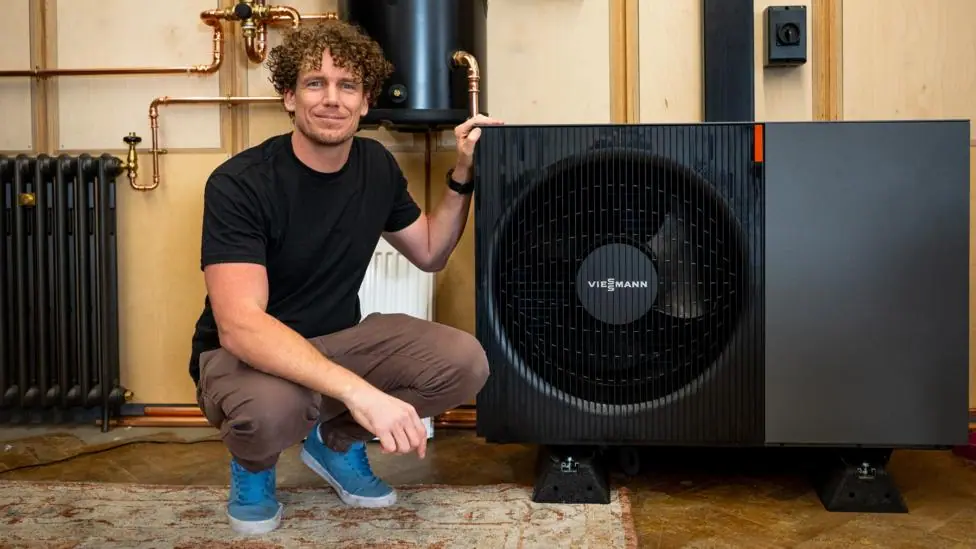
Doing your own heat loss calculation may end up "over-intellectualising" things, says Adam Chapman, chief geek at heat pump training firm and installer network Heat Geek.
"I don't personally see what a homeowner would gain from it," he says. "We will guarantee the efficiency with way less radiators and pipework upgrades than any other system out there."
Chapman points out that only the most careful of surveys will capture a home's heat loss well.
He says it is common for Heat Geek installers to discover retrofitted windows that haven't been foam-insulated into their openings, leaving draughty gaps, or cavity walls that a homeowner thought had been insulated – but which were actually missed by the builder.
"It's stuff you can't see," he says. "What we actually need is home surveys that go and spot for these sorts of things."