- Published13 minutes ago
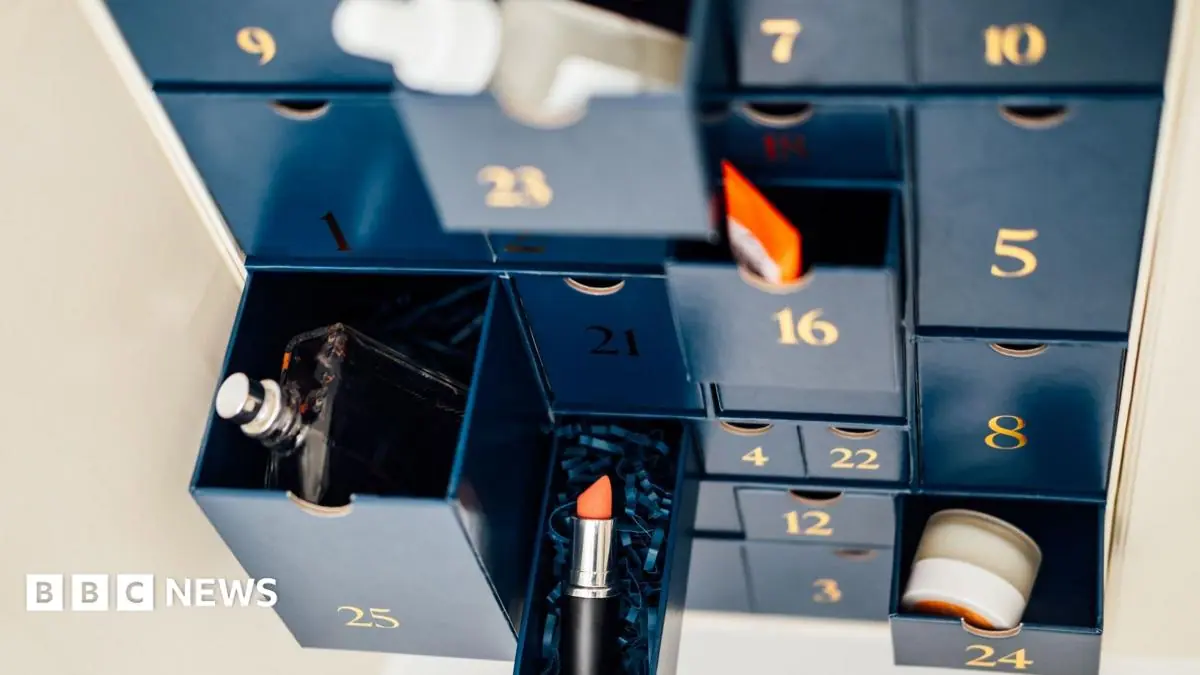
It's easy to see the appeal of a beauty advent calendar. Like many women at this time of year, Julia says she often finds herself tempted to splurge on one - especially a perfume calendar. But she takes quite an unsentimental approach.
"I always look at what's in them. If I like enough of the fragrances, I'll buy it," says the 39-year old, who works as a senior commercial manager in engineering.
Luxury advent calendars are supposed to offer the thrill of a surprise but, for Julia, it is more important she actually wants the items inside - a thought that is also striking more and more customers in the wake of the scandal over the Skims calendar.
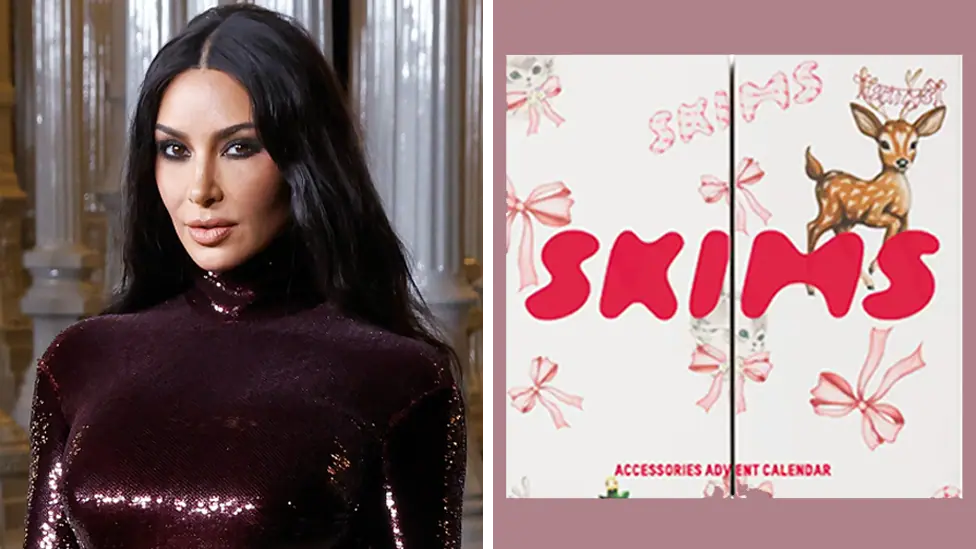
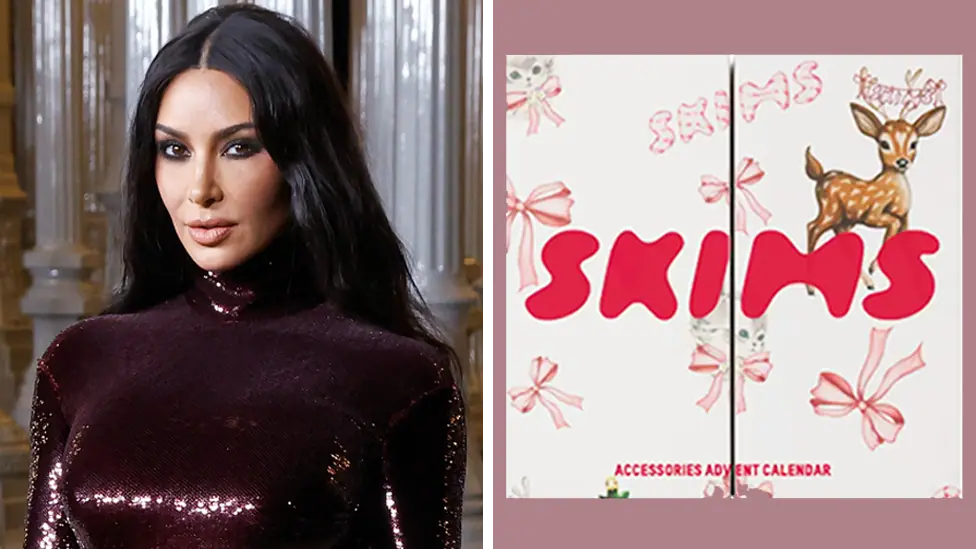
This week, Kim Kardashian's beauty brand offered all of its customers refunds for its $148 (£110) calendar after being widely criticised on social media over the quality of its contents, with some customers likening the hair clips, scrunchies and keychains inside to things you might find down the back of a sofa.
Julia says she earns a good salary but is keen to get value for money and doesn't want to waste it on items she won't use.
"I spent £160 on a Space NK fragrance calendar last year," she says. "I got some fragrances I'd been wanting for a while for a lot less than recommended retail price, and those I didn't like I managed to sell on for a slight mark-up on what I paid."
Beauty calendars, which often cost upwards of £100 and sometimes much more, have been around for more than a decade and the marketing has grown ever more sophisticated.
High-profile brands will warn that their calendars risk running out, which may boost early demand, while unboxing videos posted by influencers can encourage spending by creating an infectious sense of surprise and delight.
And it appears to be working. Ipsos data shows, external around 15% of all advent calendars sold are beauty ones, with people aged 18-34 particularly willing to splash out.
But in the face of that tsunami of marketing, customers seem to be getting savvier.
"I love beauty, but I rarely buy beauty advent calendars. They are pricey and often only have a few things that I actually want to try or are trending products," says Priya Raj, 30, a fashion journalist.
She thinks some are good value but, for her, the advantage is being able to try on a small scale without forking out for a full-size product.
"For me, an advent calendar - particularly a beauty one - serves the purpose of allowing me to try out different products, particularly in the lead-up to Christmas, and then I can hopefully snag a bargain in the Boxing Day sales."
Podcaster Rhea Somaiya, 28, also likes the general idea, but has a healthy scepticism around a lot of them in practice.
"I do think some brands take the consumer for granted in that they provide each day with something so menial that people are bombarded with irrelevant and cluttering items.
"And when that's the case, they certainly put me off as the excitement to open each window dwindles into irritation rather than joy."
Jessica Jasper, a marketing consultant, is more positive - she thinks it's worth it. But she also thinks some companies are just jumping on a trend and that "some brands are getting a little carried away with the pricing".
So can beauty calendars offer value for both the brands and the customer - an example of a win-win? Or are they mainly designed to make us spend more at Christmas than we need to?
Heather Widdows, a philosophy professor and beauty expert, has pointed out that while you might buy some of the products in an advent calendar individually, it's highly unlikely you'd buy all of them.
"Beauty calendars may offer you lots of products for a really good price. They can also be a bit of fun and feel sensuous.
"But it is exceptionally unlikely that you would use all the products inside them, so they're probably not worth it."
This year, Julia has spent £99 on a John Lewis fragrance calendar which she thinks is good value for money. But it doesn't mean she'll keep everything in it.
In fact she's joined a Facebook group where people trade the ones they don't want for ones they do.
"The ones I keep are already a lot cheaper per mililitre than if you bought them at retail," she says.
With additional reporting from Kris Bramwell
Get in touch
Have you bought something you didn’t feel was value for money? Or seen misleading discounts on products?
Contact formContact form