
AI workflow automation is changing how businesses build applications and manage everyday work, raising questions about the role of established software platforms. As organizations experiment with AI-generated applications and autonomous agents, they must also determine how to maintain access controls, integrate existing systems and manage increasingly complex workflows.
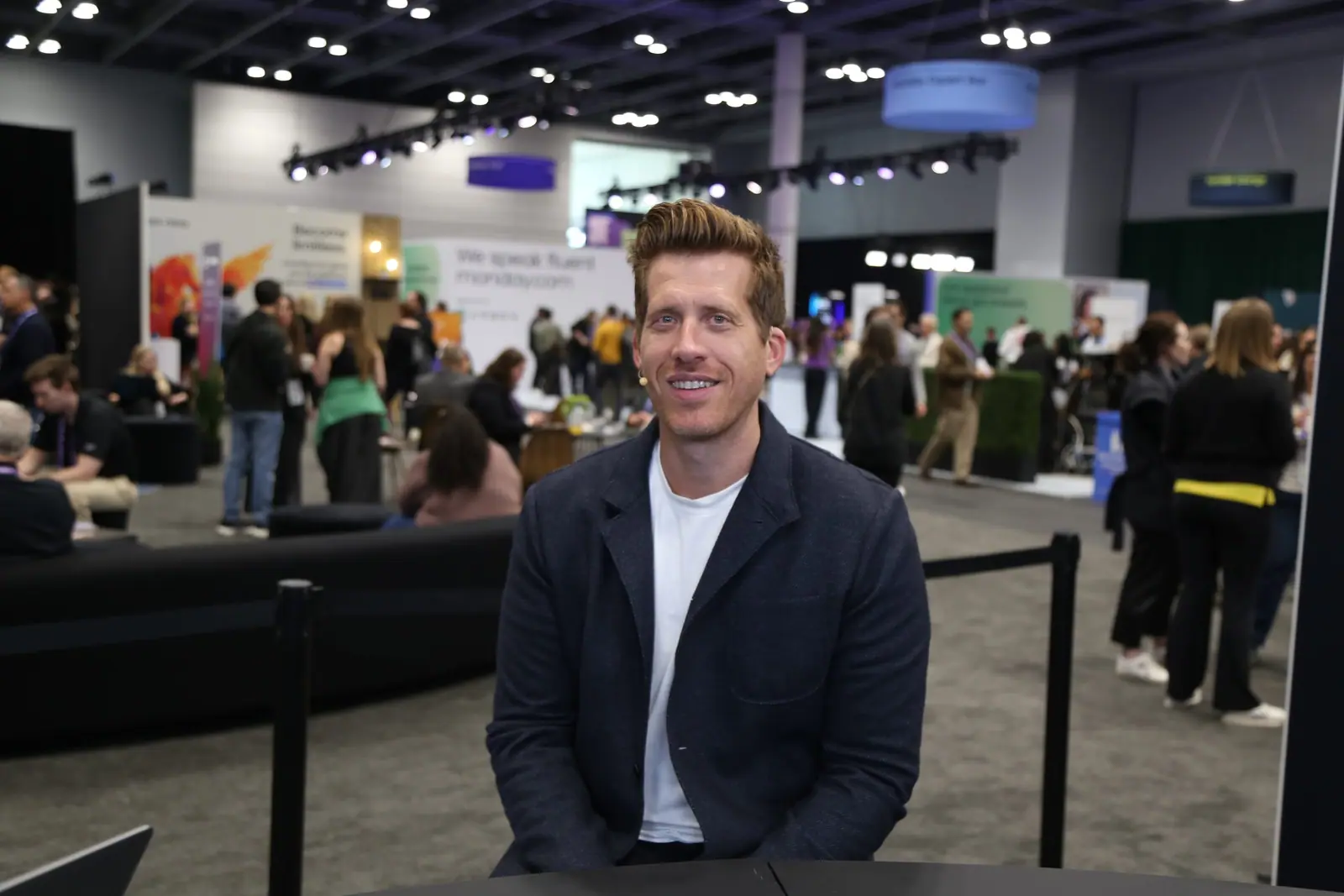
The growing accessibility of AI development tools has prompted speculation that businesses could replace traditional software-as-a-service platforms with applications built for specific needs. But building an application and operating it securely across an enterprise present different challenges, according to Casey George, chief revenue officer of monday.com Ltd.
“We are seeing customers come back to a platform that’s integrated — that’s governed, that’s permissioned with their infrastructure, that is secure — like monday.com,” he told theCUBE. “I joke and say it was an expensive funeral, but we learned a lot. Customers learned a lot.”
George, along with executives and practitioners, spoke with host Rebecca Knight at monday.com’s Elevate event during an exclusive broadcast on theCUBE, SiliconANGLE Media’s livestreaming studio. The discussions examined enterprise AI deployment, governance requirements and the challenges of scaling AI workflow automation across organizations. (* Disclosure below.)
Here’s theCUBE’s complete video interview with Casey George:
Here are three insights you may have missed from theCUBE’s coverage of monday.com’s Elevate event:
Insight #1: Deploying AI agents requires expertise and governance.
Making autonomous agents available to employees does not guarantee business returns. After an internal initiative produced more than 3,600 agents, monday.com established monday Frontier, an organization combining managed services and deployment engineers to help customers identify workflow bottlenecks and implement AI projects. The initiative addresses the implementation challenges involved in moving agents into productive use, according to Eran Zinman (pictured), co-founder and co-chief executive officer of monday.com.
“Adopting AI really requires expertise. I know how hard it is because we experienced ourselves that you have this amazing technology, but how do you actually use it?” he said during the event.
As organizations deploy AI agents, security teams must account for how access rights change across users, applications and environments. Incremental rollouts offer a way to test capabilities before expanding their reach, while permission management remains an ongoing responsibility, according to Ryan Nigro, security trust and enablement team lead at monday.com.
“It just comes to making sure that your users are properly being given just enough to do their roles but not too much to cause harm,” Nigro told theCUBE. “There’s no reason why a sales rep should have the ability to change your production environment.”
Here’s theCUBE’s complete video interview with Ryan Nigro:
Insight #2: Shared dashboards improve operational visibility.
At Hewlett Packard Enterprise Co., employees are using monday vibe, monday.com’s no-code application builder, to create custom tools. One executive dashboard replaces the manual process of copying charts into presentation slides while retaining the ability to export to PowerPoint, according to Kate Kenner, capability and community lead for strategic sourcing and planning at HPE.
“[Executives] knocked a whole bunch of the meetings off the calendar,” she told theCUBE. “Instead of weekly, now they’re monthly.”
Here’s theCUBE’s complete video interview with Kate Kenner:
At Lowe’s Cos. Inc., coordinating store setups and remodels once required tracking information across Microsoft Excel, emails and other communications. The retailer now uses monday.com to monitor individual store bays and dozens of simultaneous projects, according to Lanny Finley, director of remerch and new stores at Lowe’s.
“I can take the dashboard and see which projects are on track, which ones are at risk, and then make the appropriate actions and get the right partners in place to make the corrections to get everything back on track and completed,” he said during the event.
Lowe’s also developed an internal Green Dot Board to track issues such as missing components during store projects. The company is exploring additional automation that could initiate vendor orders when components are needed and close issues once replacements are installed, according to Brian Olms, senior business partner manager at Lowe’s, who joined Finley during the discussion.
“We needed a way to automate the process, make it more user-friendly [and] make it simpler. That’s what we started the Green Dot Board for,” he told theCUBE. “Here at Elevate, we’re seeing ways that we could even take it a step further and start to use agents and more automation and [the] vibe app.”
Here’s theCUBE’s complete video interview with Lanny Finley and Brian Olms:
Insight #3: AI workflow automation expands organizational capacity.
For nonprofits facing growing demand, AI workflow automation offers a way to expand organizational capacity without placing additional administrative burdens on employees. At Feed the Children Inc., a two-person team oversees relationships with more than 500 community partners, according to Colleen Finn Ridenhour, chief growth and strategy officer at Feed the Children.
“Things from [memorandums of understanding] and legal contracts, annual renewals and compliance and reporting — it’s quite a lot. It’s been a very manual process, historically, for them to keep track of that all the time. We really want them focused on the human element of that job, which is bringing in new partners to help us scale our impact,” she told theCUBE.
The nonprofit uses monday.com’s forms, boards, automations and agents to coordinate partner activities and manage information. Employees can also build dashboards for specific needs, including budget tracking, while retaining human oversight of compliance-related work, according to Ridenhour.
“We’re not going to be able to scale our impact by just always asking people to work harder. [We need to find] ways to repeat a lot of these repetitive actions in a much easier way and [share] information so [that] people’s jobs get easier and it frees up their time to do the things that only they can do,” she said during the event.
Here’s theCUBE’s complete video interview with Colleen Finn Ridenhour:
To watch more of theCUBE’s coverage of monday.com’s Elevate event, here’s our complete video playlist:
(* Disclosure: TheCUBE is a paid media partner for monday.com’s Elevate event. Neither monday.com, the sponsor of theCUBE’s event coverage, nor other sponsors have editorial control over content on theCUBE or SiliconANGLE.)
Photo: SiliconANGLE