(Bloomberg) -- When Aon Inc. on Monday priced $2 billion of notes maturing in 2056 as part of a debt package to fund an acquisition, investors rushed to buy it, placing orders more than seven times the size of the offering.
Most Read from Bloomberg
Zuckerberg Has an AI Empire to Build. Meet the Adviser Who Handles the Details
EU Proposes Canada Become the Bloc's First 'Associate Member'
MBS and Saudi Arabia Face Crisis With Escalating Houthi Attacks, Oil Pipeline Shut
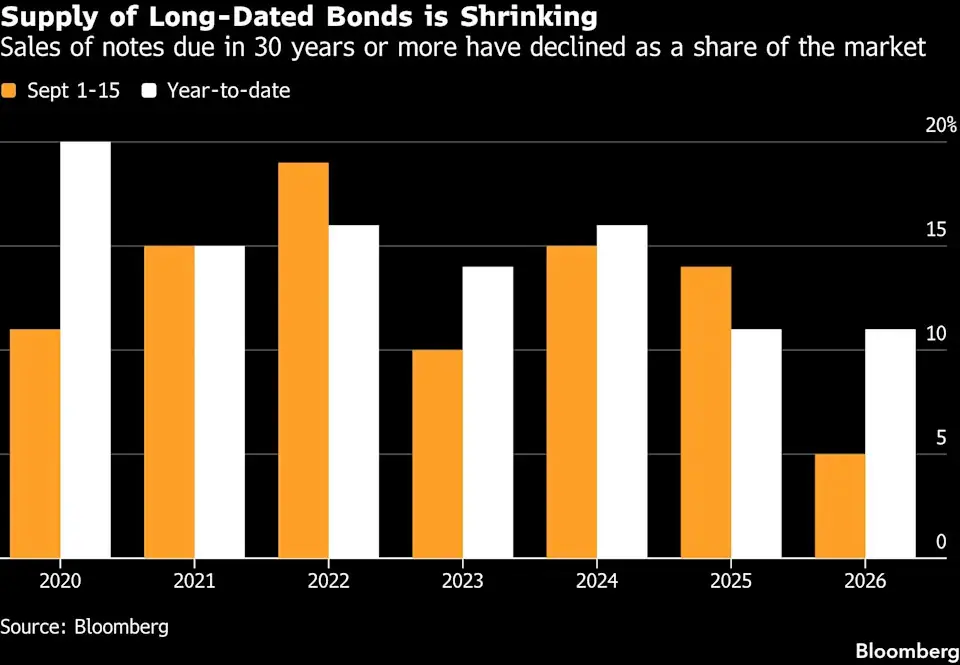
There was good reason for the enthusiasm: long-dated debt have become increasingly scarce in the US high-grade corporate bond market.
Firms and banks are scrapping plans for long-maturity bond offerings, according to people familiar with the matter, as they grow reluctant to lock in expensive debt for years to come as 30-year yields have surged to the highest level in almost two decades.
Sales of investment-grade notes so far this month have been less than half of year-earlier levels, according to data compiled by Bloomberg News. They've accounted for just 5% of issuance for the first half of September, the smallest share for the period since at least 2020.
Meanwhile, the share of bonds issued with maturities ranging three to 10 years so far this month has increased to 60% from 51% a year ago.
The shift underscores how higher interest rates are reshaping the bond market, creating a mismatch in supply and demand for the debt typically favored by pension funds and insurers, who rely on long-dated corporate debt to match their obligations.
Higher costs also pose a challenge for hyperscalers such as Alphabet Inc. and Amazon.com Inc., which have heavily relied on long-dated bonds to help finance the buildout of artificial intelligence infrastructure.
"With yields remaining elevated, it is increasingly challenging for corporate treasurers and CFOs to make the case for long-dated funding," said Neil Sun, a portfolio manager at RBC Global Asset Management Inc. "There is no near-term reversal in sight as robust US growth and AI-driven capex support rates remaining higher for longer."
Aon drew more than $14 billion of investor demand for its 30-year bond, the most of any tranche in its seven-part $13.5 billion debt offering, separate people said, asking not to be identified because they're not authorized to speak publicly. That note has outperformed the deal's other tranches in the secondary market, according to Trace data.
Story Continues