
Citing concerns about persistent inflation, Federal Reserve officials voted unanimously on Wednesday to raise the bank's benchmark interest rate by a quarter of a percentage point, to a range between 3.75% and 4.0%.
The decision — the first rate hike since 2023 — pushes the Fed's interbank lending rate to its highest level since December 2025.
The move comes as Fed officials confront persistent inflationary pressure, driven by President Trump's tariffs, the buildout of artificial intelligence infrastructure and, most recently, a surge in energy prices sparked by the war with Iran. The latter has driven fuel costs sharply higher, with U.S. diesel prices sitting at record highs and likely moving higher.
"Inflation remains elevated," the rate-setting Federal Open Market Committee said in a brief statement. "Today's policy action will support a timelier return" to the Fed's 2% target rate for inflation — a target it has missed for more than five years. "The committee will deliver price stability," the committee declared.
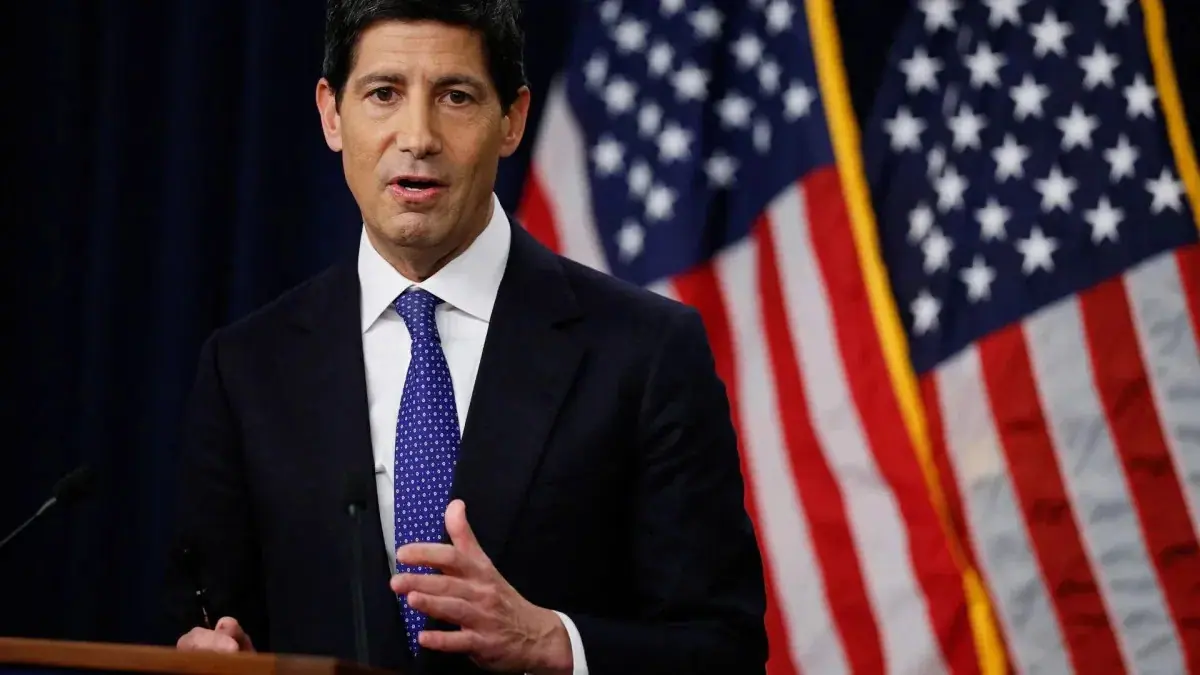
In comments delivered at the conclusion of the FOMC's two-day meeting, Fed Chair Kevin Warsh said he has not seen signs that the inflationary wave is receding. "The plain fact is that inflation is too high and has been for too long," Warsh said. "This summer's inflation readings do not tell me that underlying trends have meaningfully improved."
Warsh said that the Fed "must be confident that underlying inflation is moving to our objective clearly and at sufficient speed. Today, the FOMC decided that this standard has not been satisfied."
At the same time, Warsh said that his view that the economy has been growing stronger in recent months has been borne out. "The economy has strengthened," he said. "It's a judgement I have and the committee has."
The labor market remains resilient, Warsh said, suggesting that it was appropriate for the Fed to concentrate on the other half of its dual mandate, price stability. "Inflation risks are to the upside, while labor risks are roughly balanced," he said.
Investors reacted to the news and to Warsh's hawkish stance at the press conference by driving stocks sharply lower on worries about higher rates, with the Dow Jones Industrial Average falling over 600 points, or 1.2%. The yield curve flattened, as short-term interest rates rose and long-term rates eased slightly. The yield on the 10-year Treasury note moved above 5%, a key psychological level for the market.
More rate hikes ahead? Today's rate hike was widely anticipated, and some analysts were more interested in what the Fed would say about the future. Projections by the FOMC members show that 16 of the 18 participants expect to see another rate hike this year, while just two expect the central bank to limit itself to a single rate hike. (Warsh has refrained from providing projections.)
Story Continues