
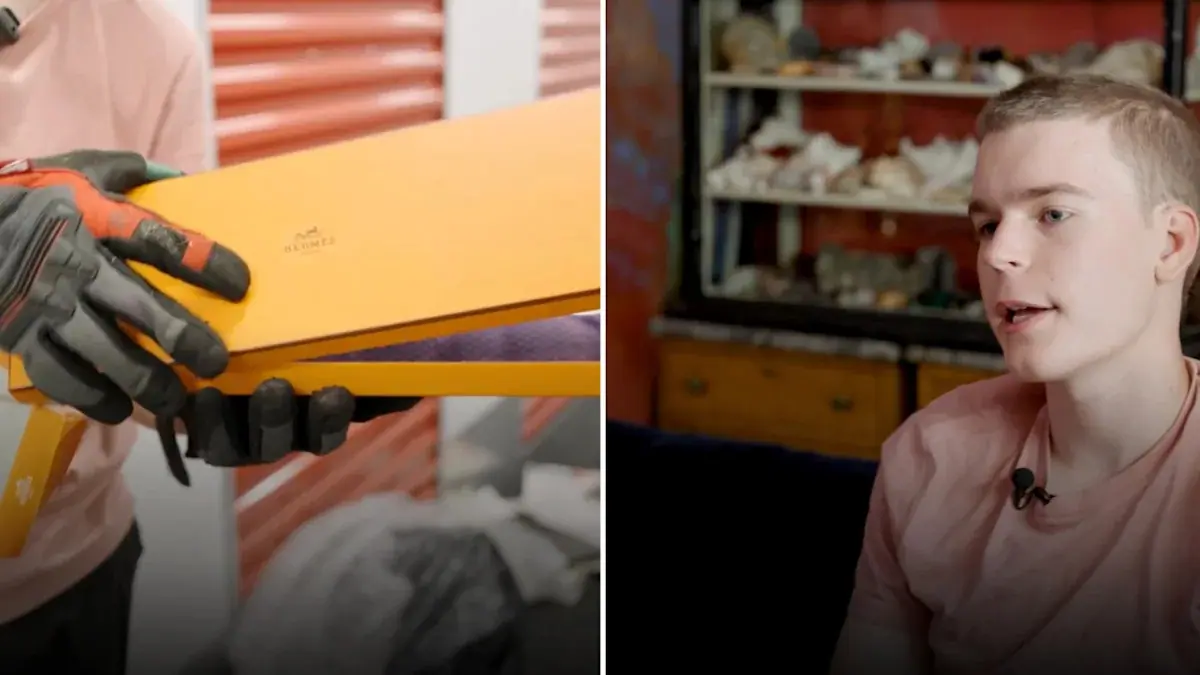
Michael Haskell's first storage unit cost $10. Inside, he found a carbon dioxide canister he sold for $40. That $30 profit — made while he was still in high school — was enough to convince him to keep going.
Two years later, the 18-year-old from Englewood Cliffs, New Jersey, had turned that curiosity into a business in the New York tri-state area, generating around $220,000 from 2025 through July of this year, according to financial documents reviewed by CNBC.
Must Read
Jeff Bezos backs a platform that lets anyone invest in rental homes for as little as $100 — 6 ways to build wealth like a landlord without actually being one
Dave Ramsey warns nearly 50% of Americans are making 1 big Social Security mistake. Here's what it is and 3 simple steps to fix it ASAP
The tax breaks in Trump's 'big beautiful bill' expire after 2028. Here are 4 moves to make before the window closes
His model is simple: Haskell finds and bids on abandoned storage units — usually for $500 or less — through auction websites, then sorts, researches and resells the contents on eBay. He stores inventory in his mother's home, where shelving units in the garage are stocked with everything from Cold War-era artifacts to Nike sneakers to crates of books and vinyl records.
The find that changed everything
Haskell's turning point came early. After spotting that a unit had belonged to Andrew Crispo — a scandal-riddled former Manhattan art dealer — he paid $450 for it. Inside, he found a painting by Man Ray and sketches by modernist painter Walt Kuhn that together sold for $36,000.
"Every single time I'm driving to a locker, I'm thinking, is this going to be the next Crispo?" he told CNBC.
That windfall convinced his parents he was onto something real. It also crystallized his approach: success in storage unit flipping isn't about luck, but about reading the clues.
"The way you make money is not by looking at stuff that's directly in front of you," but about piecing together clues, Haskell said. "It's connecting the dots with various small items that may not be obvious." A college pennant might not be worth much on its own, but it signals an educated owner — and possibly more valuable items elsewhere in the unit.
Haskell uses Google Lens, ChatGPT and cross-referenced eBay listings to estimate values. He and some friends also built an AI tool that scans for notable names attached to units up for auction.
Story Continues