
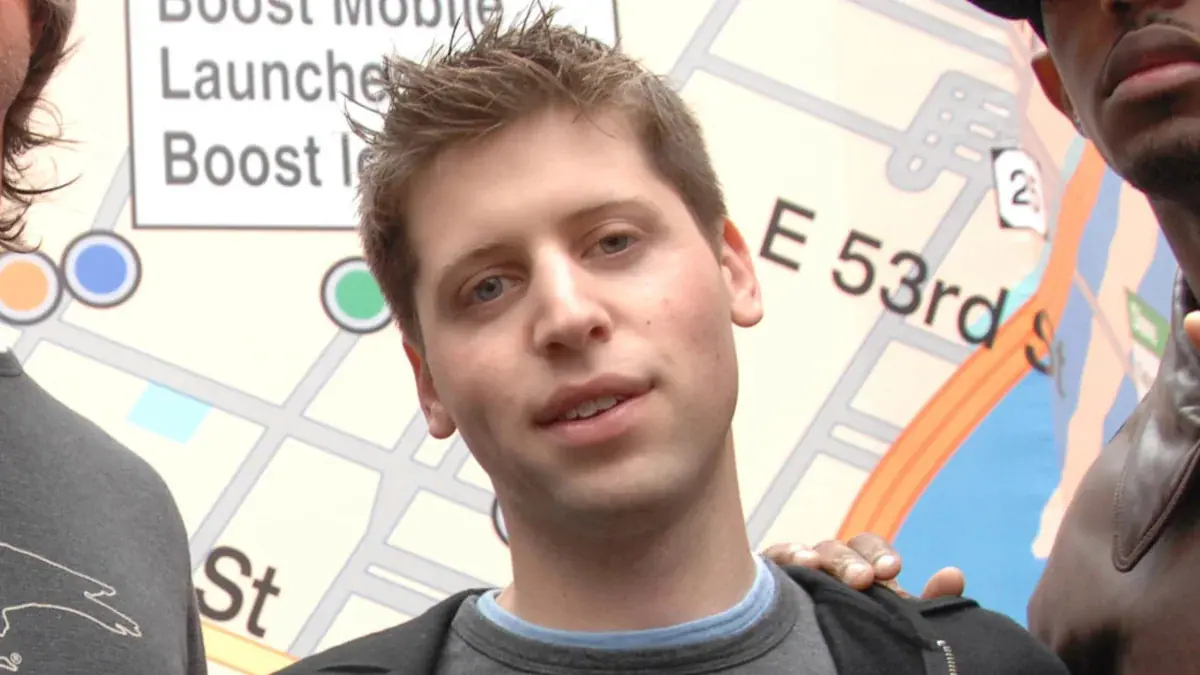
Before Sam Altman took the reins as OpenAI's founder, CEO, and the driving force behind ChatGPT, he left Stanford University to launch a location-based social networking app called Loopt.
Altman was just 19 years old when he co-founded the company and, as a portent of good things to come, managed to sell the company and its modestly used app to Green Dot Corporation in March 2012 for an eye-popping $43.3 million. That deal got the green light despite Loopt's flagship product gaining little ground in the social media market that was getting really competitive around 2010.
Must Read
Jeff Bezos backs a platform that lets anyone invest in rental homes for as little as $100 — 6 ways to build wealth like a landlord without actually being one
Dave Ramsey warns nearly 50% of Americans are making 1 big Social Security mistake. Here's what it is and 3 simple steps to fix it ASAP
The tax breaks in Trump's 'big beautiful bill' expire after 2028. Here are 4 moves to make before the window closes
Here's what experts have said about the deal, and what it says about who Altman was back then, and today.
The Green Dot deal made good sense for both companies
The acquisition of Loopt gave Green Dot, an early fintech player, a bundle of key strategic benefits at a time when social media apps were kicking into higher gear. Those benefits included new banking and payment products targeted at new markets and better methods of customer acquisition and retention, which gave Green Dot a major leg-up with U.S. retailers.
While Loopt never became a mass-market consumer app, the deal "gave Green Dot a shortcut into mobile payments," Roman Milyushkevich, CEO of HasData, a technology infrastructure company, told Moneywise.
"Loopt had location technology, mobile development experience, patents around real-time location-based messaging, and a team that had already spent years solving problems Green Dot was only beginning to face," Milyushkevich noted.
Green Dot already had customers, payment infrastructure, and retail distribution, and Loopt had mobile product expertise and location technology. "Green Dot was betting that combining those assets would produce something neither company could build as quickly alone," Milyushkevich added.
What does the Loopt deal say about Sam Altman?
The main deal takeaway is that Sam Altman dropped out of Stanford to build Loopt, struggled to turn it into a breakout consumer product, but still ultimately achieved a multimillion-dollar exit.
Story Continues