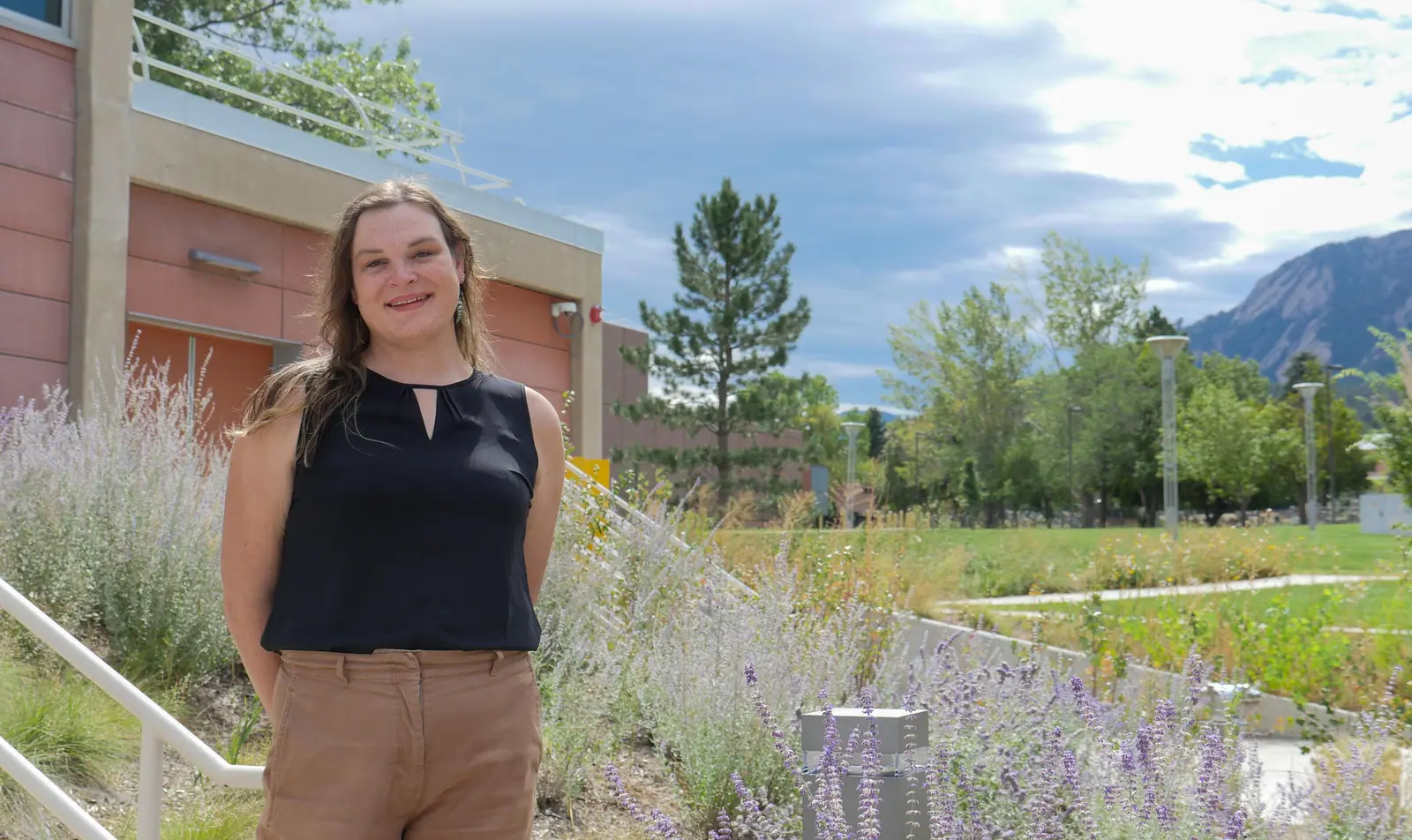
Meet NIST mechanical engineer Rachael Sexton, whose research focuses on human factors engineering and human systems integration — essentially how humans and machines can work together. By “machines,” she means a designed system, such as computers, databases, websites and algorithms.
There are two things Rachael enjoys most about being a programmer: building software for the public domain and solving complex problems in creative ways.
One example of the many projects she’s working on is building reference libraries (not the kind filled with books). These libraries act as blueprints for the programming community to develop its software programs or apps. Rachael helps develop the functions or algorithms organized into libraries so they’re accessible and easy to use for other programmers and researchers.
One of her favorite things about making software libraries at NIST is being able to put them in the public domain, meaning they are freely accessible to the public.
Earlier this year, she developed two NIST reference libraries. The first, called Affinis, is a suite of algorithms, and the second, called Contingency, is a set of tools that measure how well algorithms (like the ones in Affinis) do at their job.
Programmers can use both libraries together to solve specific problems in their own programs and to assess their performance. This is important for programmers developing apps for a variety of fields, including manufacturing, epidemiology, scientific research or even modeling tools with specific purposes, such as monitoring wildfires.
Artificial intelligence, Information technology, Data and informatics and Natural language processing Released September 14, 2026, Updated September 18, 2026