
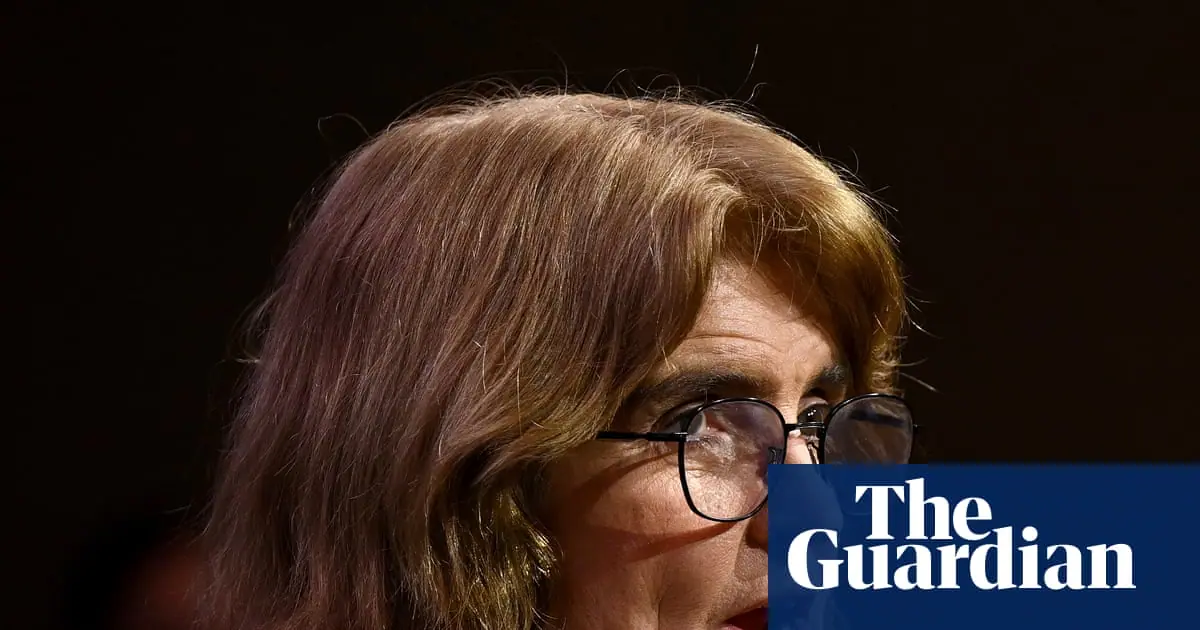
Michele Bullock said board knows decision will hit some people hard but hopefully in the next few years ‘this will all have been worth it’
Get our breaking news email, free app or daily news podcast
The Reserve Bank of Australia has lifted its key interest rate to 4.6%, its highest level since 2011, and warned of further hikes as the unending US war on Iran pushes prices “permanently higher”.
The widely expected fourth increase to the cash rate this year will add to repayment costs for millions of mortgage holders. Before Tuesday’s meeting, it sat at 4.35%.
The RBA governor, Michele Bullock, said inflation had been too high for most of the last six years but she was confident higher rates would bring it back down.
“We knew that this was going to hit some people pretty hard,” Bullock told reporters in Sydney.
“Hopefully, in the next couple of years, when we get inflation back down, this will all have been worth it.”
The RBA board said it voted unanimously for a hike in response to higher prices from the AI investment boom and amid fears that firms would begin passing on rising costs to consumers. Bullock singled out the US war on Iran, saying it could disrupt oil supply longer than expected.
“It’s lasted, and there doesn’t seem to be any end to it,” she said. “That means that fuel prices, fertiliser prices, transport prices, all these things now are permanently higher.”
Data to be released on Wednesday is expected to show underlying inflation rising at an annual pace of 3.6% for the third month running in August, well ahead of the RBA’s target range of 2% to 3%.
The board in a statement accompanying the decision to hike rates said the economy was slowing as expected but that it would still lift interest rates “if needed”.
Bullock said the RBA did not expect a recession but may have to create one if households began to assume inflation would stay at its current level.
“If people start saying, ‘you know what, three-point-something [inflation] is fine or [4%] is fine … you might need to have quite a dramatic slowdown in the economy,” she said.
But the governor said she wanted to avoid a “massive” increase in unemployment and didn’t “like the idea” of job losses, adding: “maybe there doesn’t need to be any more interest rate rises.”
Markets interpreted her remarks as a sign the RBA would avoid multiple rate rises.
Another increase was still expected by February or earlier but traders dropped their bets on a further hike next year, putting it at now just a 50% chance.
Analysts at top bank ANZ and wealth manager UBS stood by their predictions of a hike as soon as November.
My Bui, an AMP economist, said Bullock had offered a balanced view of the risks and predicted rates would stay on hold. Commonwealth Bank and NAB also reaffirmed their forecasts for rates to stay put.
The Coalition leader, Angus Taylor, said federal government spending was to blame for Tuesday’s hike but would not be restrained by higher interest rates.
“This is a dark day, a tough day for hardworking Australian families with a mortgage, those in small businesses,” Taylor said.
The treasurer, Jim Chalmers, said the government took responsibility for “our part of the fight” against inflation but was managing the budget responsibly, blaming the US war on Iran for inflation.
“Australians are paying a very hefty price for that war in the Middle East and today that price became a bit steeper with this decision from the independent Reserve Bank,” Chalmers said.
Explore more on these topicsShareReuse this content