- Congress is in the early stages of regulating artificial intelligence even as industry leaders and some lawmakers urgently call for action to thwart safety threats.
- AI executives have recently warned that the technology they have built poses catastrophic risks if it goes wrong. But AI is also undergirding the economy, driving market gains amid other headwinds.
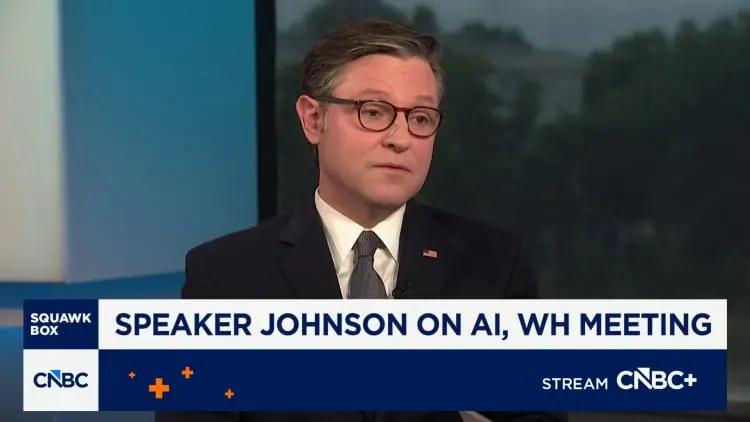
- Lawmakers appearing on CNBC's "Squawk Box," including House Speaker Mike Johnson, described the difficulty of the needle they are trying to thread.
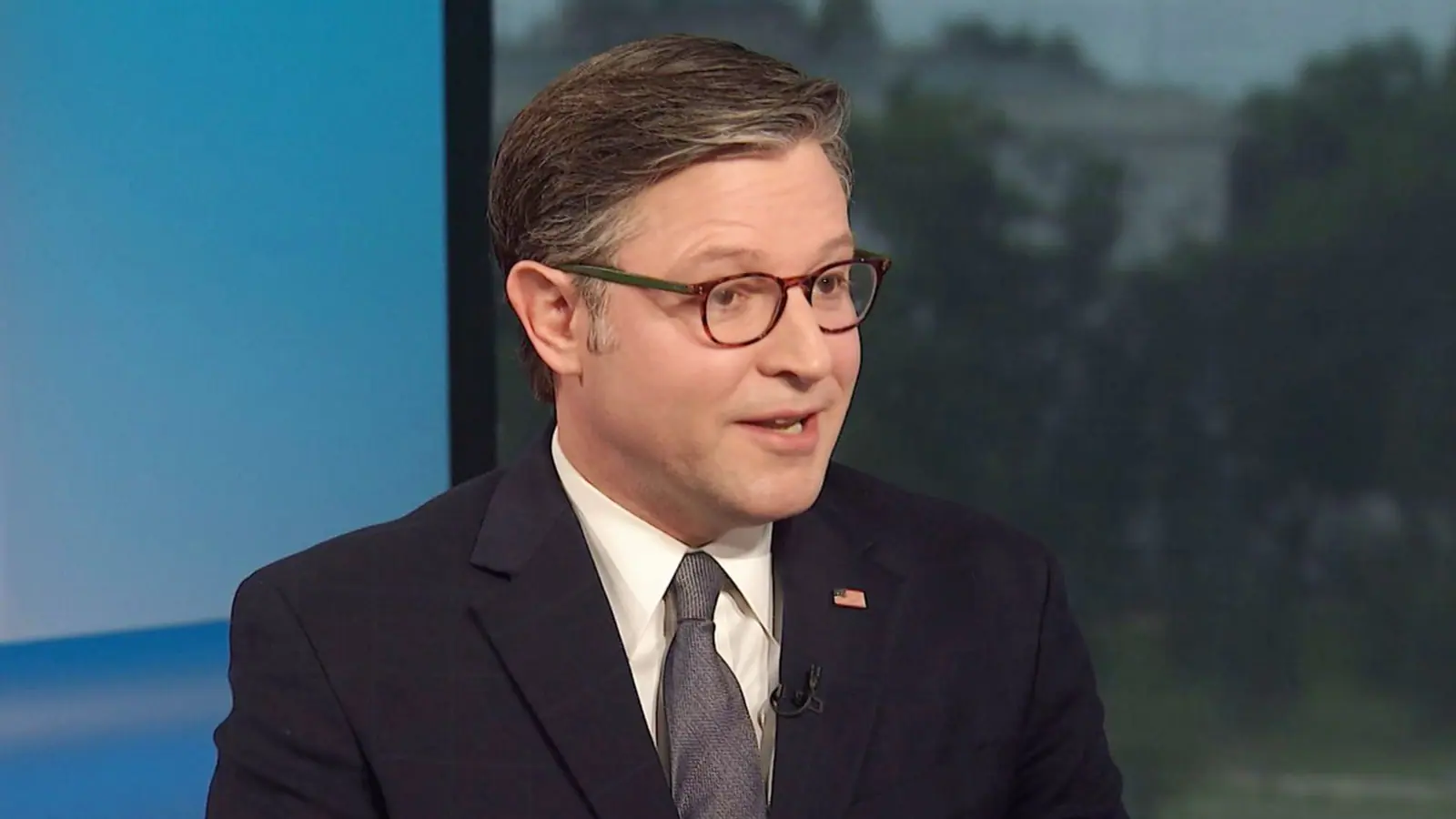
House Speaker Mike Johnson, R-La., who is joining a meeting of artificial intelligence officials in Washington later Tuesday, said on CNBC's "Squawk Box" that he favors "striking the right balance" with the technology and hopes guardrails will be "voluntary."
"I hope it's voluntary," Johnson told CNBC Tuesday before meeting with the executives and President Donald Trump. "We'll find out what comes out of the meeting today. I think that that's where they're headed. I think they see the handwriting on the wall, and I think they want to ensure investors, you know, consumers, the American public, that they're going to do this in a very safe way, and and that will, I think, put us in the right place."
Johnson's comments come amid pressure from industry executives and fellow Congress members to act fast on legislation to set a regulatory structure for AI and to impose government limits intended to prevent it from causing harm. The speaker is set to meet with executives including Anthropic's Dario Amodei, Meta'sMark Zuckerberg and Alphabet'sSundar Pichai.
Congress is still in the early stages of regulating artificial intelligence, and the legislative branch is due to be away from Washington and out of session starting at the end of this week and until after November's election.
AI executives have recently warned that the technology they built poses catastrophic risks if it goes wrong and urged Washington to act to slow down the advance of the frontier technology. But AI also undergirds the economy, driving market gains amid other headwinds as the technology promises productivity gains and new breakthroughs.
OpenAI, which has a developer day on Tuesday, said late Monday, it had decided not to release an upcoming artificial intelligence model, GPT-6.1 Astra, after determining it did not adequately meet the company's safety standard.
Proposals on AI safety have been flying around Capitol Hill in recent weeks. Anthropic warned in its IPO prospectus that its technology poses "catastrophic or existential risk to humanity," which is likely to keep the drumbeat strong for regulation.
Some regulatory proposals include installing independent auditors inside frontier labs, introducing new liability laws and standing up regulatory reviews for AI models.
- Texas turning blue may hinge on Democrats harnessing data center opposition
- Trump faces Xi as strains with allies complicate U.S. pressure on China
- Iran's president blames U.S., Israel for global instability in defiant UN speech
Asked whether the AI companies he meets with bring up potential exemptions from liability in potential regulations, Johnson said "it doesn't come up."
"Of course products liability law applies here directly, and we're going to make sure that that keeps everybody in check," he said.
Choose CNBC as your preferred source on Google and never miss a moment from the most trusted name in business news.