
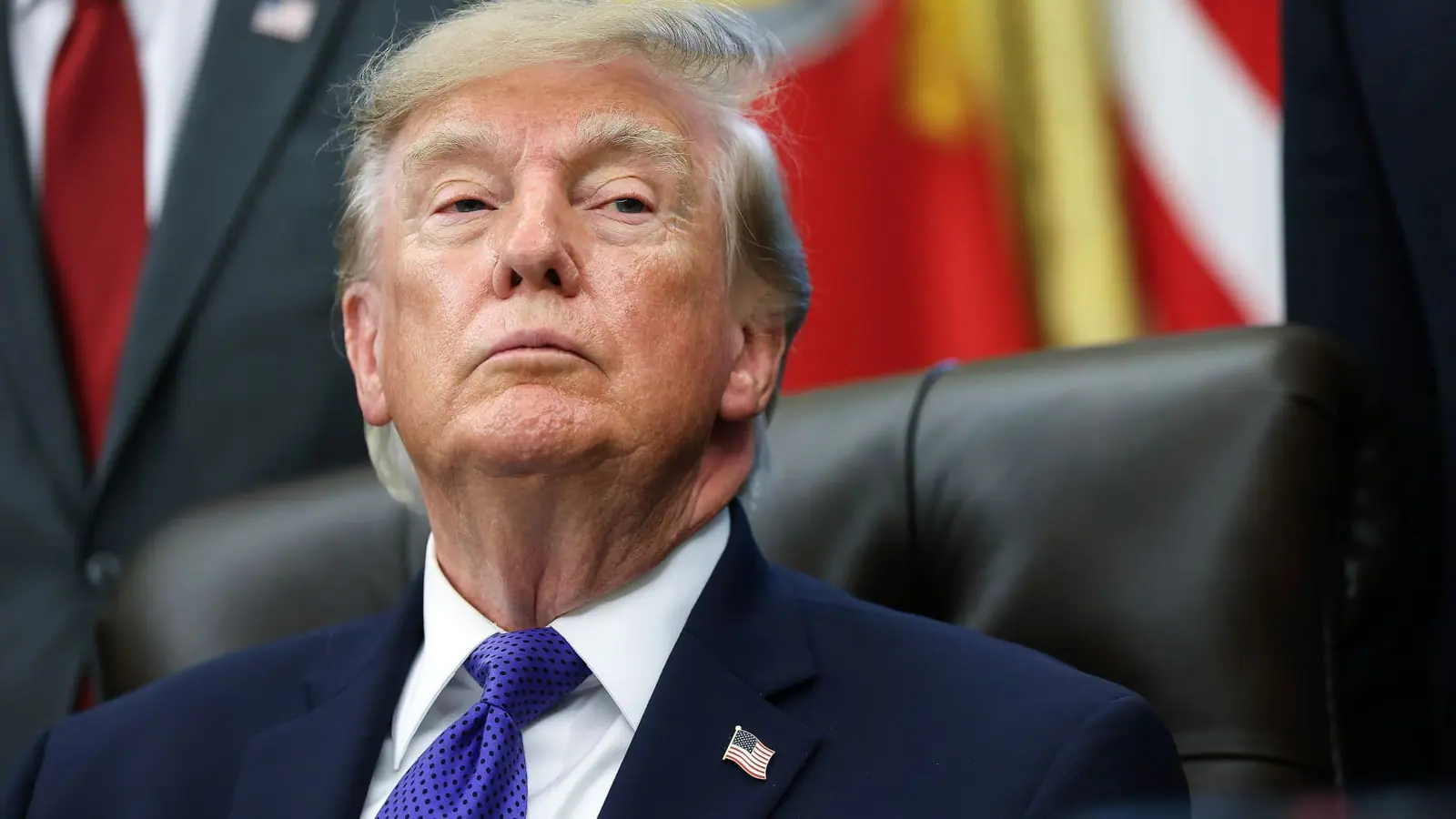
- A panel of judges in federal trade court in New York City are hearing arguments challenging President Donald Trump's "Section 301" tariffs.
- The new tariffs were imposed after the Supreme Court struck down Trump's prior global tariffs and a replacement set of duties expired.
- The lawsuits challenging the new duties contend the administration is effectively trying to reimpose the worldwide tariffs that were previously struck down.
President Donald Trump's near-global tariff policy is being challenged in federal court — again.
A panel of three judges at the U.S. Court of International Trade in Manhattan is hearing arguments Wednesday morning from a group of small businesses and Democratic-led states who say Trump's sweeping "Section 301" tariffs overstep the law.
It's the third time in less than two years that the courts have been asked to intervene against the president's attempt to impose sweeping tariffs on the vast majority of U.S. imports.
The latest tariffs impose 10% or 12.5% rates on goods from 86 countries, covering 99.4% of U.S. imports. The Trump administration said they were imposed in response to the targeted countries failing to effectively enforce bans on the trade of goods produced using forced-labor practices.
But an attorney for the challengers said at the start of Wednesday's hearing that a "constellation of factors" show the government's justification was a "pretext" in pursuit of reviving Trump's worldwide tariff regime.
"We know this was not the only reason that they did this," the attorney Pratik Shah said.
One of the judges pushed back. "So what?" she asked, probing whether the government having additional motivations for the tariffs was enough to rule against them.
Shah replied that the administration's "unprecedented" use of Section 301 — slapping tariffs of similar size on dozens of economies in "one fell swoop" after a truncated investigation — does not satisfy the statute's requirements.
Specifically, the attorney argued that the government must show that each country's trade practices are unreasonable and impose a burden on U.S. commerce. "It's the lack of the country-specific findings" that violates the statute, Shah told the panel.
The hearing began at 10 a.m. ET. The judges called a short break around 11 a.m. ET.
Trump's tariff efforts
The Trump administration started its investigations into foreign forced-labor practices in March, shortly after the president's protectionist agenda suffered a major legal setback.
The Supreme Court in February struck down the "reciprocal" tariffs that Trump had unveiled in April 2025, trashing a huge piece of his trade agenda and forcing his administration to refund more than $100 billion.
The day that ruling came down, Trump announced a worldwide 10% tariff under a different statute known as Section 122 of the Trade Act of 1974. That authority only allowed the tariffs to last for 150 days — but in that interval, the federal trade court ruled against them. An appeals court paused that ruling, allowing them to stay in effect for their duration.
Right as those tariffs expired in July, the Trump administration imposed new duties under Section 301 of the same 1974 trade law.
The move "is the most sweeping international labor rights action the United States has ever taken — that any country has ever taken," a senior Trump administration official told reporters at the time.
- Inside the China espionage case that ensnared former Fed advisor John Rogers
- AI's coming roadblock in regulation: Antitrust hawks
- Trump holds up to $1 billion in bonds tied to institutions he can affect
- Rep. James Comer expands House investigation into prediction market insider trading
The legal challenge being heard Wednesday morning contends that the administration invoked the forced-labor argument as a pretext to reimpose the worldwide tariffs that were previously struck down.
"In short, Defendants have now tried to re-create materially the same global tariff regime under three disparate statutes," the plaintiffs wrote in a court filing in August in the case, which consolidates multiple legal challenges. "But there is a reason they did not begin with Section 301 and are instead turning to it now only as a last resort."
The plaintiffs comprise a number of small businesses who say they import goods that are subject to the Section 301 tariffs, as well as a coalition of 25 states
Attorneys for the Department of Justice insist the Office of the U.S. Trade Representative fully complied with the law.
"The actions that USTR has taken at the direction of the President in this case are consistent with the text, object, and purpose of the Section 301 statute, as well as with the President's firm commitment to create a level playing field for U.S. workers, producers, and exporters by conditioning access to the U.S. market on concrete action to prohibit international trade in forced labor goods," they told the court in early September.
Trump in late July told Fox News that the 301 tariffs are "doing the same thing" as the ones that the Supreme Court struck down.
Sara Albrecht, chairman and CEO of Liberty Justice Center, the legal nonprofit that brought one of the lawsuits against the new tariffs, told CNBC at the time that Trump's remarks bolstered their argument.
Choose CNBC as your preferred source on Google and never miss a moment from the most trusted name in business news.