- Psychology and RelationshipsThe No. 1 way Americans spend their free time: It's 'always been a huge part' of our culture
- The Next DreamThe American Dream is missing a key ingredient, says expert: Without it, 'life is pretty grim'
- Psychology and RelationshipsCollege students are increasingly striving for perfection, even when it hurts
- How to Talk to People Stop saying 'let me know if you need anything,' says psychologist—how to talk to a friend who's struggling
- Psychology and RelationshipsSocial isolation can inhibit success: ‘You need to make time for people'
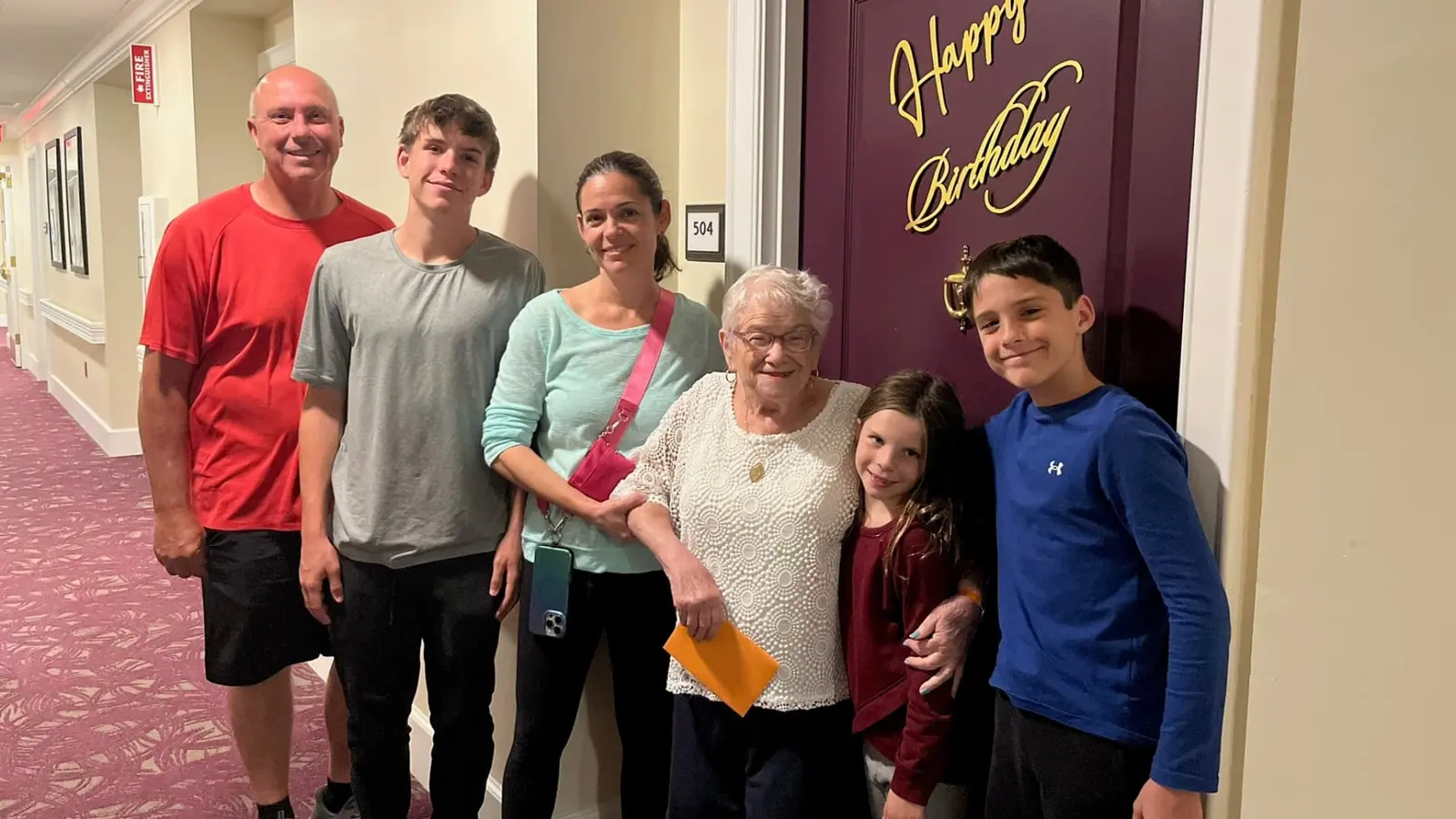
When Natalie Groeger, 100, moved into her assisted living facility 13 years ago, she was in her 80s. "I came here as a child," she jokes.
The mentally sharp, quick-witted centenarian has a few daily habits that are often linked to longevity, including a positive outlook on life and enjoying the brain health-boosting antioxidants found in her morning blueberries. But her most impactful healthy habit — helping her attain what many people would likely deem a successful life in her older age — might just be the amount of time she spends with her grandchildren and great-grandchildren.
Groeger's greatest pride and joy is her family, she says: her late husband, two children, four grandchildren and six great-grandchildren. She maintains a close relationship with her family, she says — treasuring a picture of her eldest great-grandson at his junior prom and doting on her 11-year-old great-grandson who frequently visits her assisted-living facility, The Bristal at Englewood, in Englewood, New Jersey.
Recent research shows positive impacts on grandparents who connect with their grandchildren. In a May 2026 study published by psychology researchers at Tilburg University in the Netherlands, grandparents "reported higher feelings of pride and higher feelings of love" upon spending time with their grandchildren, says Flavia Chereches, a PhD student and researcher at Tilburg University who co-wrote the study.
"I think this really speaks [to] the value of this contact for grandparents, and I think for the younger generation, [it] speaks to how important it is also for us to have contact with our grandparents," says Chereches. "It seems to bring emotional benefits for them."
From a health standpoint, emotional benefits matter beyond short-term warm and fuzzy feelings: Maintaining positive relationships in your life, or social fitness, stands out as a contributing factor in boosting physical well-being and longevity, according to researchers at Harvard University who study what leads to long, healthy lives. In other words, you could potentially help your grandparents age gracefully by making an effort to stay in touch with them.
Of course, not everyone maintains a strong connection with their parents or their children. But if you can develop connections with your family members across generations, you could contribute — at least somewhat — to helping your grandparents and parents age well. In doing so, you could increase your odds of eventually having children and grandchildren who want a positive relationship with you as you age, too.
Connecting with your grandparents can potentially help them — and yourself, down the road
Several studies show that supplementary caregiving, or providing additional support in the care of grandchildren alongside their parents, is associated with positive health outcomes like a lower risk of dementia, greater mobility and a lower risk of mortality. Notably, being the primary sole caregiver for grandchildren is associated with negative effects on grandparents' health, including a higher risk of mortality.
Supplementary caregiving grandparents have "higher levels of verbal fluency and episodic memory" than grandparents who aren't involved in the upbringing of their grandchildren, according to other research Chereches co-published this year. Caregiving grandmothers specifically experience slower cognitive decline than non-caregiving grandmothers, the study found.
"We know in general that the ingredients of healthy aging are being physically active, being engaged cognitively and then also having a good social network and having social participation ... Caregiving kind of affords for all these opportunities," Chereches says.
Of course, caregiving and regular contact with grandkids aren't the same. But Lenny and Hilda Bergman, ages 93 and 88 respectively, credit their happiness — at least partially — to their regular contact with their seven grandchildren and four great-grandchildren.
Lenny and Hilda Bergman, ages 93 and 88 respectively, say they value making family memories across multiple generations.Lenny and Hilda Bergman, The Bristal Assisted LivingThe Bergmans built those relationships over time, they note: When their grandchildren were adolescents attending summer camp, Lenny Bergman decided to write them letters daily and call them every weekend to help them "be less homesick," he says.
In the years since, their activities with their grandchildren have ranged from cross-state travel to a family game night after Hilda Bergman gifted her granddaughter a Mahjong set, she says. Even now, "if I don't hear from somebody for a week, I call, or my wife calls," Lenny Bergman says. "Every single one of them, we love very much."
Their mobility highlights another potential benefit to active grandparenting. "As we grow older, we have multiple options of keeping ourselves active," Chereches says, "and grandparenting can be one way."
CNBC Select is editorially independent and may earn a commission from affiliate partners on links.
- Should you buy a home when rates are over 7%? Here are the best lenders for finding a deal
- The 1 thing YNAB founder Jesse Mecham says can help you manage money better
- 3 reasons now is the right time to plan your 2027 summer holiday
- See if you qualify for the $167.5M Visa and Mastercard settlement and learn how to avoid out-of-network ATM fees
- Prep for the next Fed rate increase by boosting your credit score with these tools