France's High Council for Public Finance calls the government's 1.0% growth forecast for the 2027 budget "optimistic", as economists warn of a possible "slippage" and the executive still has to secure approval.
The budget battle is only just beginning, and the growth figure chosen by the government for 2027 is already prompting reservations.
ADVERTISEMENTADVERTISEMENTIn an opinion published on Thursday (source in French), the High Council for Public Finance (HCFP) judged that the draft budget and social security financing bills, presented the same day to the Council of Ministers, were based in particular on a 1.0% growth forecast it considers "optimistic".
The institution chaired by Amélie de Montchalin, currently First President of the Court of Audit and formerly minister for Public Action and Accounts under Emmanuel Macron, also highlights the "significant uncertainty" surrounding the domestic situation, notably regarding "the very adoption of the budget for 2027".
According to the first draft unveiled, the executive aims to bring the public deficit down to 5.0% of GDP in 2027, from 5.4% this year, at the cost of an "effort" totalling 54 billion euros.
"That would make it the fifth consecutive year with a deficit equal to or above 5%," notes Hadrien Camatte, senior economist for France, Belgium and the eurozone at Natixis CIB, in a commentary to Euronews.
"Risk of budget slippage"
To reach this target, the government is planning 43 billion euros in new measures, including 25 billion in spending cuts and 18 billion in additional revenue. On top of that would come 12 billion euros already decided this year.
In detail, the deficit of central government would widen to 5.0% of GDP in 2027, from 4.8% in 2026, mainly "under the impact of higher debt-servicing costs (+10.3 billion euros), defence spending (+6.5 billion euros) and the contribution to the EU budget (+2.8 billion euros)," observes Hadrien Camatte.
Most of the measures would focus on the social security system, the expert continues, "with a target surplus of 0.2% of GDP, compared with a deficit of 0.1% in 2026". This would notably involve a partial freeze on pensions, expected to generate around 4 billion euros in savings, and on family benefits, for 500 million euros, according to the government.
As for the deficit of local authorities, it "would improve slightly", the economist says, narrowing to 0.1% of GDP from 0.2% in 2026.
On the revenue side, the plan provides for 17.2 billion euros in new compulsory levies, notably through an overhaul of cuts to social contributions (6.6 billion euros), higher local taxes and shaving down a tax allowance currently enjoyed by retirees.
This trajectory rests on several assumptions judged "optimistic", Hadrien Camatte recalls. The government is banking on GDP growth of 1% in 2027, compared with 0.8% for Natixis, the corporate and investment bank of the BPCE group (Caisses d'Épargne and Banques Populaires). The economist also points to "an average rate of 4.3% for 10-year government bonds, a level already far exceeded in recent days, at 4.9%."
"Weaker economic growth, the high sensitivity of debt-servicing costs to interest rates – a 100 basis-point increase would mean an additional 3.4 billion euros in 2027 – and the insufficiently documented nature of certain measures all create a risk of budget slippage in 2027," warns the Natixis expert.
"Tomorrow the overseas territories, universities, the health sector"
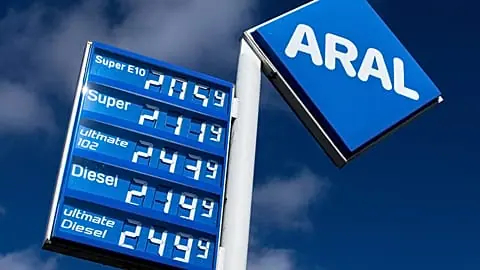
It is "very difficult" to predict what growth will be in 2027, says François Facchini, professor of economics at the University of Paris 1 Panthéon-Sorbonne. He points in particular to the uncertainty surrounding the outcome of the war in the Middle East, which is driving the surge in fuel prices in France, but also stresses political instability.
The new government, which will take office after the 2027 presidential election, "will probably pass an amending finance bill that will affect growth", he believes.
According to the researcher, it is also "likely" that the election year will be marked by strikes and social movements, with each group seeking to "weigh on candidates' promises". He mentions civil servants and students, but also, potentially, "tomorrow the overseas territories, universities, the health sector, all the sectors that are highly dependent on political choices".
"It is likely, moreover, that food prices will rise after the heatwaves and drought of 2026," he adds.
François Facchini considers that, between geopolitical and political uncertainty, likely inflationary pressures and the risk of a debt crisis, "the High Council is right: 1% [growth] is optimistic". He does, however, qualify this: "That is generally the rule for budget scenarios."
A parliamentary wall
But the current government must first get this budget passed, in a National Assembly that is becoming ever more fragmented as the presidential election approaches.
Hadrien Camatte identifies two scenarios for Prime Minister Sébastien Lecornu: resorting to article 49.3, which allows adoption without a vote but automatically triggers no-confidence motions, or using ordinances.
The first option would, however, mean reducing the planned savings effort in the budget and would require "abstention either by the Socialist Party – an unlikely prospect in light of its recent statements – or by the National Rally, whose stated positions are more open to this possibility but with red lines that could shift, particularly on pensions", according to the Natixis CIB expert.
As for ordinances, they would give France a budget "matching the version adopted by the government" in the event of deadlock at the end of the 70 days of debate in the National Assembly.
France would then be entering uncharted territory under the Fifth Republic.
Go to accessibility shortcuts