Citizen environmentalists create online platform that flags spills in real time and highlights repeatedly polluted spots
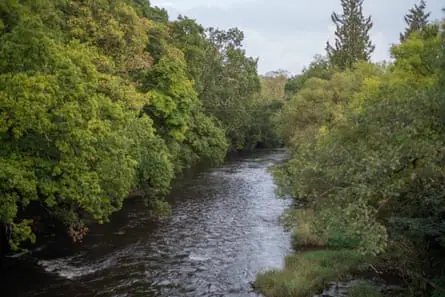
The easy thing for the people who live on the banks of the River Dart in Devon might have been to grumble and groan about the sewage spills that blight their beloved waterway.
Instead, citizen environmentalists in the area have created a unique online platform that flags up spills in real time, highlights spots that are repeatedly polluted, and sets out where improvement work is planned – and where it isn’t.
Friends of the Dart (FOD), an independent, not-for-profit organisation, says its River Hub is the first platform to pull together, overflow by overflow, such a sweep of granular detail about how one British river is being polluted.
It argues it should be up to water companies or the Environment Agency to provide this sort of information in a user-friendly way – but claims they don’t – so it has done the digging and provided what it believes is a vital service.
Rob Worthington, one of the designers of the platform, said there was a lot of justified anger about sewage. “We built River Hub to help channel that constructively: to show where the problems are and why, so communities can help decide what gets fixed first.”
The launch comes in the week that South West Water (SWW) was fined almost £800m for sewage spills, including in Cornwall’s River Camel, which like the Dart rises on the moors and plunges down to cherished tourist hotspots.
It also coincides with the prime minister, Andy Burnham, telling the Labour conference that water was a symbol of what had gone wrong with Britain and promising to reverse Margaret Thatcher’s “ideological ban” on the public ownership of water companies.
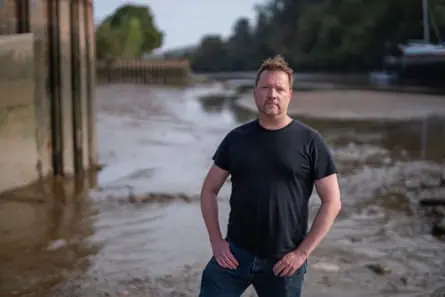
Worthington told the Guardian about River Hub while sitting on a bench at Steamer Quay on the Dart in the market town of Totnes. This is a designated bathing water spot – but Worthington says he would not swim there, knowing about what goes on a little farther upstream.
The hub has a page that people can check to find out where spills are happening right now and where they stopped in the last 12 hours. There is also information about “dry spills” – discharges when there was no or little rain.
Worthington acknowledged other independent sewage maps, such as Top of the Poops, also do this job. “But River Hub takes this a lot further,” he said.
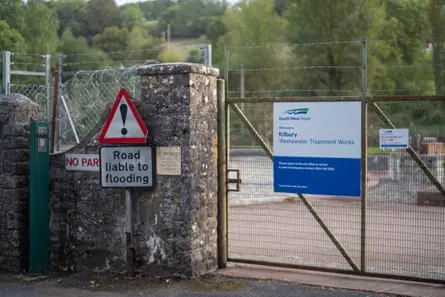
A section called Why it keeps happening? probes issues such as whether sewage treatment works have the capacity to deal with the sewage produced by the size of the population it serves. The hub concludes that not all do.
In Who is fixing it?, the hub spells out works that are taking place or planned, with the dates they are due to be completed, and also draws attention to problem spots where there is no planned remedial work.
A lengthy How we know? section sets out the hub’s methodology – for example, where the rainfall data it uses to classify each dry spill comes from.
Much of the data used, such as SWW spill information and permits, is in the public domain but some of it can be difficult to spot, and FOD had to extract some through freedom of information requests.
Worthington has worked on the hub alongside his day job as a business analyst and accepted that the picture the platform provided was incomplete and there could be inaccuracies. He and the rest of the team are happy to be corrected when they have got something wrong.
They are offering the model for free to any groups who want to do the same thing on their local river. Organisations FOD has links with have already shown an interest.
People who live in and around Totnes tell tales of falling ill after swimming in the Dart and its tributaries.
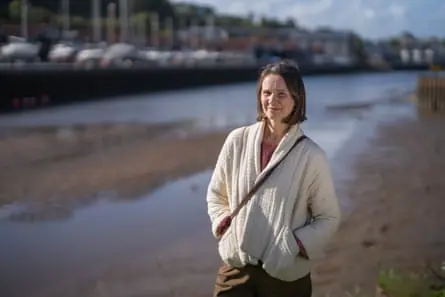
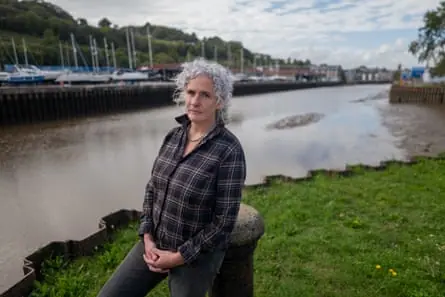
Emma Roberts, an interfaith minister and theatre director, said she ended up in hospital with an E coli infection after a dip. “It’s shocking really. The river is alive and we should all be protecting it, not putting poo into it.”
She is not a member of FOD but thinks the hub will help. “The more information people have, the more pressure that we can put on.” A quick check of the hub reveals that place where she got ill was close to a treatment work that FOD believes does not have sufficient capacity.
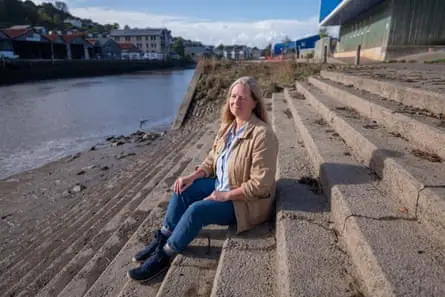
Olivia Doherty, who works in children’s rights and participation, said her son Seamus, 17, recently suffered stomach problems after swimming in the Dart.
She said the United Nations had made it clear that young people had a right to safe spaces. “For me that includes our rivers. Getting into the river is a big thing for children here. It’s so wrong if they miss out because it’s too dirty.”
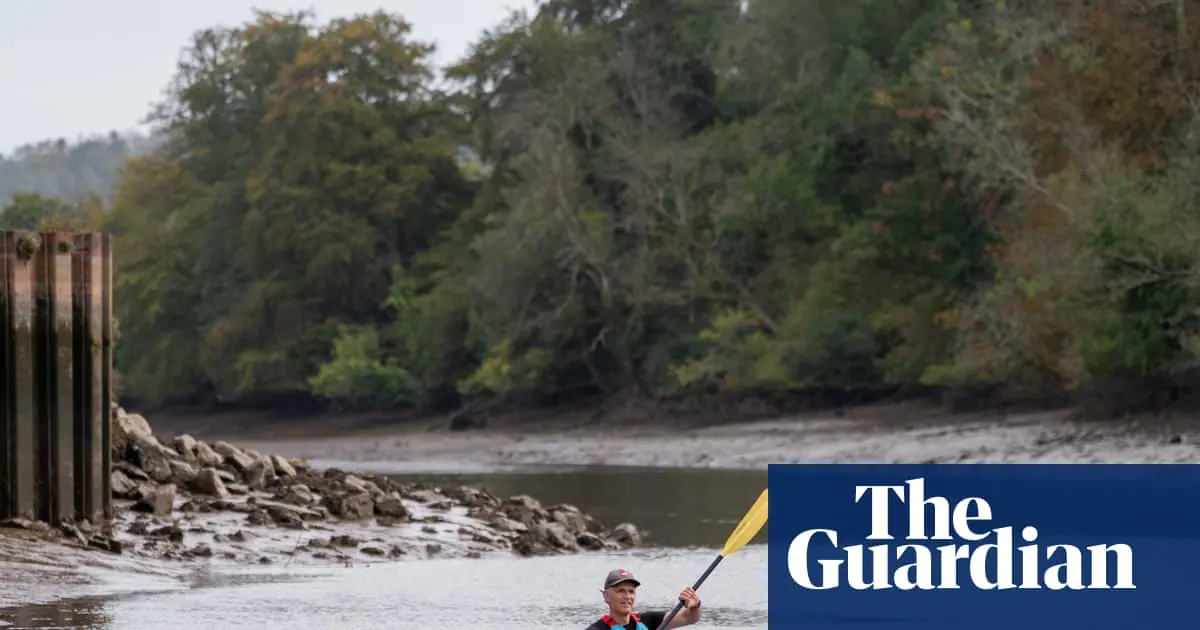
Ben Brierley, who runs kayak tours and courses on the Dart, said the hub could help him work out where and when it was safe for his clients to be submerged in the river.
Brierley expressed frustration that water companies have been given a deadline of 2035 by the UK government to reduce sewage flowing into bathing water and areas of ecological importance, and 2050 for other places. “It’s bonkers that we’ll be putting sewage into our rivers until 2050,” he said.
SWW said it welcomed people taking an interest in rivers’ health. A spokesperson said its WaterFit Live site provided customers with a wide range of information, including near real-time storm overflow data, bathing water information and details about investment programmes.
The spokesperson said: “We are committed to making information accessible and continue to develop the platform to help customers better understand our work to improve river health.”
An Environment Agency spokesperson said it was taking action to tackle pollution on the Dart and welcomed the initiative from local communities to use data to raise standards.
The agency said: “100% of storm overflows are now monitored and the data is publicly available. As part of the government’s storm overflows reduction plan, a record £10.2bn is also being invested over the next five years to improve more than 2,500 storm overflows in England. We will continue to hold water companies to account where performance falls short.”
Hannah Pearson, a healer, coach and a founding director of FOD, said the hub built on other initiatives such as water monitoring and installing river “guardians” in parishes along the Dart.
Pearson was keen to stress that they met dedicated professionals who wanted to do the right thing within organisations such as SWW and the Environment Agency. “But they are working in a dysfunctional system,” she said.
She said the idea of the hub and other FOD projects was to find a way to bring about change, not to moan. “We’re not saying: ‘This is terrible.’ We’re taking responsibility and saying: ‘What can we do?’”
Explore more on these topicsShareReuse this content