
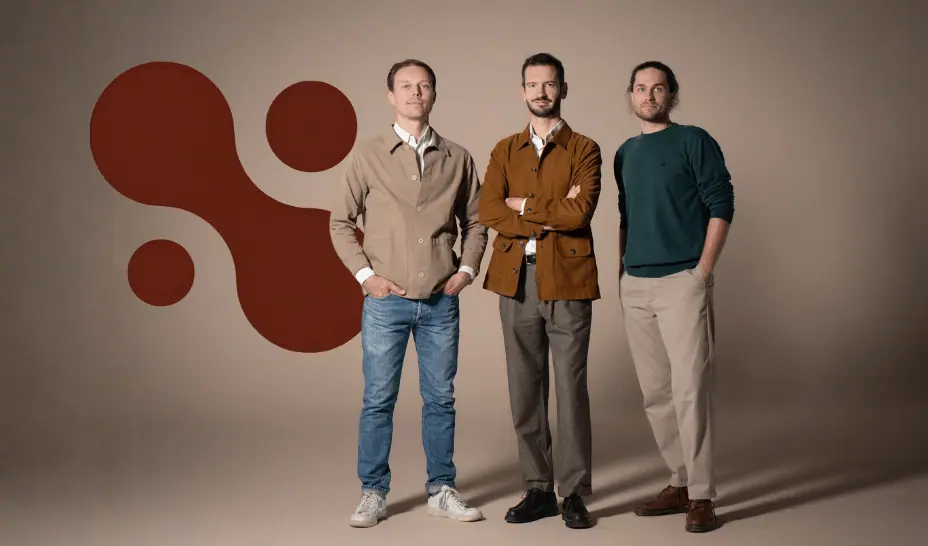
French FoodTech startup Edonia, a B2B ingredient supplier specialised in ready-to-eat-protein ingredients, has raised €15 million to expand the commercial use of its microalgae-based ingredients.
The round was led by SWEN Blue Ocean 2, Asterion Ventures, EIT Food, and Bpifrance. This follows a previous €2 million round in 2024 – as covered by EU-Startups.
“The goal now is simple: make enough of it, and bring it to food manufacturers and foodservice operators across Europe, Japan and the US,” said CEO Hugo Valentin in a public statement.
Edonia’s raise comes amid continued investment in European B2B protein and food-ingredient technologies in 2026.
In France, Lyon-based Verley raised €32 million to expand its precision-fermented whey-protein production and Paris-based Standing Ovation secured €30 million for precision-fermented casein, while elsewhere Planetary raised approximately €23 million for fermentation-based ingredient production, MAASH secured €12.15 million to industrialise mycoprotein, Vivici received €12.5 million to scale animal-free dairy proteins, and Pacifico Biolabs raised €7 million for mycelium-based protein.
Alongside smaller rounds for Aardaia, Ferm Labs and Millow, these 2026 announcements represent approximately €127 million in funding, or around €142 million including Edonia’s new round.
Marine Reygrobellet, Partner at Asterion Ventures, adds: “What struck us from our very first meeting with Hugo and the Edonia team was how fully developed the product already was, how it ticked every box: taste, natural ingredients, scalability for industrial production, and market positioning. Many alternative protein projects we encountered back then only had part of the equation right.
“Three years later, that initial assessment has been confirmed: the team built a solid commercial pipeline even before the factory was up and running, a fact that speaks volumes about both the product’s quality and the team’s vision and sales capabilities. We are delighted to continue supporting Edonia in this next phase, alongside SWEN.”
Founded in 2023, Edonia develops ready-to-eat protein ingredients made from microalgae for foodservice operators and food manufacturers, using a patented process developed with AgroParisTech Innovation.
The startup has already secured more than €30 million in pre-contracted revenue from industrial partners, according to the company, while its ingredients are being used in both catering and ready-meal applications.
At the centre of Edonia’s technology is Edonization, a patented process that transforms spirulina into a whole-food protein ingredient. Its first product, Edo, is made by cooking spirulina in oil at a controlled temperature, creating a tender grain designed to address one of the longstanding barriers to wider spirulina adoption: its distinctive taste.
Edo contains 27g of protein per 100g and is also rich in iron. Edonia says the processing method gives the ingredient a tender and fluffy texture similar to minced meat without relying on the long lists of additives commonly found in some alternative protein products.
The company also claims Edo can have a carbon footprint up to 27 times lower than beef.
Spirulina itself has long attracted interest because of its nutritional profile and relatively low environmental footprint, but its taste and other organoleptic characteristics have limited its use in everyday food products. Edonia is positioning its technology as a way for manufacturers and foodservice companies to use spirulina as an ingredient in dishes rather than mainly as a dietary supplement.
Julie Peyrache, Investment Director at SWEN Blue Ocean 2, says: “There is an increasing demand for nutritious, tasty, inexpensive, good-for-the-planet foods as people become more aware of the climate problems posed by meat consumption and the health problems posed by ultra-processing. Today, options that meet all those criteria are limited, and consumers are stuck needing to compromise on either the environment, health, or taste, depending on what they decide to choose as a protein source.
“That is why we are delighted to support Edonia, whose innovative microalgae-based ingredients meet all of these demands and could drastically improve the health and sustainability of our food supply.”
The startup has already moved beyond pilot projects. In 2025, Edonia launched Edo with catering group Newrest, where the ingredient is now used to prepare thousands of meals each month across collective catering sites in France.
In the retail market, Dietbon has introduced a range of ready meals using Edo. According to Edonia, 40% of customers presented with the recipes switched from the meat version to the Edo alternative, while satisfaction scores remained comparable with the original products.