
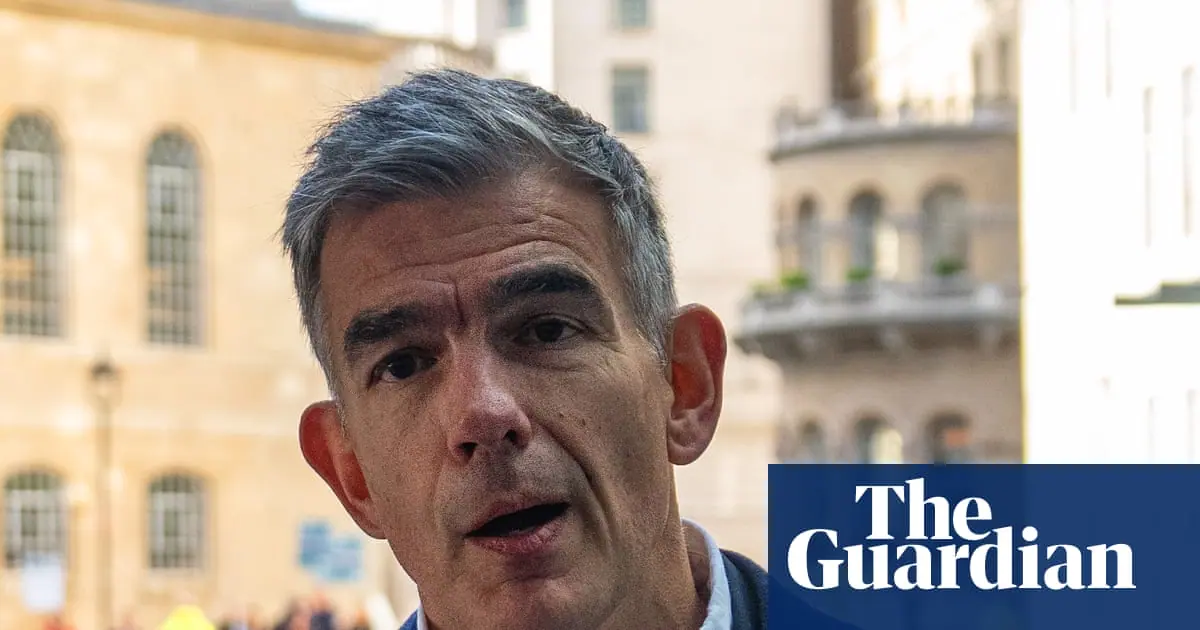
Matt Brittin fields questions on whether ‘bloated’ senior ranks are being spared and lays out iPlayer overhaul
Matt Brittin, the BBC’s director general, has faced a barrage of accusations that frontline staff are being laid off instead of those from the “very bloated” senior ranks.
In an all-staff call, Brittin conceded the BBC was “going to be smaller” but said it could still have a bigger impact. He said it needed to be “a bit more Elvis – a little less conversation, a little more action”.
Brittin also laid out a potential overhaul of the iPlayer platform that included AI-assisted recommendations. He said he wanted the public to think “iPlayer and chill”.
However, as the BBC continues to roll out details of a plan to cut up to 2,000 jobs, many of the questions raised by staff alleged that executives were being spared at the expense of junior staff.
One staff member asked Brittin how the changes were affecting senior leadership, stating that the BBC was “an incredibly top-heavy organisation”. They added: “All the ‘doers’ are getting cut.”
Another referenced a Guardian article this week about low morale at the BBC. “How do the executive team propose to tackle this during the financial crisis we’re all working through?” they asked.
There were also criticisms about the decision to reverse a promise of jobs made to a cohort of BBC apprentices who are now facing redundancy.
“I don’t want to hear about savings when bosses get huge salaries,” said another questioner.
Brittin disputed that there was an issue with morale. “I don’t dismiss the impact of uncertainty on everybody, but we also have a really powerful, motivated staff and I don’t think that narrative applies to everyone.
“I don’t underestimate how it does affect people, but I don’t think it’s quite fair to say that’s the morale. I think we’ve got people who really are here for the purpose and mission of the BBC, who are energetic and proud to work here.”
There were so many similar questions that Anna Foster, the Radio 4 Today programme presenter who was hosting the staff meeting, said: “People are feeling that perhaps disproportionately … some of these cuts are landing on people who are more junior, and less so on people in managerial roles. So can you talk us through that?”
Rhodri Talfan Davies, the deputy director general, said senior roles would also be affected by the staffing cuts. “We are expecting changes at all levels of the organisation,” he said. “So there isn’t a cohort of senior leaders that are excluded from this process. I think when we look back at the changes that have been introduced, you’ll probably see that it’s at the most senior levels that some of the steeper reductions have happened.”
BBC employees have reported feeling ground down as the plans to cut staff have been made gradually since the summer, with more announcements to come in the next few days. Cuts have been announced across news, local content, the media tech division and beyond.
The Guardian understands the linear television channels BBC Three and BBC Scotland will go to help ease the BBC’s financial peril.
Brittin used the meeting to present possible new iPlayer features. He has focused a lot of his attention on overhauling the platform, which he believes has become outdated despite having been pioneering when it launched more than 20 years ago.
During the meeting, an AI feature known as “Iggy” was presented that can deliver recommended content. A version of iPlayer was shown that features BBC YouTube content, including the World Service, which has more than 2 million YouTube subscribers.
Brittin said he wanted to ensure the BBC was prominent on other platforms such as YouTube, Netflix and Amazon Prime.
The government and the BBC are looking at plans that would lead to anyone who watches any streaming service being told to pay the BBC’s licence fee. It is designed to arrest an alarming fall in the number of households paying the fee.
Explore more on these topicsShareReuse this content