
Rivercell, a Paris-based BioTech and AI company building proprietary cell-response data infrastructure and a world model that predicts how human cells respond to treatment, has launched today out of stealth with a €22 million ($25 million) Seed round.
The round was led by HV, with participation from HCVC, Alven and Bpifrance Digital Venture. The investment will fund the scale-up of Rivercell’s proprietary data generation platform, the expansion of its wet lab in Paris (a lab working with chemicals and biological samples), and the launch of its AI Virtual Cell programme.
“A world model of the cell is the opportunity of the century in medicine. The missing piece is data: how cells change over time and under treatment, seen through multiple lenses and at multiple layers, captured at scale. Building that data engine in Europe is strategic, not only for Rivercell but for the continent’s place in AI and biology,” says Yann Fleureau, co-founder and CEO of Rivercell.
Rivercell’s Seed round adds to an active year for European startups applying AI, proprietary biological data and automated experimentation to drug discovery and life-sciences R&D.
In 2026, EU-Startups has reported approximately €100.7 million across closely related financings, including Lausanne-based Adaptyv Bio’s €34.35 million Series A for an automated AI-native wet lab, London-based Helical’s €8.4 million Seed round for its virtual AI lab, and Antwerp-based Sightera Biosciences’ €3 million pre-Seed financing for an AI drug-discovery platform trained on patient-derived biological data.
France is also represented directly: Paris-based Generare raised €20 million to scale its proprietary molecular-data and drug-discovery platform, while WhiteLab Genomics secured €23.2 million to expand its AI-driven genomic-medicine platform.
Activity in this sector points to continued investment in the combination of biological data generation, computational models and experimental validation for pharmaceutical R&D.
“AI is already rewriting how we understand the chemistry of life, from protein structure to molecular design. The next frontier is predicting how cells behave, and that requires a full-stack approach that combines a novel platform, automated wet labs, and world models. Yann and Eric bring exactly this combination of expertise, and with its footing in both Paris’s AI ecosystem and Basel’s pharma cluster, Rivercell is uniquely positioned to lead it,” adds Maxi Pethö-Schramm, Principal at HV.
Founded in 2026, Rivercell is building a data engine and an AI model that predict how living cells respond to drugs and genetic changes. Its proprietary in-house platform produces interventional, time-resolved, multimodal single-cell data at scale, which trains Rivercell’s own AI world model of the cell.
Rivercell builds a proprietary platform that generates massive, high-quality pre-training datasets to train its “AI virtual cell” (AIVC) model. AIVC is a world model designed to predict how human cells respond to a drug or genetic change in silico, reducing the overall need for physical wet-lab experiments.
The company’s long-term goal is to fundamentally change drug discovery by accelerating and redesigning it. Developing a single drug can take years and be costly, with the industry reportedly investing nearly €268 billion ($300 billion) in R&D each year.
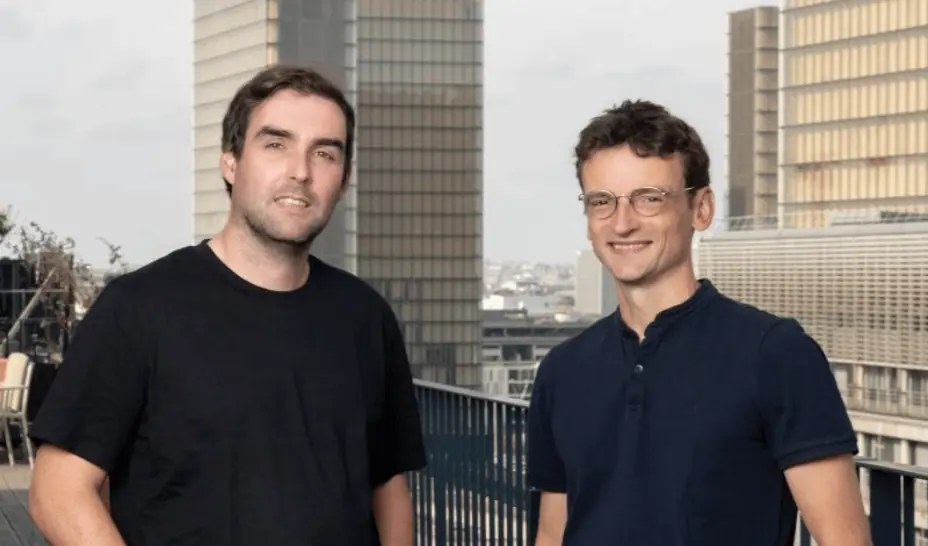
Engineer and serial entrepreneur Yann Fleureau previously co-founded and led AI diagnostics company Cardiologs, raising several funding rounds before its nine-figure acquisition by Philips in 2021. Data scientist Eric Durand was director of oncology data science at Novartis and served as Chief Data Science Officer at Owkin before co-founding bio foundation model company Bioptimus, which raised €67 million ($76 million).
“AI virtual cells will transform how we understand and engineer biology. Rivercell’s ambition to unite large-scale perturbation experiments with AI simulation is why I’m excited to join its Scientific Advisory Board,” says Dr. Charlotte Bunne, Assistant Professor, Artificial Intelligence in Molecular Medicine at EPFL.