The government lifted its full-year growth projection to 1.3%, up from its April forecast of just 0.5%, as the German economy proved more resilient than expected.
Foreign trade is expected to boost Europe's biggest economy this year.
ADVERTISEMENTADVERTISEMENTStronger exports helped prompt the German government to more than double its growth forecast for this year on Thursday, as it said the economy had withstood the energy shock caused by the Iran war and was benefiting from the global AI boom.
The improved outlook could take some pressure off Chancellor Friedrich Merz, who is facing criticism that he has not done enough to kickstart the long-stagnant economy.
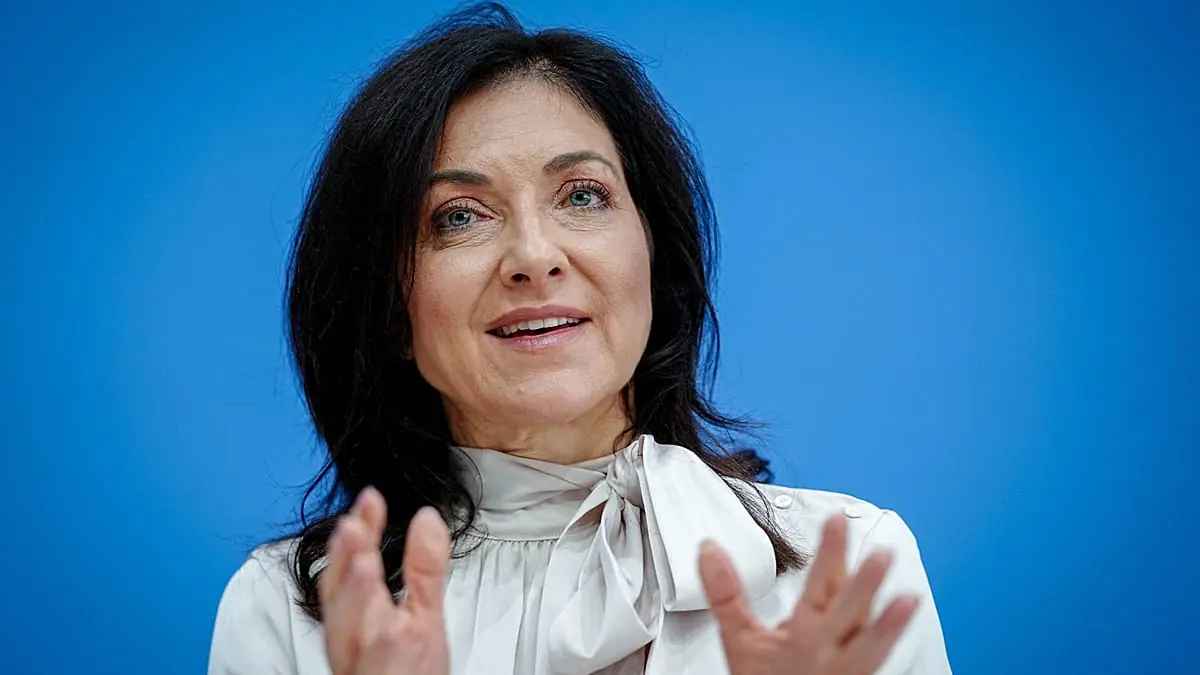
"The German economy proved more robust than projected in the spring," Economy Minister Katherina Reiche said as she announced the new forecasts.
"Despite geopolitical uncertainties, despite a global energy price shock, despite the closure of the Strait of Hormuz and despite tariffs, the economy was able to embark on a path of recovery," she told a press conference.
Germany's economy has faced years of stagnation amid weak export demand, high energy costs, US tariffs and Chinese competition, though recent indicators suggest it is starting to recover.
Reiche said foreign importers had rushed to stockpile German-made goods such as steel, fertiliser and aluminium in the months following the outbreak of the Iran war, supporting growth.
The government expects exports to grow by 3.7% this year, reversing a 0.9% decline in 2025.
German suppliers were also benefiting from the "global trend of investment in artificial intelligence", she said.
The boom in data centre construction has led to a surge in orders for German-made equipment such as lasers, semiconductor machinery and cooling systems, she said.
The economy ministry also raised its forecast for 2027 to 1.1%, from 0.9% previously, and said increased public spending on defence and infrastructure would support the economy in the coming years. Growth is expected to slow to 0.6% in 2028.
But it warned that household consumption would remain subdued as higher energy costs push up consumer prices. German inflation hit 3.3% in September, the highest level in nearly three years.
The ministry expects inflation to average 2.7% this year and rise to 3.0% in 2027, while household spending is forecast to grow by just 0.3% and 0.5%, respectively, after adjusting for inflation.
As in other countries, Germany has seen fuel costs surge amid the Iran war, prompting the government last week to announce a temporary fuel tax cut to provide some relief for drivers.
The official growth forecast for 2026 is in line with recent estimates by Germany's leading economic research institutes.
Go to accessibility shortcuts