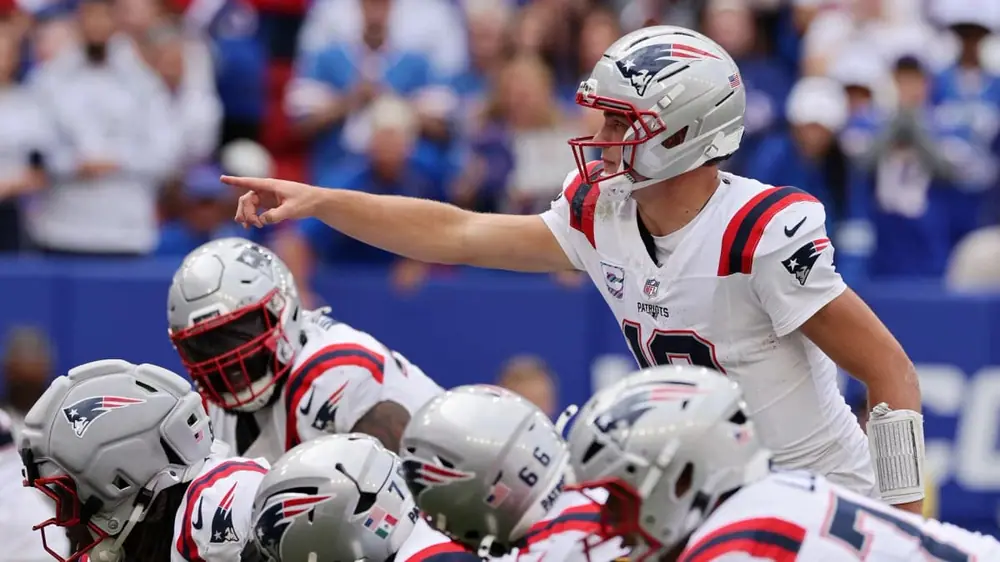
- The NFL has piled into the argument against federal oversight of prediction markets such as Kalshi and Polymarket, filing a brief with the U.S. Supreme Court as the case potentially heads toward a definitive ruling.
- Other briefs also landed with the Supreme Court this week, including those from ex-regulator Gary Gensler and former Senator Chris Dodd, the sponsor of the bill on which the Commodity Futures Trading Commission has anchored its argument that it should have the last say as the prediction markets watchdog.
The National Football League has joined with tribes, state governments, former regulator Gary Gensler and even one of the lawmakers who penned the law prediction markets are relying on — all of them asking the U.S. Supreme Court to let local gambling regulators police the companies.
The NFL said in its Thursday filing that the league had shared concerns with the U.S. Commodity Futures Trading Commission, which claims a role as the sole regulator of these platforms, about how they conduct sports wagers. But the NFL told the high court that its requests haven't been answered, leaving betting practices that "pose real challenges to game integrity and consumer protection." The NFL was among many filing legal briefs this week in the case supporting the states' argument that they have the right to impose local gambling laws on the emerging prediction markets.
Kalshi, for its part, is saying it has attempted to work through the issue with the NFL several times with no luck.
“We have consistently tried to engage proactively and constructively with the NFL to collaborate on market integrity with no response,” Kalshi spokesperson Elisabeth Diana said in a statement.
It also pointed out that it has secured multiple partnerships with other professional sports leagues — including Major League Baseball and the National Hockey League — and that the NFL is standing apart. “All but the NFL have been willing to share data and collaborate to protect game integrity,” Diana said.
The legal authorities underpinning sports wagers on prediction markets has come to a crossroads as one federal court has backed Kalshi's argument that the CFTC should be its sole regulator and two others have sided with the states' position that sport betting belongs under the authority of their own gambling laws and regulators. The division in those rulings leaves an uncertain and hazardous legal terrain, the NFL suggested in its legal filing — known as an amicus brief, in which an involved party shares its opinion in a case.
While New Jersey has asked the Supreme Court to take the case and make a definitive ruling, the CFTC continues to insist that the exchanges it regulates, including Kalshi and Polymarket, are under its exclusive authority that preempts state powers.
Besides the NFL, other voices have joined in opposition to the position of the CFTC and Kalshi, including a former senator who was one of the authors of the law from which the relevant regulations spring — Senator Chris Dodd of the Dodd-Frank Act. The former Democratic senator called himself "uniquely qualified" on this topic and noted that his bill "did not set out to authorize nationwide sports betting through derivatives markets or displace decades of state and tribal primacy over gaming regulation."
Other prediction markets critics included the guy who ran the CFTC when Dodd-Frank was implemented, Gensler. The ex-regulator (who also ran afoul of the crypto industry when he later led the Securities and Exchange Commission) contradicted the CFTC's current chairman, Mike Selig, to argue there was never an intention to override state gambling laws.
"Congress did not transfer jurisdiction over sports betting from the states to the CFTC," Gensler wrote in his brief. "When Congress amended the [Commodity Exchange Act] through Dodd-Frank, it was addressing the causes of the recent financial crisis, not undoing federal policy against sports betting and displacing traditional state and tribal regulation."
The NFL's brief insisted that the CFTC isn't currently holding Kalshi and other companies to standards as tough as the states. The federally regulated firms "are not subject to the same rigorous regulatory constructs and oversight provided by state gaming authorities." Since the onset of state-regulated betting on football, the league said its top priority "has been preserving the integrity of its games and protecting its fans as legal sports betting spread state by state"
The league argues that the CFTC oversight is failing on several key points: It's allowing wagering that can be manipulated by the choices of single players; it's letting people younger than 21 bet; and the federal agency doesn't have enough staff to police the markets as well as the states.
The federal agency countered that view on Thursday, saying, “Since day 1, the CFTC has engaged with the NFL regarding the agency’s rulemaking agenda and policy priorities.” The CFTC’s statement called it “unfortunate” that the NFL chose not to secure an arrangement with the agency “which would’ve provided the league the ability to better discuss, cooperate, and exchange information with us to promote the integrity and resilience of prediction markets.”
The NFL insisted, however, that the CFTC has "stuck to a more laissez-faire approach" than the states. So the league asked the Supreme Court to take this up quickly.
"Billions of dollars will be bet on NFL games through prediction markets each season, and any delay from the court will result in increasing consumer harm and risk to game integrity," the NFL said in its brief.