
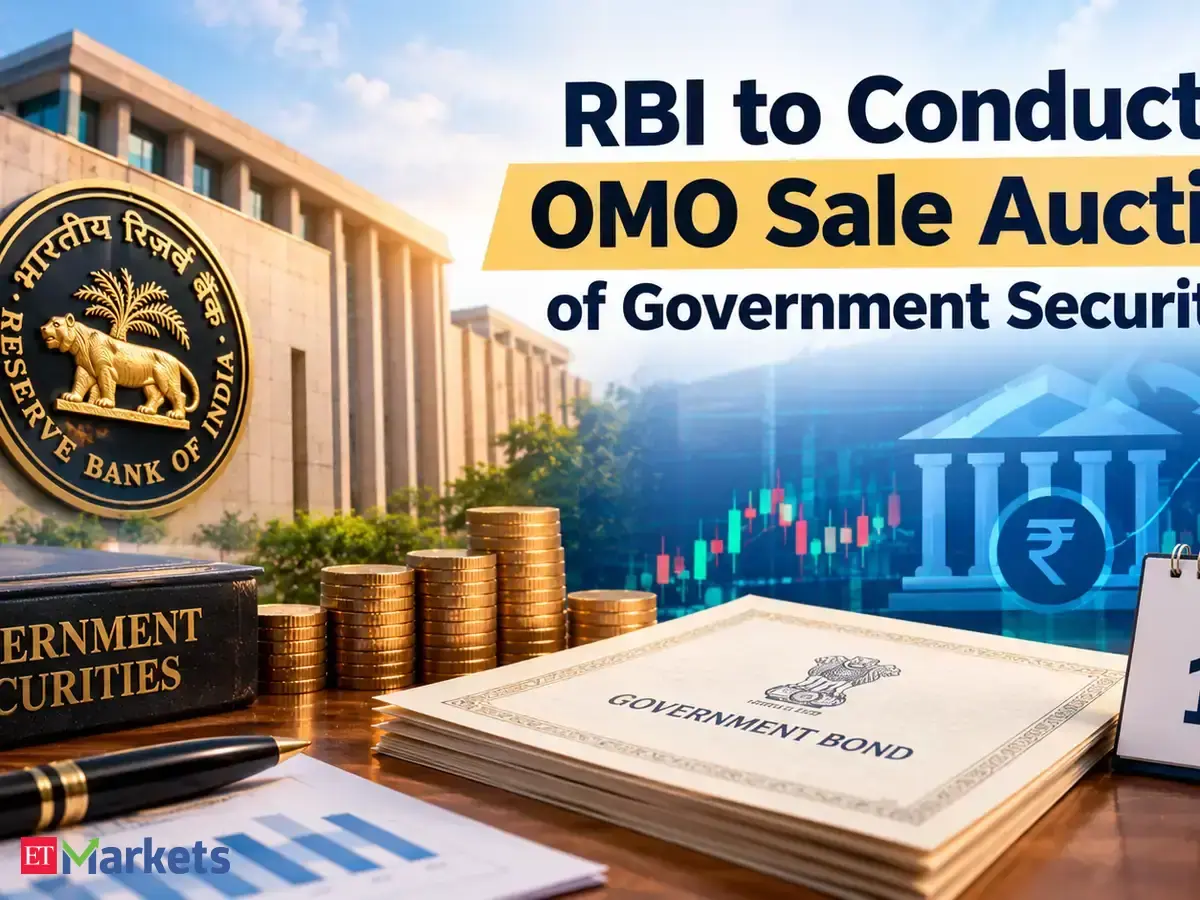
The central bank has offered six government securities for the auction, with maturities ranging from March 2030 to April 2034. These include 7.88 per cent government security (GS) 2030, 6.10 per cent GS 2031, 7.95 per cent GS 2032, 7.26 per cent GS 2033, 7.18 per cent GS 2033, and 7.10 per cent GS 2034, according to a notification.
The RBI has not specified individual sale amounts for the six securities and retains the discretion to decide the quantum of each security to be sold.
Bonds Corner Powered By RBI to sell $2.6 bln of bonds, tighten bank reserve need to squeeze cash
The Reserve Bank of India is set to initiate bond sales to better regulate liquidity within the banking system. As of October 16, banks will face a stricter cash reserve ratio requirement, further enhancing liquidity oversight. This follows the RBI's first key policy rate hike in almost four years, hinting at possible future increases.
India bonds extend weekly slide; struggle to shake off RBI hike, hawkish stance shiftReissued bonds account for nearly 66% of state borrowings in H1 FY27: ReportSurging bond yields likely to slash banks' treasury incomeIndia bonds hemmed in as market digests higher rates Browse all Bonds News withIt may also accept bids for less than the notified aggregate amount and adjust the total sale marginally to account for rounding-off. The central bank reserves the right to accept or reject any or all bids, either wholly or partially, without assigning any reason.
OMO sales involve the sale of government securities by the central bank, which withdraws liquidity from the banking system in exchange for the securities.
Currently, liquidity in the banking system is estimated to be in surplus of around Rs 3.88 lakh crore as of October 8.
Since two months, the RBI has been doing various VRRR auctions to absorb excess surplus liquidity from the banking system and align the overnight money market rates to the repo rate.
The banking system was flushed with liquidity due to heavy mobilisation of FCNR (B) deposits by banks, as the mobilisation brought foreign currency into the system, while subsequent swaps with the RBI provided rupee liquidity to banks.
Besides FCNR(B) inflows, month-end government expenditure, including payments toward salaries and pensions, also added to liquidity in the banking system.
On October 6, RBI Governor Sanjay Malhotra, during the post-monetary policy press conference, said the huge banking system liquidity is to be absorbed within the current financial year through various means such as currency leakage, the Reserve Bank's liquidity operations, and banks' reserve requirements.
Add as a Reliable and Trusted News Source Add Now!
(You can now subscribe to our ETMarkets WhatsApp channel)