The space industry, currently valued at €600 billion, is expected to grow by 10% a year, according to European Space Agency (ESA) director general Josef Aschbacher. He spoke to the Big Question about how Europe can benefit from this booming industry.
The European Space Agency received record budget commitments of more than €22 billion from member states at its ministerial council meeting in 2025, a 32% increase on 2022.
ADVERTISEMENTADVERTISEMENTMember states also gave ESA a historic mandate to use space technology for non-aggressive security and defence, including technologies to monitor external borders.
With that backing, ESA director general Josef Aschbacher wants Europe to take its next big step: developing the ability to launch its own astronauts into space.
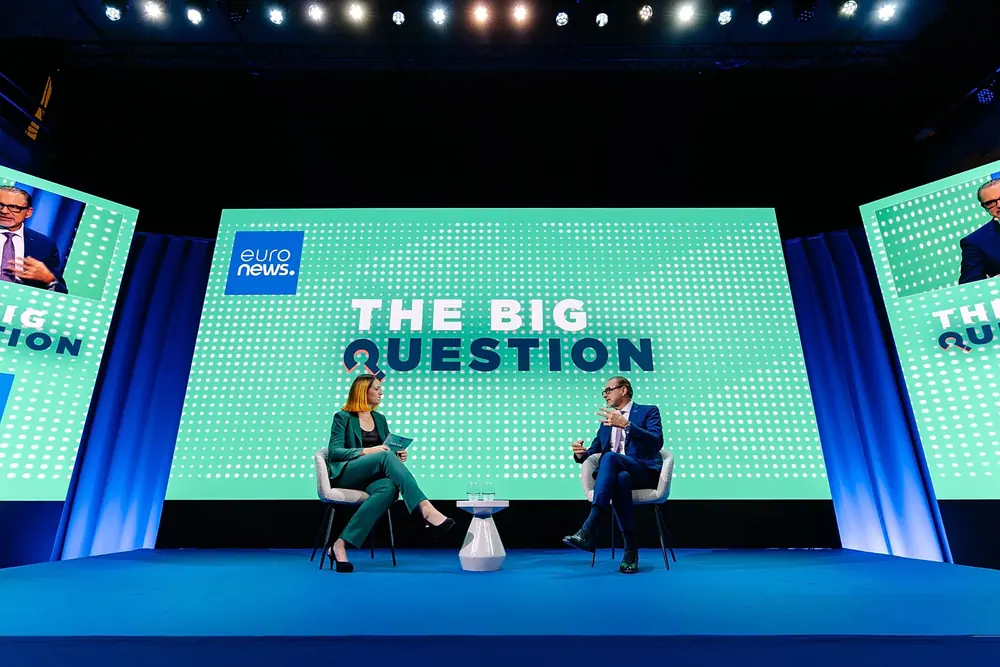
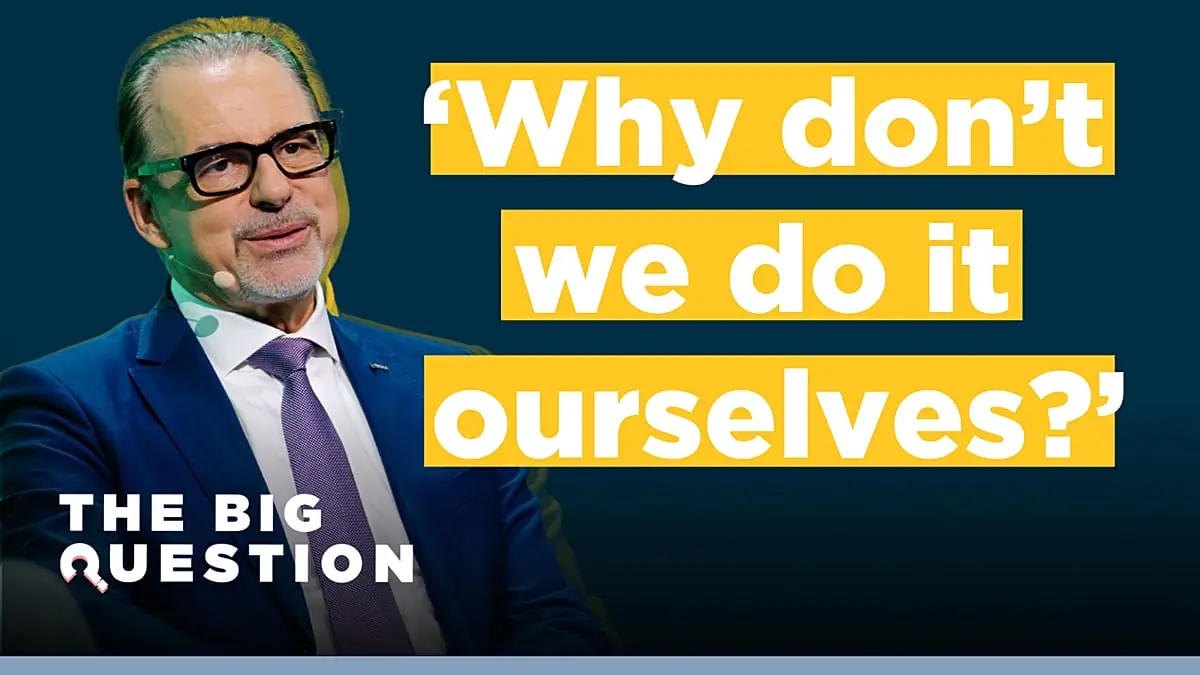
In the latest episode of The Big Question, Josef sat down with Hannah Brown to discuss Europe’s independent future in space.
‘Why don’t we do it ourselves?’
Since its founding in 1975 (and its first astronaut mission in 1983), the European Space Agency has relied on international partners, including NASA and Russia, for astronaut launches.
And while this arrangement has worked for all this time, geopolitical tensions are pushing Europe to seek an alternative.
Only the US, China and Russia have the capability to launch astronauts into space. But political tensions with China and Russia leave ESA reliant on the US.
And in recent years, NASA has partnered with SpaceX to launch astronauts into space. One way or another, today, ESA astronauts travel to space aboard a US spacecraft.
“SpaceX has already announced that they want to decommission Falcon 9 and Crew Dragon (the crew vehicles that bring the astronauts to space) probably around 2029,” Josef explained.
“That means in a few years, we will not have at least this capability available anymore. There may be others coming up, which we do not know today.”
This leaves Europe facing uncertainty over how to get its astronauts into space in the future.
To ensure reliable access and support investment in European industry, Josef is developing a plan for Europe to strengthen its position as a global space power by gaining the ability to launch its own astronauts.
Is space autonomy good for the European economy?
Of course, this won’t happen overnight and it needs political approval from ESA’s member states to secure funding.
Here’s how it might work.
Europe isn’t starting completely from scratch. It already has strong technological capabilities and world-leading programmes like Copernicus (Earth observation) and Galileo (satellite navigation constellation), as well as a talented workforce.
But Europe lacks its own crew vehicle and recovery system, in other words the means to get astronauts up there and bring them safely back to Earth.
Josef estimated that with a budget of around €10 billion, ESA could develop these independent capabilities in the next 10 years.
And yes, €10 billion is an enormous amount of money, but what’s the alternative?
ESA is facing the prospect of spending billions of euros in the coming years either way. The question is how to turn that spending into an investment in Europe’s space industry rather than simply a cost.
The International Space Station is essentially a floating laboratory where ESA does much of its vital science. After its decommission in 2032, this is likely to be replaced by a commercial space station.
Without its independent access to space, Europe will have to continue to rely on buying seats aboard US spacecraft with uncertain availability and then rent facilities aboard commercial space stations for research. Josef estimated that this would come at a cost of around €5 billion over the next 10 years.
“But the money is lost, or lost in the sense it's being spent not in Europe. So I'd rather invest this funding in Europe, strengthen our industry, increase the autonomy of Europe in this domain,” Josef explained.
But he stressed this would not mean an end to international collaboration for Europe.
“[We could] even offer a seat maybe to our friends and colleagues from Japan or Australia or some other countries, and I think this is also something that Europe could consider to build up its own strength, its autonomy, not to isolate, not at all - the opposite, but to be a strong partner internationally to other countries and other agencies.”
The Big Questionis a series from Euronews Business where we sit down with industry leaders and experts to discuss some of the most important topics on today’s agenda.
Watch the video above to see the full discussion with the European Space Agency.
Go to accessibility shortcuts