
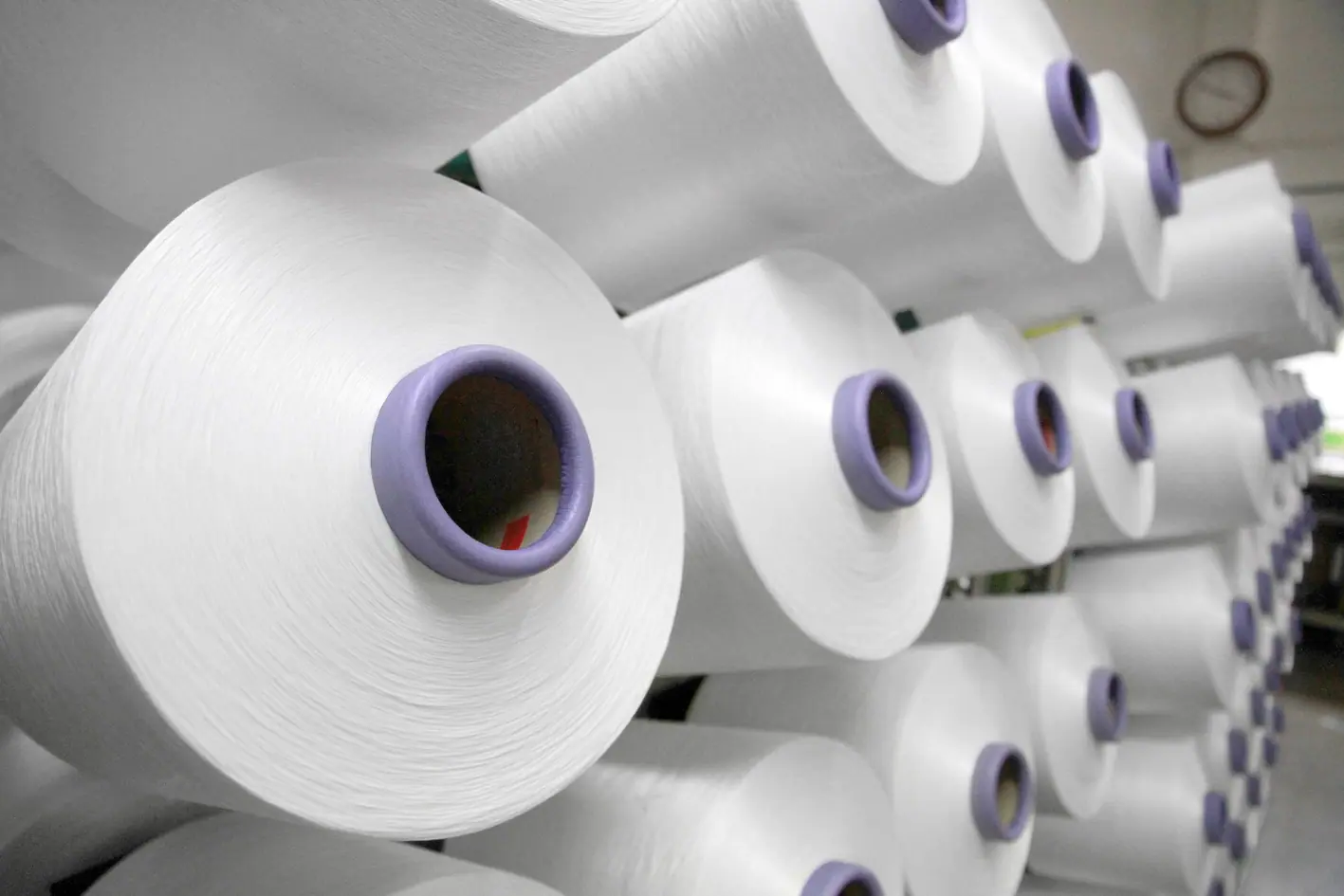
Overcapacity forces company to concentrate production at its most competitive facilities.
11th November 2026
Knitting Industry
| Bangkok, Thailand
Indorama Ventures has removed approximately 3.5 million tons of production capacity through the closure or restructuring of ten manufacturing sites since 2023, with the majority of the affected operations in Europe.
The Bangkok, Thailand-headquartered chemicals and fibres group says the rationalisation has helped eliminate approximately $298 million in annual fixed costs compared with 2023, contributing to a sharp recovery in profitability despite lower production volumes.
Announcing its financial results for the first nine months of 2026 on November 9th, Indorama reported a 63% year-on-year increase in EBITDA to approximately $1.3 billion, while its EBITDA margin improved from 8% to 11%.
The improvement came despite a 5% decline in sales volumes, partly reflecting the company’s deliberate withdrawal from less competitive manufacturing operations and its decision to align production more closely with demand.
The restructuring forms part of Indorama’s IVL 2.0 transformation programme, which is intended to establish a leaner, more competitive global manufacturing network.
Overcapacity
The company specifically identifies Europe as the principal location of its capacity reductions, with its Combined PET (CPET) and Fibers divisions particularly affected by structural difficulties in the aromatics market and persistent industry overcapacity.
These pressures have forced Indorama to concentrate production at its most competitive facilities while withdrawing from operations that can no longer deliver acceptable returns.
The scale of the restructuring is significant. The removal of 3.5 million tons of capacity represents a substantial contraction of Indorama’s global manufacturing footprint and illustrates the continuing pressure on established European polyester and chemical fibre production.
Indorama says it has nevertheless succeeded in retaining customers and market share by transferring production from the affected sites to more competitive facilities elsewhere in its network.
Importantly, the approximately $298 million reduction in annual fixed costs is structural, rather than dependent on temporary improvements in raw material prices or petrochemical margins.
This distinction is particularly relevant to the European textile and chemicals industries, where producers continue to face competition from large-scale manufacturing operations in Asia and other lower-cost regions.
Indorama has not identified all of the individual facilities affected in its latest earnings announcement, nor provided a breakdown of the capacity removed from its polyester and textile fibre operations.
Profits recover
The benefits of the restructuring are becoming increasingly apparent in the group’s financial performance.
For the first nine months of 2026, Indorama recorded a net profit before impairments and exceptional items of approximately $292 million, compared with a loss of around $77 million in the corresponding period of 2025.
Reported net profit reached approximately $158 million.
EBITDA per ton increased by approximately 75% year-on-year, demonstrating the improvement in profitability achieved from a smaller overall production base.
In the third quarter alone, EBITDA reached approximately $408 million, representing a 65% increase compared with the same period last year.
However, this was 37% below the second quarter of 2026, when exceptionally favourable market conditions had provided a significant boost to earnings.
The company acknowledges that these conditions are unlikely to be sustained indefinitely and is therefore placing considerable emphasis on permanent cost reductions and improvements in operating efficiency.
Operating cash flow after maintenance capital expenditure increased by 47% to approximately $1.03 billion during the nine-month period, equivalent to around 80% of EBITDA.
Net debt was reduced by approximately $566 million year-on-year, while the ratio of net debt to EBITDA improved from 6.61 to 4.69.
Inventory and operating rates
Alongside the manufacturing restructuring, Indorama has introduced tighter inventory management through its Sales & Operations Execution programme.
Despite crude oil prices increasing by approximately a third, inventory turnover improved from 4.7 to 5.2 times, with the company targeting a further increase to 6.
This is intended to reduce the group’s exposure to fluctuations in crude oil prices, which have historically had a significant influence on earnings throughout the polyester value chain.
Having deliberately restricted production during 2026, Indorama now expects to increase operating rates progressively through 2027 and 2028 as market conditions and inventory requirements allow.
The approach reflects a shift away from maximising production volumes towards concentrating on profitability, cash generation and more disciplined capacity utilisation.
Further expansion in India
While Indorama has been reducing capacity in Europe, it is also continuing to strengthen selected operations in other markets.
The planned consolidation of its Indovida packaging business in India remains on schedule for completion during the first quarter of 2027 and is expected to nearly double Indovida’s EBITDA, providing an additional contribution to the group’s earnings as the exceptional market conditions experienced during 2026 begin to normalise.
Indorama believes the combination of this expansion, its manufacturing rationalisation and improving performance across key businesses will support its longer-term financial objectives.
“Favorable markets have supported our results this year, but they are not the whole story,” said Aloke Lohia, group CEO of Indorama Ventures. “Deliberate management actions are making us more competitive, improving the quality of our earnings and generating the cash to reduce debt.”
He added that the company’s regional manufacturing model and access to feedstocks had enabled it to maintain reliable supplies to customers during periods of market disruption.
“We enter 2027 from a stronger position, with a leaner cost base and lower debt,” he said.