Benninger’s FabricMaster, SynthMaster and CPB Knit target demanding fabrics while reducing water, energy and chemical consumption.
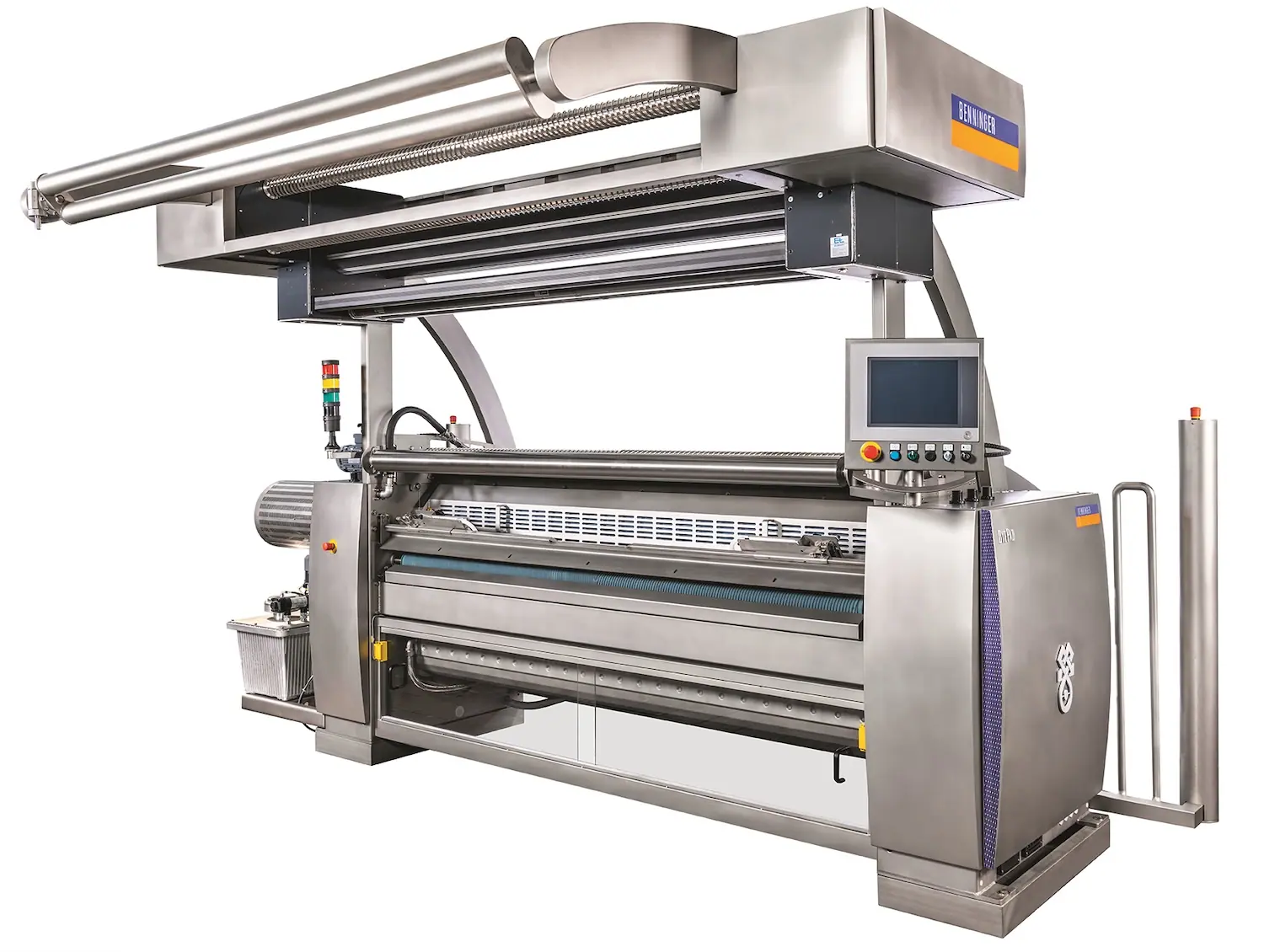
Benninger's CPB Knit cold-pad-batch system.
© Benninger11th November 2026
Knitting Industry
| Uzwil, Switzerland
Swiss textile machinery manufacturer Benninger will showcase advanced dyeing technologies for knitted and woven fabrics at India ITME 2026, addressing growing demand for flexible, resource-efficient processing across the Indian textile industry.
At the exhibition, the company will present its FabricMaster, SynthMaster and CPB Knit systems, designed to handle demanding textiles, ranging from sportswear and heavy jersey to sensitive synthetic blends and high-value underwear fabrics.
As fashion cycles shorten and fabric diversity increases, textile manufacturers face mounting pressure to reduce processing times and resource consumption without compromising quality. Benninger says its technologies offer solutions to these challenges, particularly for fabrics susceptible to marking, uneven dyeing or extended processing cycles.
FabricMaster
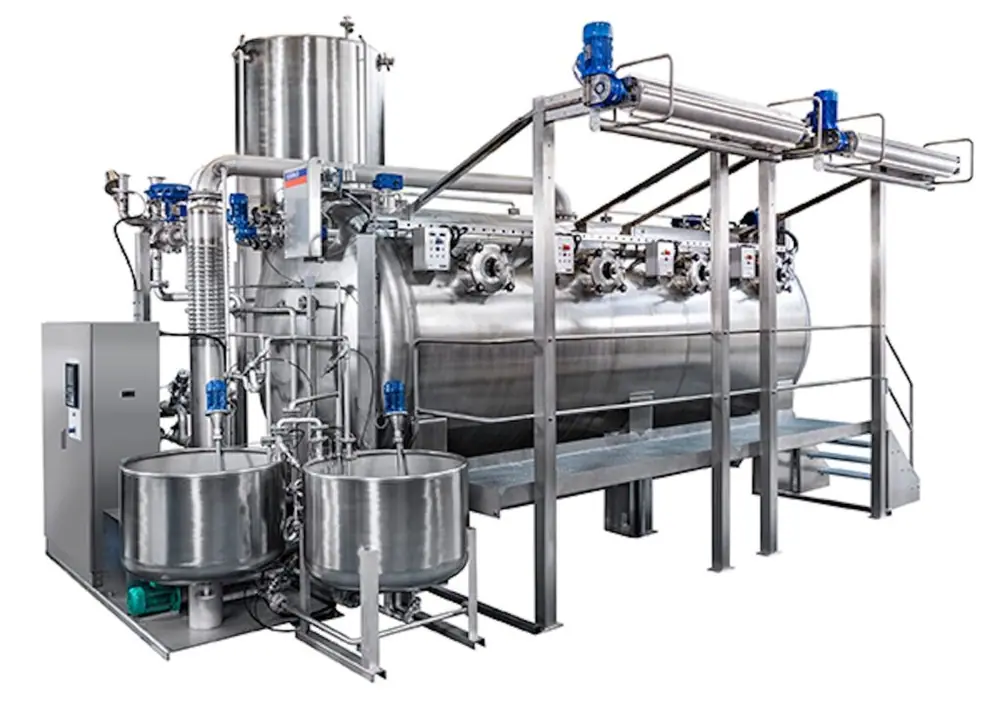
The FabricMaster jet dyeing machine is designed for versatile discontinuous processing of knitted and woven fabrics, including articles that are difficult to handle using conventional equipment. Applications include heat-set polyester sportswear, smooth viscose-elastane blends and heavy cotton jersey.
Its intelligent liquor circulation, efficient penetration, high rope speeds and gentle fabric transport enable shorter processing cycles while minimising rope marks and reducing water and energy consumption. The system allows manufacturers to switch between different fabric qualities while maintaining consistent dyeing results.
The FabricMaster jet dyeing machine.
© Benninger
For more sensitive materials, Benninger offers the FabricMaster horizontal jet dyeing machine, developed specifically for fabrics prone to compression marking. These include nylon-elastane blends, viscose-wool underwear fabrics and non-heat-set polyester articles.
The machine’s horizontal configuration provides smooth, tension-free fabric movement and consistent processing conditions, helping prevent compression marks in finished textiles. Optimised nozzle technology and chamber design support low liquor ratios, while its compact footprint makes it suitable for mills seeking to expand capacity within existing facilities.
Shared components between the SynthMaster and FabricMaster also simplify maintenance and provide operational compatibility across the two platforms.
CPB Knit
For knitted fabrics, Benninger’s CPB Knit cold-pad-batch system offers salt-free dyeing with water consumption of less than one litre per kilogram of fabric. The technology combines tension-free, non-curling fabric transport with high dyestuff yield and eliminates the need for biopolishing.
Central to the system is a padding mangle equipped with two Küsters S-rolls, whose adjustable nip profiles support uniform dye application without listing or tailing. A compact design and accessible dyeing trough also improve operational efficiency and operator safety.
Beyond its dyeing machinery, Benninger provides integrated technologies for continuous and discontinuous textile processing, including automated chemical dispensing, powder dissolving and distribution, wastewater heat recovery and caustic soda recovery for mercerising operations.
These complementary systems are designed to improve process stability while reducing the consumption of water, energy and chemicals throughout textile finishing operations.
With more than 165 years of textile machinery experience, Benninger combines Swiss engineering with an established presence in India to support manufacturers serving domestic and export markets.
The company has been part of Jakob Müller AG since 2016, benefiting from synergies in technology, manufacturing and international sales. It is also a member of the Swiss Textile Machinery Association.
Visitors to India ITME 2026 can meet Benninger’s specialists at Booth D1F2 in Hall 3 to discuss dyeing and finishing technologies for increasingly demanding textile applications.