
New textile wastewater regulations introduce biological toxicity testing, with bluesign proposing wider international adoption.
14th October 2026
Knitting Industry
| China
China has introduced new wastewater regulations requiring textile dyeing and finishing plants to demonstrate that their treated effluent does not cause unacceptable toxicity to fish embryos, marking a significant shift in environmental compliance for the country’s textile industry.
The new national standard, GB 4287-2026, came into effect on 1 September 2026 for new, rebuilt and expanded facilities, with existing plants required to comply from 1 January 2028. It introduces fish egg toxicity testing alongside conventional chemical discharge limits, placing greater emphasis on the combined environmental impact of textile wastewater.
According to Swiss textile sustainability specialist bluesign, the change represents an important development in wastewater management, moving beyond measuring individual pollutants to assessing the biological effects of treated effluent.
The standard, published by China’s Ministry of Ecology and Environment and State Administration for Market Regulation in June, replaces four earlier standards covering dyeing and finishing, silk reeling, wool and hemp processing. It also extends regulatory coverage to chemical fibre weaving and industrial textile products.
The new toxicity requirement applies to dyeing and finishing operations discharging treated wastewater directly into rivers, lakes or other water bodies, as well as dedicated textile industry wastewater treatment plants. Purely physical finishing operations are excluded.
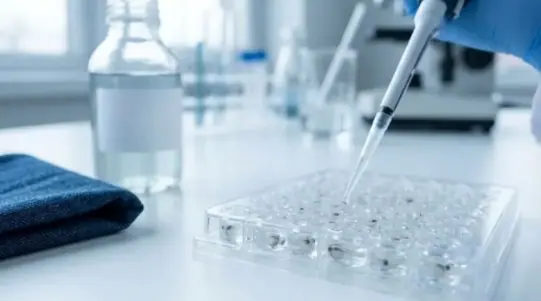
Under the test procedure, newly fertilised zebrafish embryos are exposed to a solution containing one part treated wastewater to five parts dilution water for 48 hours at 26°C. At least 90% of the embryos must survive for the sample to meet the required limit.
Facilities subject to the strictest discharge permit controls must conduct testing at least twice annually, while other affected facilities must test at least once a year.
Unlike conventional wastewater monitoring, which measures parameters such as chemical oxygen demand, ammonia, phosphorus and specific hazardous substances, whole-effluent toxicity testing evaluates the combined biological effects of pollutants present in treated water.
This approach can identify harmful effects caused by interactions between substances or by compounds not covered by routine chemical analysis. However, bluesign emphasises that a failed toxicity test does not identify the source of contamination.
Determining the cause requires effective chemical input management, wastewater treatment monitoring and root-cause analysis. Potential problems may arise from chemicals used during textile production, substances formed during processing or deficiencies in wastewater treatment systems.
Fish egg toxicity testing is already established in Germany, where it was introduced into wastewater regulations in 2004. The Organisation for Economic Co-operation and Development subsequently adopted its Fish Embryo Acute Toxicity Test guideline in 2013.
Bluesign has required fish egg toxicity testing from chemical suppliers discharging treated wastewater directly into water bodies for more than a decade. The organisation is now proposing to extend biological wastewater testing across a wider range of textile manufacturing operations.
Its revised bluesign Criteria, currently open for public consultation until 30 October 2026, propose annual ecotoxicity testing through accredited laboratories for directly discharging textile manufacturing sites producing more than 5 cubic metres of wastewater daily.
The proposed requirements would cover yarn and textile manufacturing, wet processing operations and consumer product manufacturing, including denim production.
Bluesign is also proposing a four-tier testing system, beginning with fish embryos and progressing to water fleas, algae and bacteria where testing at higher levels of the food chain is not reasonably available.
For fish egg toxicity, the proposed limit matches China’s new standard, requiring no observed toxicity at a dilution factor of six. The draft criteria recognise China’s HJ 1069 testing method alongside OECD 236 and ISO 15088.
The tiered approach is intended to accommodate differences in laboratory testing capabilities internationally while ensuring that textile manufacturers remain subject to biological wastewater assessment.
“The bluesign Criteria address chemical inputs and wastewater treatment, but these controls alone cannot show the combined biological effect of the final effluent,” said Sumit Sarker, Sustainable Textile Expert at bluesign Academy.
“Whole-effluent toxicity testing adds a final biological check that the treated wastewater does not cause unacceptable acute toxicity.”
For international brands sourcing textiles from China, bluesign says the regulations highlight the importance of understanding how suppliers manage wastewater throughout production, rather than relying solely on individual test results.
This includes identifying whether wastewater is discharged directly into the environment or transferred to dedicated treatment facilities, assessing chemical inputs and establishing procedures to investigate and correct failed toxicity tests.
Bluesign says its existing System Partner requirements, which include chemical input assessments, wastewater monitoring, accredited laboratory testing and site inspections, provide participating manufacturers with a foundation for meeting the new requirements.
With existing Chinese textile facilities facing a January 2028 compliance deadline, the organisation believes the new regulations reinforce the need for an integrated approach combining chemical management, effective treatment and biological verification of wastewater quality.