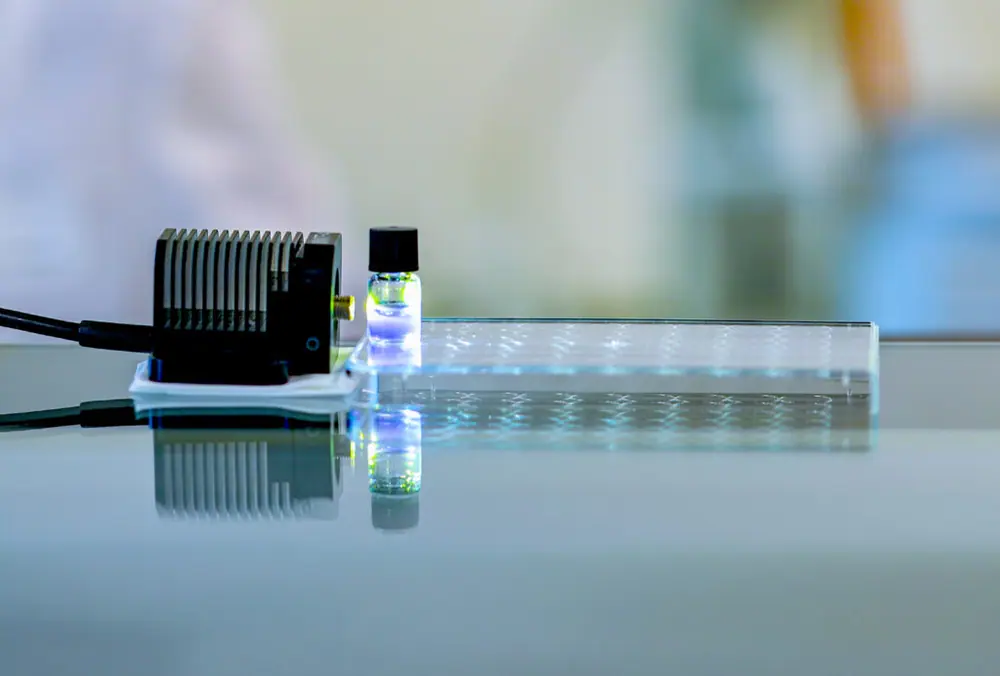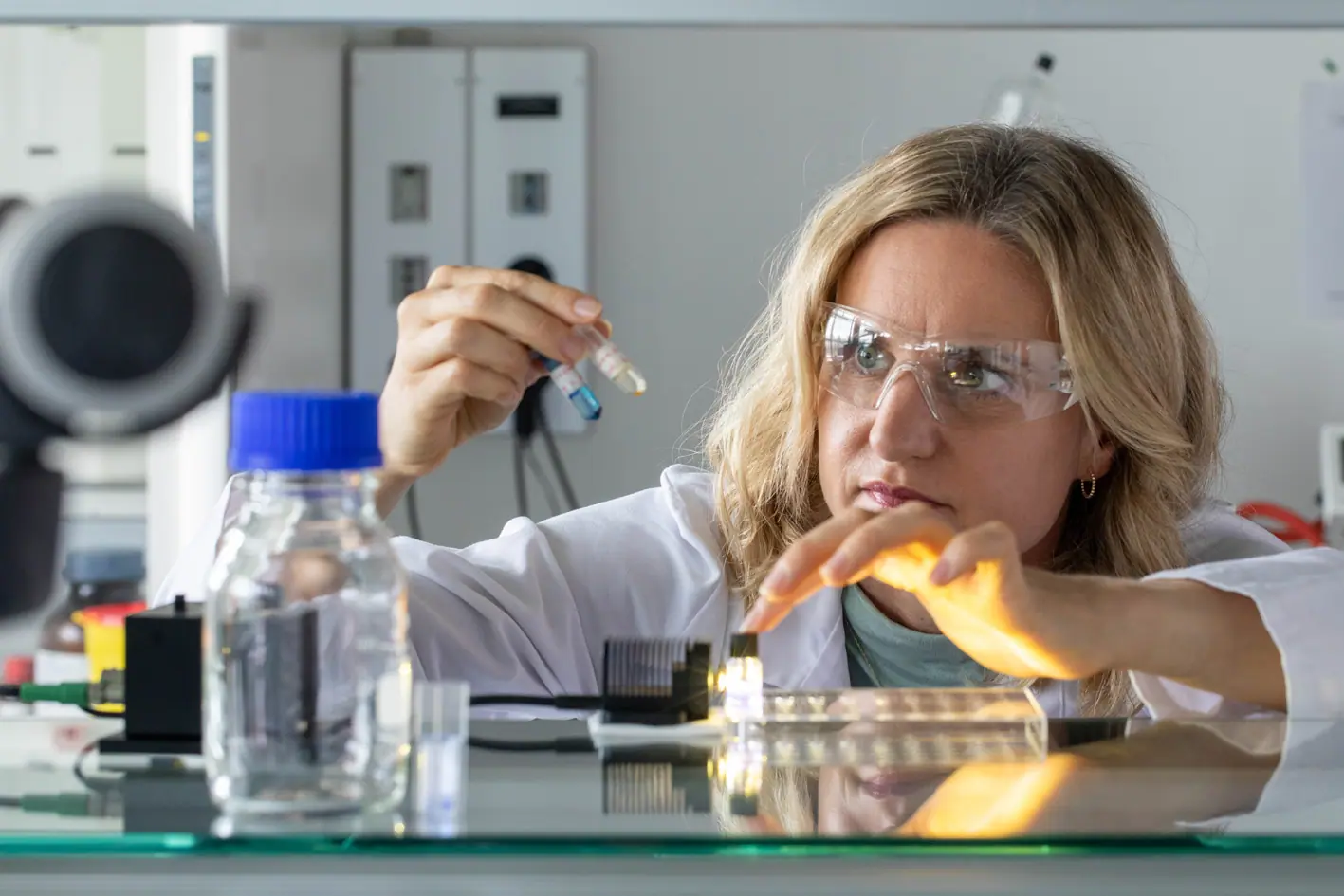
The nanoparticles are surrounded by a polymer coating containing molecular photoswitches.
15th October 2026
Innovation in Textiles
|
Researchers at Swiss materials research institute Empa have developed a light-responsive material that could enable wound dressings to deliver precisely controlled doses of antiseptics and other therapeutic agents, potentially improving the treatment of chronic wounds.
Developed at Empa’s Biomimetic Membranes and Textiles laboratory in St. Gallen, the technology uses nanoparticles coated with a light-sensitive polymer to release active ingredients when exposed to visible LED light. Switching off the light stops the release, allowing the timing and dosage of treatment to be controlled.
The research could have particular significance for patients with diabetes, who are vulnerable to chronic wounds caused by poor circulation and nerve damage. Diabetic foot ulcers can remain open for months, requiring frequent dressing changes, specialist care and repeated hospital visits.
The Empa team, led by Luciano Boesel and Giorgia Giovannini, has developed a system based on silica nanoparticles loaded with chlorhexidine, a widely used wound antiseptic.
The nanoparticles are surrounded by a polymer coating containing molecular photoswitches that change their structure when exposed to specific wavelengths of visible light. This causes the polymer to swell and become more permeable to water, allowing the disinfectant to escape from the silica core.
When the light is switched off, the polymer contracts and returns to its original, less permeable state, restricting further release.
“When incorporated into a wound patch, this system enables controlled wound disinfection,” explains Boesel. “The timing and dose of the released active ingredient can be controlled by varying the duration or intensity of the light exposure and the wavelength of the light.”
The approach could offer advantages over conventional wound dressings, which generally deliver antimicrobial agents without the same degree of external control. More precise dosing could reduce unnecessary exposure to antiseptics and potentially limit the development of bacterial resistance.
Treatment and monitoring
A longer-term objective is to integrate the light-responsive material with sensors capable of monitoring bacterial activity within a wound.
Empa has already developed a wound sensor that could provide a basis for this approach. Combining the two technologies could eventually enable dressings to detect changes in wound conditions and respond with targeted treatment.
“Ideally, we could combine this new system of light-controlled drug delivery with a wound sensor that continuously determines the amount and type of bacteria present in the wound,” says Boesel.
The nanoparticles could also be loaded with therapeutic agents other than chlorhexidine, while different photoswitches could be incorporated into the polymer coating.
By selecting specific wavelengths of light, it may eventually be possible to trigger the release of different substances from the same dressing, depending on the condition of the wound and the bacteria present.
Further development
The next stage moving beyond the lab will involve adapting the material for clinical requirements, including its integration into practical wound dressings and subsequent evaluation of its safety and effectiveness.
Empa is already in contact with hospitals interested in the technology, although further research and clinical trials will be required before any commercial medical device can be introduced.
The researchers believe that, if successfully developed, the approach could reduce the frequency of dressing changes and hospital visits associated with chronic wounds.
Although light-responsive dressings would be more expensive to manufacture than conventional products, reducing the need for repeated clinical interventions could ultimately offset these additional costs.
The research also illustrates the growing potential for combining advanced materials, responsive polymers and sensing technologies in a new generation of medical textiles.