
The quality of life for people living next to one would be destroyed, writes Moira Brewer; plus a letter from Mark Davis
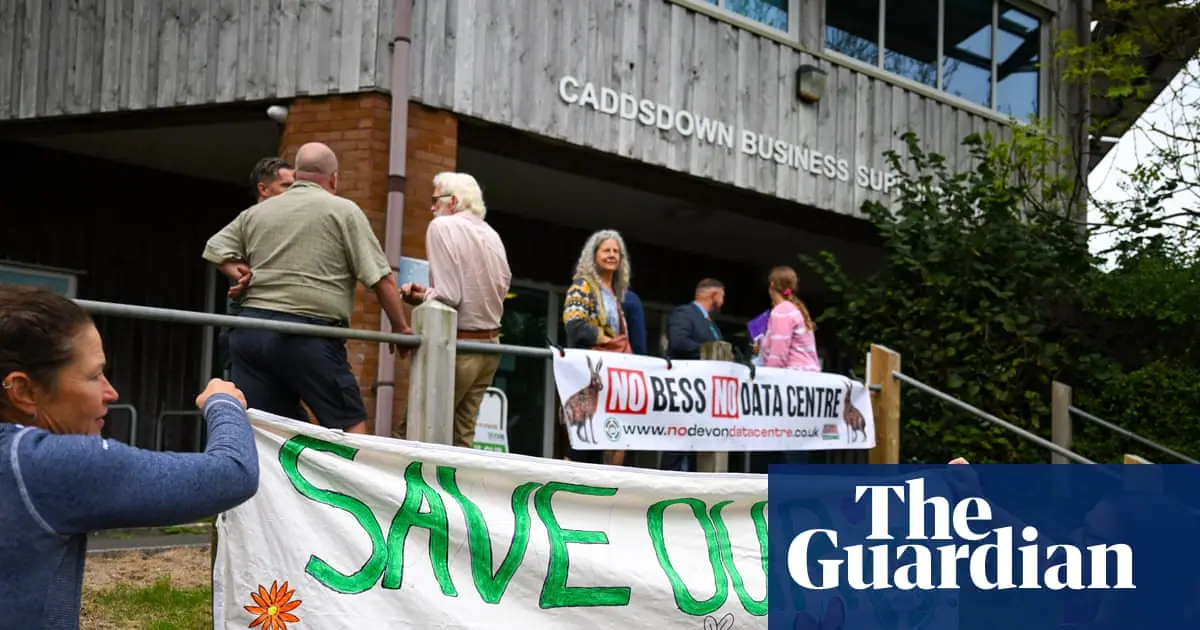
So, George Osborne thinks people who don’t want an AI datacentre on their doorstep are nimbys (OpenAI’s George Osborne says datacentre nimbys holding back Britain, 22 September). He ought to come and visit our small town in Devon, where there are plans to build one of the largest datacentres in Europe, along with a battery energy storage system, on 850 acres of farmland.
The size of this proposed development is quite out of proportion to its location – larger than the town itself – and accessed by narrow lanes. It would be a huge blot on a beautiful rural landscape that is enjoyed by holidaymakers who are vital to the local economy.
It would destroy local residents’ quality of life, with its noise, lights and greed for energy and water, and we will not accept the imposition of this monstrosity on our doorstep without a fight (‘People are standing up and fighting back’: the north Devon revolt against a vast AI datacentre, 27 September).
Moira Brewer
Great Torrington, Devon
There’s a lot of open space with just a few sheep and the odd planted turnip around Bruton in Somerset. Has George Osborne got a datacentre in his back yard yet?
Mark Davis
Frome, Somerset