
- Trump is reportedly considering broader semiconductor tariffs, Politico reported Thursday.
- The tariffs could cover servers, laptops and gaming hardware, people familiar with the matter told the outlet.
- "Reshoring semiconductor manufacturing is a top priority for President Trump," the White House told Politico.
In this article
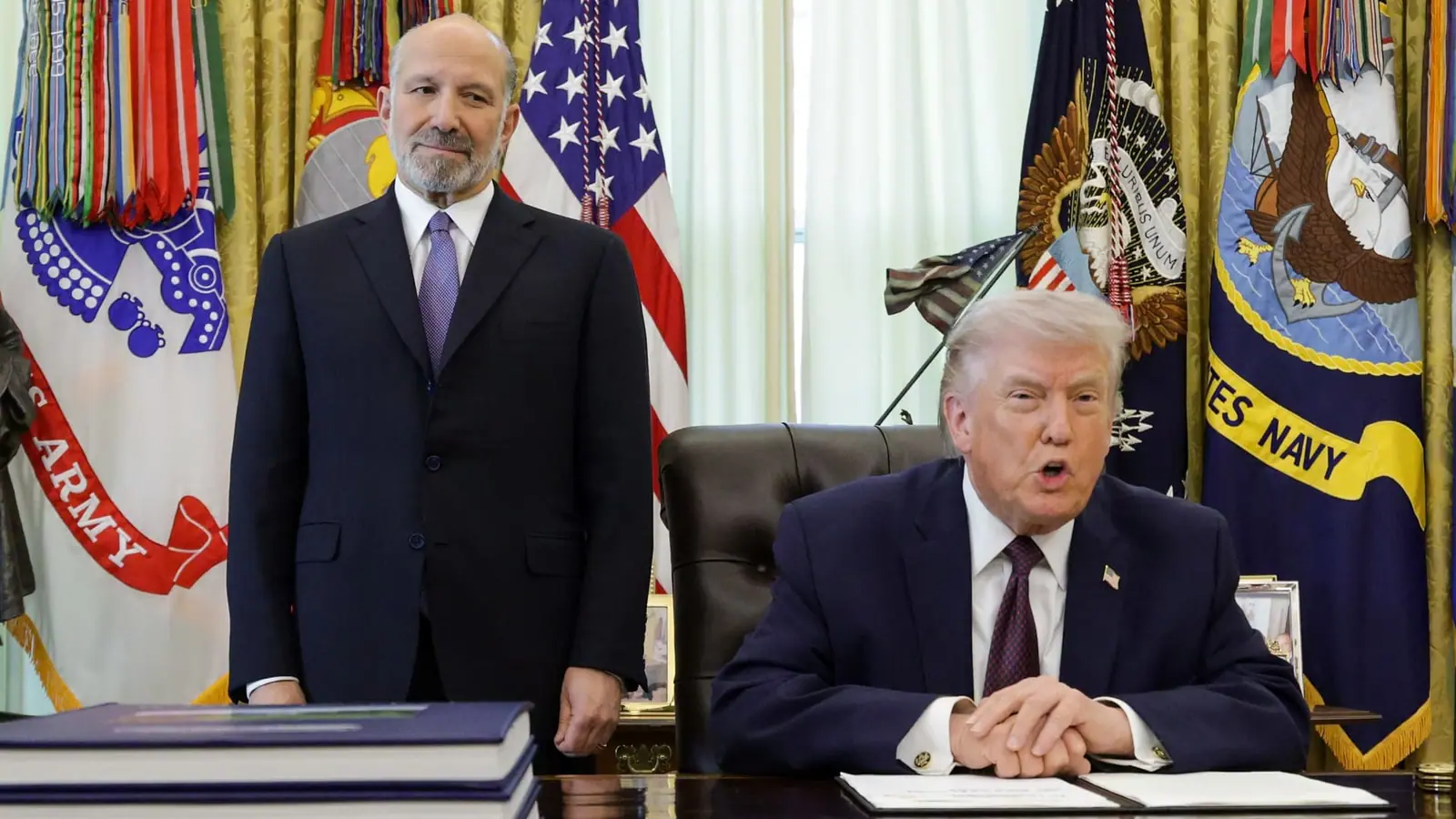
Follow your favorite stocksCREATE FREE ACCOUNTU.S. President Donald Trump (R) speaks as U.S. Secretary of Commerce Howard Lutnick looks on before signing an executive order to limit mail-in voting in the Oval Office of the White House on March 31, 2026 in Washington, DC.Alex Wong | Getty ImagesU.S. President Donald Trump's administration is reportedly considering new tariffs on semiconductors used in the U.S., as tech giants race to beat China in the artificial intelligence infrastructure build-out.
The duties will be imposed on an expanded range of tech products made alongside chips, including laptops, data center servers and gaming hardware, eight people familiar with the matter told Politico in a report published Thursday.
The measures, which are still in the early phases and subject to significant changes over the next few months, will be introduced via a staggered rollout period, according to the report.
The White House did not immediately respond to a request for comment from CNBC, but told Politico: "Reshoring semiconductor manufacturing is a top priority for President Trump, whose policies have already secured hundreds of billions of dollars of investments in this key sector."
- Canada unveils retaliatory tariffs on about $20B of U.S. goods
- Trump targets Iran's trade lifelines — here are the countries most exposed
- Mark Walter's TWG Global hires Goldman vet Markowitz as top lawyer amid probe
- Trump oil and gas stocks gained up to $15.5 million, Democrats say
- Trump admin unveils anti-Iran global sanctions plan, signals China not exempt
Existing tariffs on Chinese semiconductors were introduced under U.S. President Joe Biden's administration.
Trump said last year that he was planning to unveil new tariffs on semiconductors and chips, but the measures didn't materialize. The president also said at the time that he intends to impose tariffs of "approximately 100%" on semiconductors and chips, but there will be no charge for companies building domestically.
In January, the Trump administration did impose a 25% tariff on certain AI chips.
Chinese firms have reportedly been able to access Nvidia's chips despite heavy U.S. export restrictions. Industry watchers say access to advanced compute via overseas cloud providers is a key factor in Chinese AI models gaining capability.
U.S. legislation is being discussed to plug this loophole, but hurdles remain before it can have an impact, experts previously told CNBC.
— CNBC's Kai Nicol-Schwarz helped contribute to this report.
Clarification: This article has been updated to clarify that the new tariffs would be on semiconductors used in the U.S.
Choose CNBC as your preferred source on Google and never miss a moment from the most trusted name in business news.