
Shima Seiki technology supports the transformation of a Japanese denim factory into a flexible, small-batch manufacturing operation.
9th October 2026
Innovation in Textiles
| Japan
Japanese denim manufacturer Akita Hose has transformed a former mass-production jeans factory into a specialist operation producing smaller batches of high-value garments, supported by automated cutting technology from Shima Seiki.
Established in 1973, Akita Hose is part of the Edwin Group’s Japanese manufacturing operations and previously employed around 100 people producing approximately 3,000 pairs of jeans a day.
Today, its workforce has been reduced to around 30, while production has shifted almost entirely from jeans to more complex garments such as denim jackets. The factory now handles orders as small as 50-100 garments for brands including Edwin, Lee, Wrangler and Something, as well as jackets destined for overseas markets.
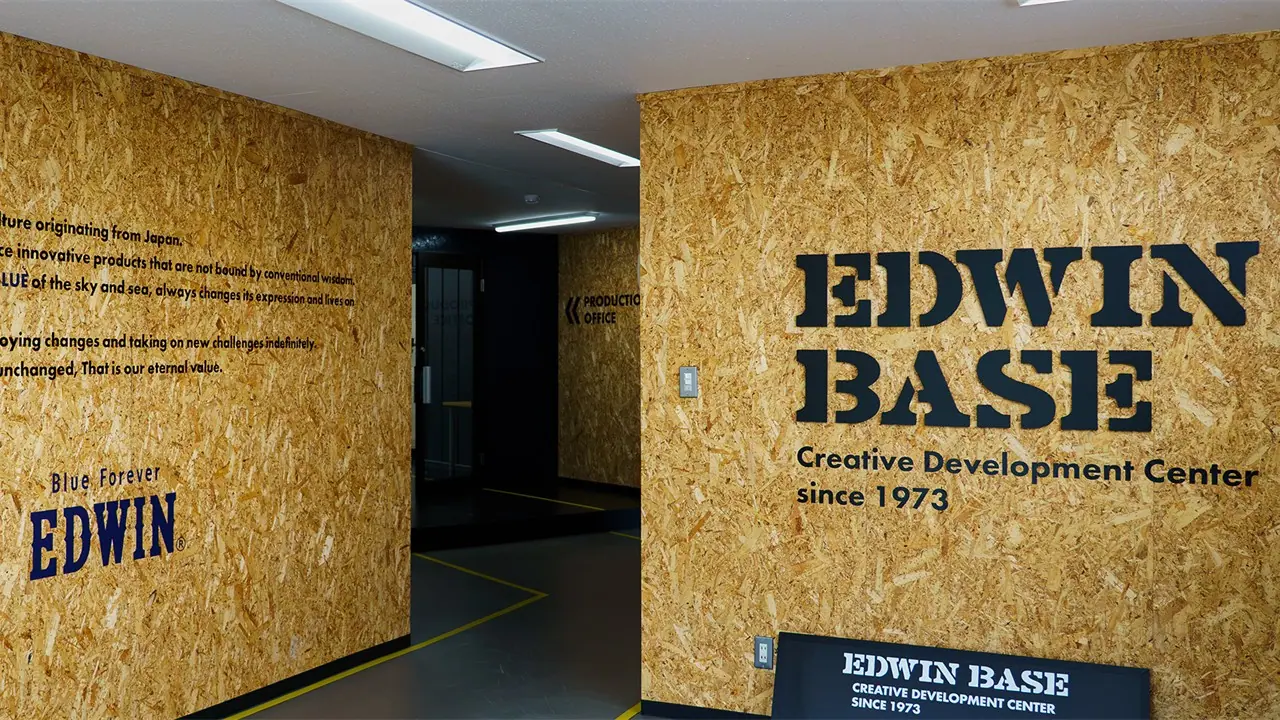
The transformation culminated in October 2024, when equipment previously distributed across three buildings was consolidated into a single facility and the operation was relaunched as Edwin Base.
P-CAM R
Central to the reorganisation was the replacement of two ageing industrial cutting machines with a single, more compact Shima Seiki P-CAM R automated cutting system.
The previous machines dated from the factory’s high-volume production era and occupied considerable floor space. Their age was also creating concerns about maintenance, safety and the availability of technical support.
Akita Hose needed a replacement capable of handling denim accurately at relatively high speeds, while accommodating frequent changes in styles and production quantities. Compatibility with its existing CAD data was another important consideration.
The company evaluated the P-CAM R at the Japan International Apparel Machinery and Textile Industry Exhibition (JIAM) and subsequently visited another Edwin Group factory already using the technology to assess its performance with denim.
The machine incorporates reinforced components and fabric distortion correction functions to accommodate demanding materials. Following adjustments to suit Akita Hose’s specific cutting requirements, it has become the central cutting system at Edwin Base.
According to the company, the most significant improvements have been in cutting speed, operational safety and the ability to maintain production with fewer operators.
Previously, six or seven employees were involved in fabric spreading, cutting, numbering and inspection. The reorganised cutting department now has three employees, with routine operations generally handled by just one or two.
Despite this reduction, the factory reports that it can maintain cutting output equivalent to approximately 100-150 jackets per day.
Flexibility
The move to smaller production runs has also required changes throughout the sewing operation. Each employee now handles an average of six or seven different processes, providing the flexibility to manufacture complex garments without relying on the narrowly defined tasks associated with traditional assembly-line production.
One particular challenge has been the cutting of selvedge denim, where the fabric’s finished edge is deliberately retained as a design feature.
This requires precise positioning and cutting to preserve the selvedge. Shima Seiki has developed an operating method involving changes to the P-CAM R’s settings, simplifying a process that previously required additional software to modify cutting data.
The machine also incorporates network connectivity for remote monitoring and technical support. Shima Seiki can identify certain operating problems remotely and contact the factory, supplementing this service with on-site assistance when required.
Beyond cutting automation, the Edwin Base redevelopment has involved upgrades to LED lighting and air-conditioning equipment, alongside the energy savings associated with consolidating production into one building.
Denim offcuts generated during cutting are also sorted for recycling into regenerated fibres used in construction materials and new denim fabrics.
Akita Hose now plans to extend automation further while continuing to develop its multi-skilled workforce. The objective is to maintain a manufacturing operation capable of producing increasingly complex, higher-value garments with a relatively small team.
The factory also hosts tours and workshops intended to promote Japanese denim manufacturing and its specialist production techniques.
For Shima Seiki, the installation illustrates how automated cutting can support a broader restructuring of apparel manufacturing, particularly as producers move away from long production runs towards smaller orders, more frequent style changes and greater product complexity.