
Base rate increases from 3.75% and Bank governor signals another rise in near future to combat rising inflation
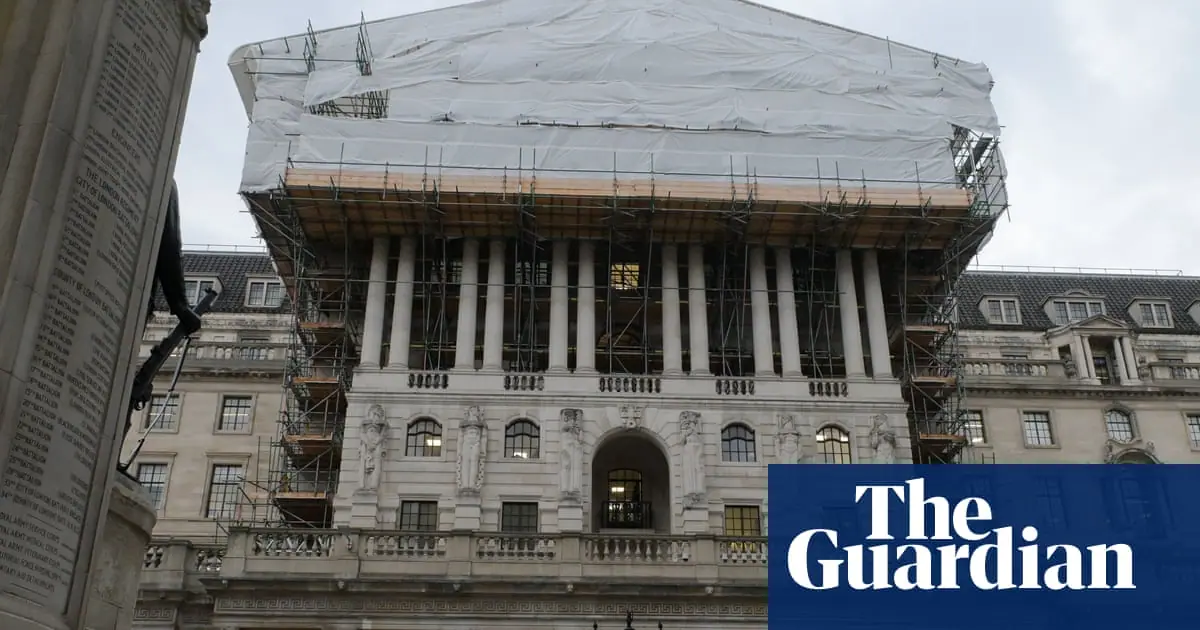
The Bank of England has raised interest rates for the first time in three years and warned of another increase to combat inflationary pressure unleashed by the Iran war.
Eight members of the Bank’s monetary policy committee (MPC) voted for the rise, which takes the base rate from 3.75% to 4%. The ninth member, Catherine Mann, preferred a more dramatic half-point increase.
The Middle East conflict has pushed oil prices persistently above $100 a barrel in recent months, as hopes have evaporated of a deal that could reopen the strait of Hormuz.
As a result, the Bank now expects UK inflation to rise to 4.9% in the middle of next year – up from 3.2% in its last economic forecast in July. Inflation hit 3.5% in September, as measured on the consumer prices index.
The decision, which will hit mortgage borrowers, comes a week after John Healey used his first budget to promise “breathing space” for hard-pressed consumers. Echoing the Office for Budget Responsibility’s gloomy forecasts for living standards, the MPC expects real post-tax income to fall this year and next.
The Bank’s governor, Andrew Bailey, raised the prospect of another rate rise in the near future – with a resolution to the Iran conflict the key factor that will influence the decision.
“Without news which softens the risks to inflationary pressures, I can see the argument for a further increase in rates and thereafter taking a more conditional approach,” he said, according to the MPC minutes.
However, he played down the likelihood of a prolonged series of increases, as markets have been predicting. “Today’s increase shouldn’t be seen as the first in an inevitable long sequence in hikes. But unless the conflict in the Middle East is resolved, neither does it seem likely to be the last increase,” he said.
The Bank’s next interest rate decision will be announced on 17 December, and some analysts suggested the MPC could press ahead with a pre-Christmas hike.
Andrew Goodwin, the chief economist at consultancy Oxford Economics, said: “The degree of inflationary pressure already in the system means another hike in December or February is likely.”
Explaining its decision to raise borrowing costs, the MPC highlighted the pass-through from elevated oil prices to business and consumer costs across the economy. It expects the Ofgem energy cap to rise from the equivalent of £1,723 a year for an average household in Great Britain to £2,150 in January and to increase again in April. Food price inflation could hit 4.75% by mid-2027, it warned.
Businesses have so far reported in the Bank’s surveys that they have been able to absorb soaring oil and gas prices – by hedging their energy costs, for example – but the MPC believes they will soon have to start passing them on to consumers in higher prices.
It is also concerned about workers seeking to offset the impact of the higher cost of living by asking for bumper pay rises.
Oil prices have fallen sharply, to below $100 a barrel, after the Democrats’ victories in the US Congress, which some investors have interpreted as potentially constraining Donald Trump’s capacity to prolong the conflict in Iran. Trump’s vice-president, JD Vance, has blamed the war, and its impact on inflation, for the rout at the polls.
Speaking at the Bank’s press conference, Bailey welcomed the sharp fall in energy prices in the last 48 hours but said it would need to be sustained to change his view about the need for future rate rises. “This is positive news, but there is already a significant amount of inflationary pressure in the pipeline,” he said, adding: “What is the best thing that can happen? It is to resolve the conflict in the Middle East.”
While the decision to increase rates was supported by all MPC members, the minutes of the meeting reveal stark divisions over how much further they may need to go to bring inflation under control. The dovish Alan Taylor suggested this should be a “risk-management ‘one-for-now’ insurance hike”, while Mann argued that an immediate half-point rise was necessary to restore the Bank’s inflation-fighting credibility.
Healey’s budget included measures aimed at cushioning the impact of higher energy prices – including extending the fuel duty freeze and the VAT cut on electricity bills. The MPC said the package would shave a quarter percentage point off inflation in mid-2027.
Responding to the interest rate increase, Healey said: “The Iran conflict is reaching deep into the pockets of families and businesses here at home.
“In my budget I acted to give some breathing space to families and businesses. Twenty million households will get a £100 energy payment, I extended the tax cut on electricity bills and froze fuel duty. I also set out the course ahead to get costs down for good.”
But the shadow chancellor, Andrew Griffith, called the rate rise “another headwind for hardworking families to deal with”.
Explore more on these topics- Interest rates
- Bank of England
- Economics
- Monetary policy committee
- US-Israel war on Iran
- Inflation
- Energy industry
- news