
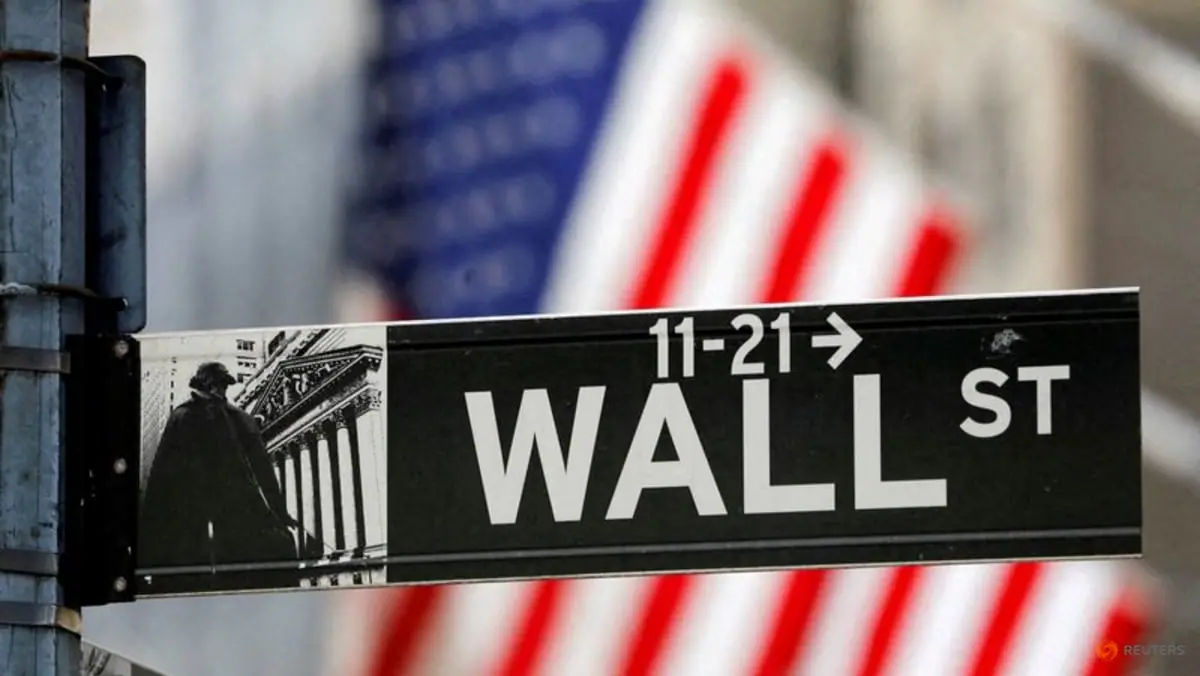
NEW YORK/LONDON, Nov 6 : Wall Street equities mostly rallied on Friday, reversing course after trillions of dollars of world stock market value were wiped out over fears that Democratic election victories this week would bring tighter US regulations for the AI industry.
The benchmark S&P 500 and the Nasdaq finished higher, with technology, communication services and industrials stocks driving gains. The Dow ended lower. All three indexes notched weekly losses following a brutal selloff in the prior session.
The Dow Jones Industrial Average fell 0.46 per cent, the S&P 500 rose 0.31 per cent, and the Nasdaq Composite gained 1.1 per cent.
The Philadelphia Semiconductor Index was up 4.2 per cent after slumping in its biggest one-day drop since April 2025. Nvidia rose nearly 3 per cent, after its worst day since January 2025, when the emergence of low-cost Chinese AI model DeepSeek hammered markets.
Guess WordCrack the word, one row at a timeBuzzwordCreate words using the given lettersMini SudokuTiny puzzle, mighty brain teaserMini CrosswordSmall grid, big challengeWord SearchSpot as many words as you can Show More Show LessOther heavyweight chipmakers, including AMD, Intel, and Micron Technology, closed up between 5 per cent and 11 per cent, while Elon Musk's Tesla and SpaceX were also up 4 per cent and nearly 9 per cent respectively after losses earlier this week.
"Most of the disruption of the AI buildout will not probably occur but it's just the uncertainty of the change in government from Republican-led to Democratic-led, not only at the federal level but the state, local levels," said Gerry Sparrow, president and portfolio manager at Sparrow Capital Management.
"That's causing some disruption in the expectations of investors ... The volatility around elections or any political event, whether it be war or terrorist attack, is always going to disrupt the market."
Texas' Democratic Governor-elect Gina Hinojosa said on Thursday that the state — which already has a large share of US data centres — will introduce new laws to protect local communities from their further mass buildup.
The jitters are hitting an AI trade already under pressure from fears that the massive cost of the data centres and other infrastructure will limit future returns, spurring margin calls and spooking retail investors and hedge funds alike.
RIPPLE EFFECT
The bounces were in stark contrast with market action in the rest of the world. Europe's STOXX 600 lost 1 per cent. In Asia, Japan's Nikkei and South Korea's KOSPI both slumped about 6 per cent. For the Nikkei — just like Wall Street the previous day — it was the biggest one-day drop since US President Donald Trump's "Liberation Day" trade tariff panic of April 2025.
The MSCI All-World index fell 0.68 per cent while MSCI's broadest index of Asia-Pacific shares outside Japan lost nearly 3 per cent.
PAYROLLS BEAT FORECASTS
US nonfarm payrolls, usually one of the most-watched pieces of data, but largely overshadowed by the tech drama, showed a stronger-than-expected 165,000 pickup in jobs.
An anticipated slowdown in annual wage growth to below 3 per cent for the first time in nearly 5-1/2 years did not materialise either, as it came in at 3.1 per cent.
The yield on the benchmark US 10-year Treasury note ticked up to 4.86 per cent, having dropped to its lowest level since September 9 overnight.
In currencies, the dollar rose against major currencies including the euro, yen and Swiss franc. It was up 0.52 per cent against the yen and rose 0.47 per cent against the Swiss franc. The euro was down 0.68 per cent against the dollar at $1.1142.
Brent crude prices settled at $98.32, rising just 0.03 per cent, on hopes the midterms' results might prompt Trump to de-escalate the Iran war.
Spot gold was flat at $4,066.28 per ounce.