
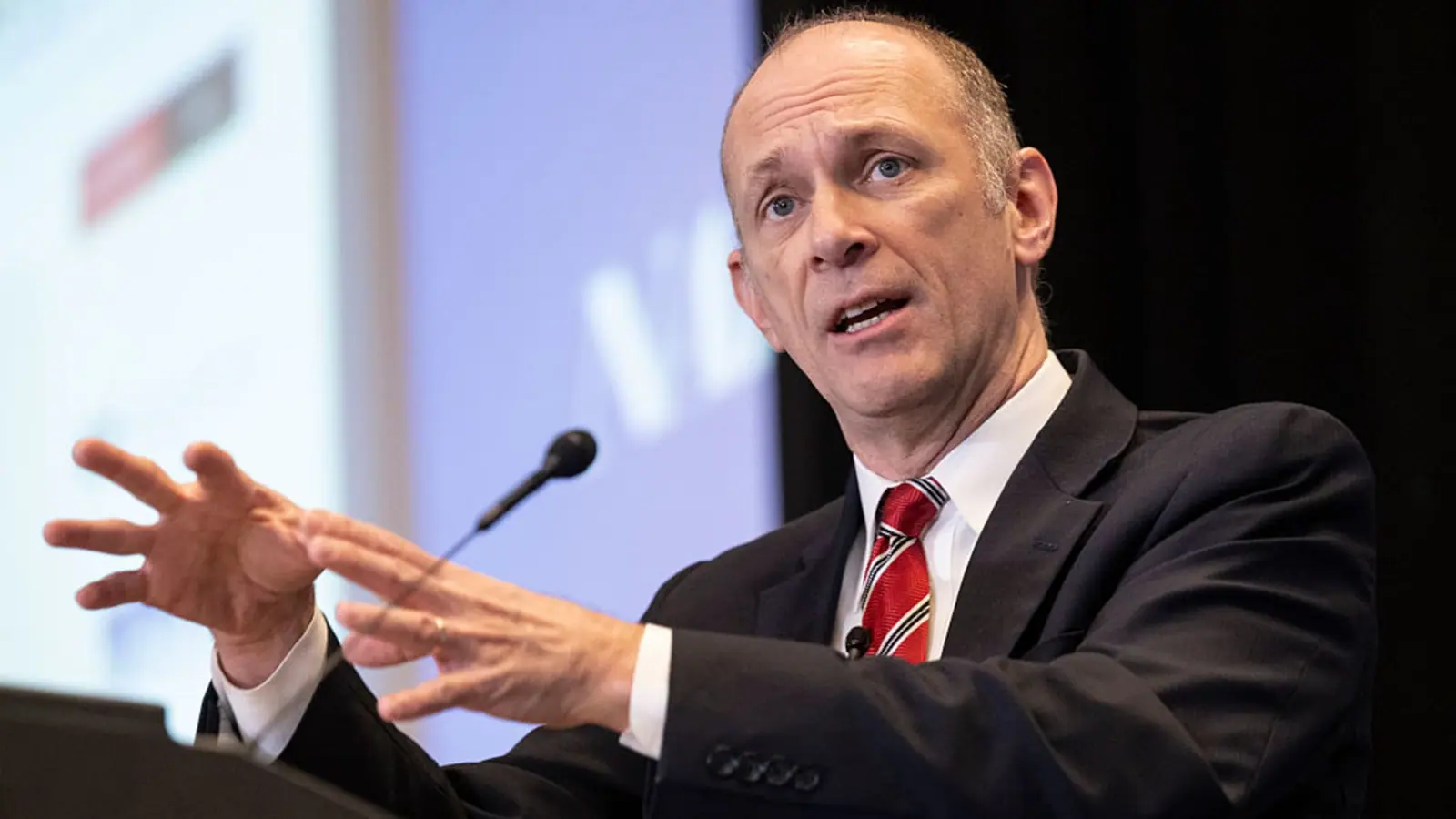
- Chicago Federal Reserve President Austan Goolsbee called the latest consumer inflation report "borderline disturbing" and "distressing."
- The consumer price index rose 0.4% on a seasonally adjusted basis in October, coming in higher than economists predicted.
- Some Fed officials have been saying the central bank may need to be more aggressive in hiking interest rates to bring down inflation.
Chicago Federal Reserve President Austan Goolsbee called the latest inflation data "borderline disturbing."
"It's another distressing report — borderline disturbing," Goolsbee said in an interview with "PBS NewsHour" on Tuesday.
"We've got a real inflation issue on our hands that has been developing," Goolsbee said. "We're going to have to deal with that."
The consumer price index rose 0.4% on a seasonally adjusted basis in October, according to the Bureau of Labor Statistics' Tuesday morning release. That was higher than economists had predicted, and the third straight month of outsized price increases.
Goolsbee said he had not seen drivers of prices like tariffs fade over time like he had hoped. He also said continuously high inflation on services concerned him.
And the Chicago Fed chief said lofty prices are a top issue for many people he meets.
"It's on everyone's mind," Goolsbee said. "It's on business mind. It's on nonprofits' minds. It's on ordinary consumers' mind."
- Consumer prices rose more than expected in October, complicating Fed's inflation fight
- Fed Governor Waller opens door to possible half-point increase
- Consumers are showing signs of strain even as they keep spending
- 3 unexpected reasons the October jobs report was so strong
Tuesday's inflation report landed at a critical juncture for the central bankers at the Federal Reserve as they considers their next interest rate move — and the moves they may have to make in the months ahead if the numbers continue to come in hot.
Goolsbee's comments arrived on the heels of remarks from other Fed officials Tuesday who said the rate-setting Federal Open Market Committee may need to act more decisively to rein in inflation.
When it raises or lowers rates, the Fed typically moves by a quarter-percentage point. But Fed Governor Christopher Waller said in London early Tuesday that a hot inflation report could push him toward advocating for an outsized half-point increase in December, and specifically said such a hike should be on the table if the core CPI, a metric that removes volatile food and energy costs, was "around 0.3." Hours later, that's exactly what happened.
Dallas Fed President Lorie Logan, speaking Tuesday after the inflation report, said she sees a need for two additional quarter-point increases, and said "it may be possible to move more rapidly this winter than the FOMC has moved so far this fall."
Anna Paulson, president of the Philadelphia Fed, was more sanguine. While she acknowledged that "inflation pressures are still very much with us," she said Tuesday that the central bank didn't need to move too quickly. "For now, further gradual tightening seems appropriate," she said. "The exact path will depend on how conditions evolve, and I'll be watching the data closely."
The committee raised rates by a quarter point in September, to a range of 3.75%-4%, before voting to hold them steady in October.
After years of higher-than-preferred price growth, Goolsbee said the possibility of consumers and businesses beginning to expect hot inflation is a "major concern." If that does happen, he said it can make the process of cooling inflation "much more painful."
But Goolsbee didn't specify whether he thought the Fed should hike rates at its December policy gathering as a result of these concerns.
"I'm not a fan of being very specific and tying our hands at the next meeting or meetings in the future," Goolsbee said.
Waller, Logan and Paulson are voting members of the FOMC this year, which means they will cast votes on whether to raise rates at the committee's final meeting of the year in December. Goolsbee will be a voting member next year.
In the wake of the inflation report and the remarks from the various Fed officials, fed funds futures are now unanimously expecting a rate hike at the December meeting, according to CME's FedWatch tool.
Now the question is about whether the central bank will raise rates by a quarter or half percentage point. The fed funds futures currently put the odds of a half-point hike at the upcoming December meeting at 15%.
Odds of rates reaching 4.25%-4.5% by the January meeting — the equivalent of either a single half-point rise or two quarter-point hikes — are now at 60%, with a 10% chance of rates hitting 4.5%-4.75% by then.
Choose CNBC as your preferred source on Google and never miss a moment from the most trusted name in business news.