
Nvidia Corp. recently added a new pillar to its AI networking infrastructure with the unveiling of Scale-In.
Scale-In brings purpose-built acceleration to secure, manage and operate agentic AI factories. It is designed to deliver secure access, high-performance data movement, tenant isolation, simpler operations and more predictable performance as agents assume increasingly larger roles within AI factories.
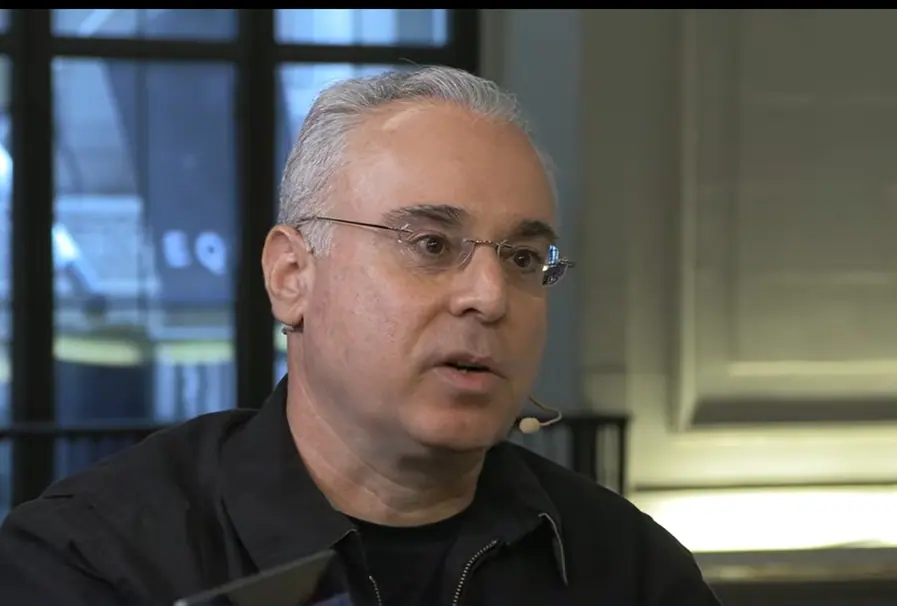
“In agentic AI, it’s a completely different use case because now we’re dealing with many agents that need to run on the infrastructure,” said Gilad Shainer (pictured), senior vice president of networking at Nvidia. “You need to increase security because you need to make sure that those agents are contained in their sandbox and are not doing the wrong things. You need to build an infrastructure that needs to ensure security all around…what happens in the memory, what happens on storage. This is why we needed to bring an infrastructure which actually enabled the security across everything. And that’s what Scale-In is.”
Shainer spoke with theCUBE’s Dave Vellante for theCUBE + NYSE Wired: AI Factories – Data Centers of the Future interview series on theCUBE, SiliconANGLE Media’s livestreaming studio. They discussed how Nvidia’s Scale-In architecture is designed to help transform scaled compute into a secure and operational AI factory platform.
Since the August introduction, Nvidia has expanded its agent security strategy. In September, the company introduced its Open Agent Safety Platform, combining OpenShell with Nvidia Sentry for out-of-band monitoring and hardware-based security enforcement. An October announcement added the OpenShell Reference Architecture, integrating Vera Rubin infrastructure, Vera CPUs and BlueField-4 to support secure agent execution across enterprise systems. Nvidia’s announcement outlines the expanded architecture.
In-silicon security for AI networking
Scale-In is powered by Nvidia BlueField-4 and Nvidia DOCA and connected over Nvidia Spectrum-X Ethernet. BlueField-4 is Nvidia’s fourth-generation data processing unit, a networking platform built for agentic AI factories and large-scale infrastructure needs. BlueField is essential to the management of agentic AI security, according to Shainer.
“You can think about BlueField or Blue-Field-4 as a device that has in-silicon security engines that are working out of band and collecting telemetry from everything, from memory, from storage, from GPUs, from CPUs,” Shainer told theCUBE. “That’s why that infrastructure connects to all other infrastructures and ensures security all around. That out-of-band monitoring enables BlueField to actually understand exactly what agents are doing.”
Along with BlueField-4, Nvidia DOCA also powers Scale-In deployment. This software platform enables the rapid creation of apps and services that offload, accelerate and isolate data center workloads.
Using DOCA, developers can create software-defined, cloud-native, DPU- and SuperNIC-accelerated solutions. Like Nvidia CUDA, which provides a programming platform for GPU workloads, DOCA gives developers access to DPU acceleration capabilities.
“DPU brings the in-silicon engines security engines, storage accelerations,” Shainer explained. “DOCA is the framework, the software, the APIs that enable you to access all of those engines that BlueField-4 provides.”
Nvidia has further reinforced agentic AI security with its open-source runtime offering called OpenShell. The tool is designed to govern agent execution, access and inference routing. Nvidia combined OpenShell with BlueField-4 because it wanted a device that could collect information outside the GPU and monitor an environment that no agent could influence.
“I want to also have another device which is completely separated, completely isolated from the agents, that can monitor everything out-of-band,” Shainer said. “That’s what we’re doing with BlueField-4, bringing all the security elements together with OpenShell, and now you have a secure infrastructure for agents. This is how the combination of OpenShell and BlueField-4 brings all the security elements that we need for gen AI.”
The more recent OpenShell Reference Architecture builds on that approach with Nvidia Sentry, which runs on BlueField-4 using DOCA software. According to Nvidia, Sentry continuously monitors agent behavior and can quarantine agents that attempt to move outside their defined software boundaries. The combination extends OpenShell’s runtime controls with an independent enforcement layer.
Here’s the complete video interview, part of SiliconANGLE’s and theCUBE’s coverage of theCUBE + NYSE Wired: AI Factories – Data Centers of the Future interview series:
Photo: SiliconANGLE