
- Novo released full results from a late-stage trial showing Wegovy helped children ages 6 to under 12 with obesity significantly lower their body mass index.
- Wegovy is already approved to treat obesity in children ages 12 and older, but there are currently no approved medications for those under 12.
- The drugmaker said it observed no safety concerns related to growth or pubertal development in the kids.
In this article
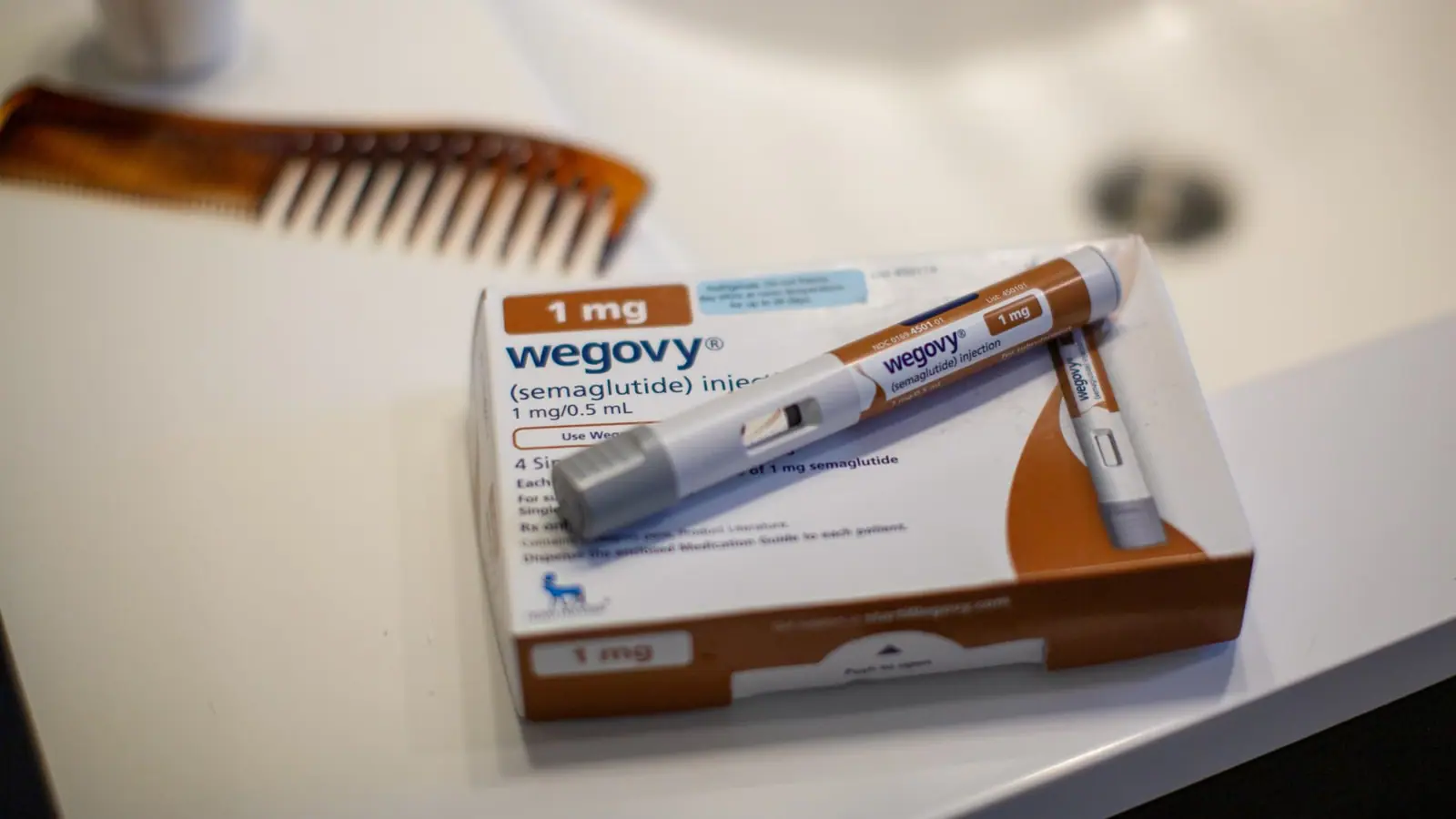
Follow your favorite stocksCREATE FREE ACCOUNTA Wegovy injection pen arranged in Waterbury, Vermont, US, on Monday, April 28, 2025. Shelby Knowles | Bloomberg | Getty ImagesNovo on Monday released full results from a late-stage trial showing its blockbuster Wegovy injection helped children ages 6 to under 12 with obesity shed weight, significantly lowering their body mass index.
Wegovy reduced BMI by an estimated 19.7 percentage points on average compared with a placebo at 68 weeks, with BMI falling 17.4% among children receiving the drug and rising 2.2% among those receiving a placebo. Those results assumed patients stayed on treatment during the trial.
When evaluating all children in the study, including those who discontinued treatment, Wegovy lowered BMI by an estimated average of 16.2 percentage points more than the placebo at 68 weeks. All 167 kids in the study received lifestyle modifications throughout the trial, including a reduced-calorie diet and increased physical activity.
The detailed results mark an encouraging step forward in treating childhood obesity — a chronic disease that can carry serious cardiovascular, metabolic and psychosocial consequences but has had few treatment options for younger children. When left unaddressed, childhood obesity can extend into adulthood, bringing earlier and more severe health complications.
"This is a very significant disease burden in this very young patient population," said Dr. Andrea Traina, Novo's medical director lead of obesity.
In 2025, the disease affected an estimated roughly 177 million children and teens ages 5 to 19 worldwide, according to the World Obesity Federation. That figure is projected to rise to 228 million by 2040.
While Wegovy is already approved to treat obesity in children ages 12 and older, there are currently no approved medications for those under 12. The latest results offer evidence that Wegovy can potentially fill that treatment gap, safely and effectively reducing the severity of the disease in children as young as 6.
In Novo's trial, 85% of children started with moderate to severe obesity, which corresponds to BMI thresholds of 35 and above and 40 or higher, respectively. Nearly half already had at least one obesity-related complication, such as high blood pressure, high cholesterol or sleep apnea.
But more than 40% of children treated with Wegovy were no longer classified as having obesity after 68 weeks of the trial, assuming patients stayed on treatment. Novo initially shared that result in September.
"We are driving towards control of this chronic disease in that patient population when they are still so young and at such high risk for more advanced and accelerated disease progression because they developed it so early," Traina said.
Novo said Wegovy's overall safety and tolerability among children — how well patients managed the drug — were consistent with those seen in trials with adults. The company added that it observed no safety concerns related to growth or pubertal development in the kids.
Still, the two-year study does not establish whether treating obesity earlier can change its long-term trajectory, or what treatment and maintenance might look like as children grow into adulthood, Traina said.
"That is something that is still an evidence gap," she said, pointing to the potential of future research.
Choose CNBC as your preferred source on Google and never miss a moment from the most trusted name in business news.