
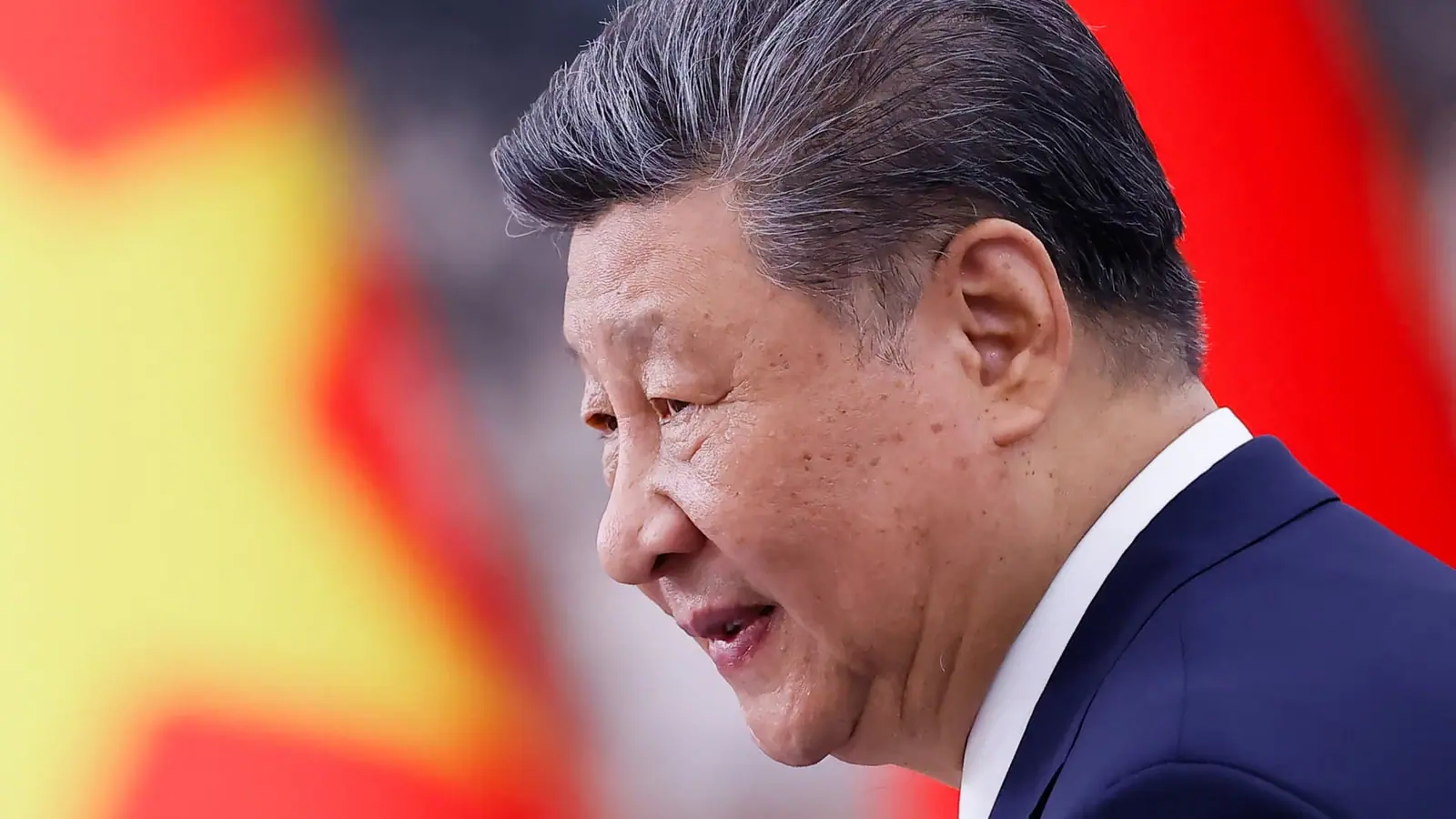
- Chinese President Xi Jinping opened the APEC meeting in Shenzhen by urging members to remove trade and investment barriers.
- China would cut tariffs, widen market access, and “reform” rules to give foreign companies “full manufacturing access, he said.
- Xi is expected to host U.S. President Donald Trump and Russian leader Vladimir Putin on Thursday.
SHENZHEN, China — Chinese President Xi Jinping opened a key Asia-Pacific Economic Cooperation meeting on Wednesday with calls for removing trade and investment barriers.
The leader spoke as he was expected to host Russian President Vladimir Putin and U.S. President Donald Trump this week alongside the APEC CEO and Economic Leaders Summit.
"We should remove trade and investment barriers," Xi said via an official English translation. He said a key reason for doing so was "to promote development that is balanced."
He did not mention U.S. tariffs or other specific measures. Instead, Xi cast China as a "promising land for development" for global businesses, and indicated plans for "Bay Area" cooperation.
Shenzhen, home to major Chinese tech companies, is part of China's "Greater Bay Area" that includes Hong Kong and Macau. The Silicon Valley region around San Francisco is also known as the "Bay Area" in the U.S.
"China will not only cut tariffs and expand market access, but also go a step further," Xi said. He said China would "reform" rules and regulations to give foreign businesses "full manufacturing access."
Chinese exports have steadily grown their share of global manufactured goods, drawing criticism from the European Union and other regions for overcapacity. The U.S. and China last year agreed to keep tariffs lower, but the world's two largest economies have yet to implement a planned $30 billion cut in duties on goods from each side.
"Global growth lacks momentum," Xi noted in his speech. But he said "still global trade keeps growing against headwinds, and breakthroughs are being made in emerging technologies at a faster pace."
He said the "hard questions of our times" for Asia Pacific economies is whether to open, or close, doors — and later cast opening doors as bringing "progress."
"There can be no stability without security, and no security without stability," he said.
Xi called for APEC members to deepen coordination in the digital economy and AI, as a way to drive regional economic growth.
"Unicorn companies and large AI models have emerged in large numbers and many innovations have empowered hundreds of trades and industries and reached millions of households," he said, in some of his most specific mentions of the cutting-edge technology.
Choose CNBC as your preferred source on Google and never miss a moment from the most trusted name in business news.