Business knowledge workers spend their days running a gauntlet of emails, spreadsheets, messaging platforms, meetings and productivity applications, wasting hours of their time switching from one to another to get mundane tasks done.
Microsoft Corp. is now proposing an alternative: It wants Copilot to evolve from a somewhat useful generative artificial intelligence assistant into the autonomous foundation for all business work. At Microsoft Ignite 2026 today in San Francisco, it unveiled a slate of powerful new capabilities and features for its favorite autonomous tool as part of its ongoing effort to transform Copilot into the new workplace operating system.
The company’s new vision was outlined in a blog post by Microsoft Chief Marketing Officer Jared Spataro, who pointed to its comprehensive intelligence layer for work, called WorkIQ, as the critical engine behind this shift.
Spataro explained that enterprise work is notoriously messy. Microsoft 365 stores roughly 19.5 exabytes of customer’s business data, and it’s adding billions of new files, documents, emails and messages each day. For businesses, it’s not enough to just give an autonomous AI agent access to this data and expect it to start making sense of it. It needs WorkIQ, which acts as the centralized reasoning layer for all Copilot agents, retrieving data, understanding its intent, identifying what’s important for the task it has been assigned while ignoring everything else.
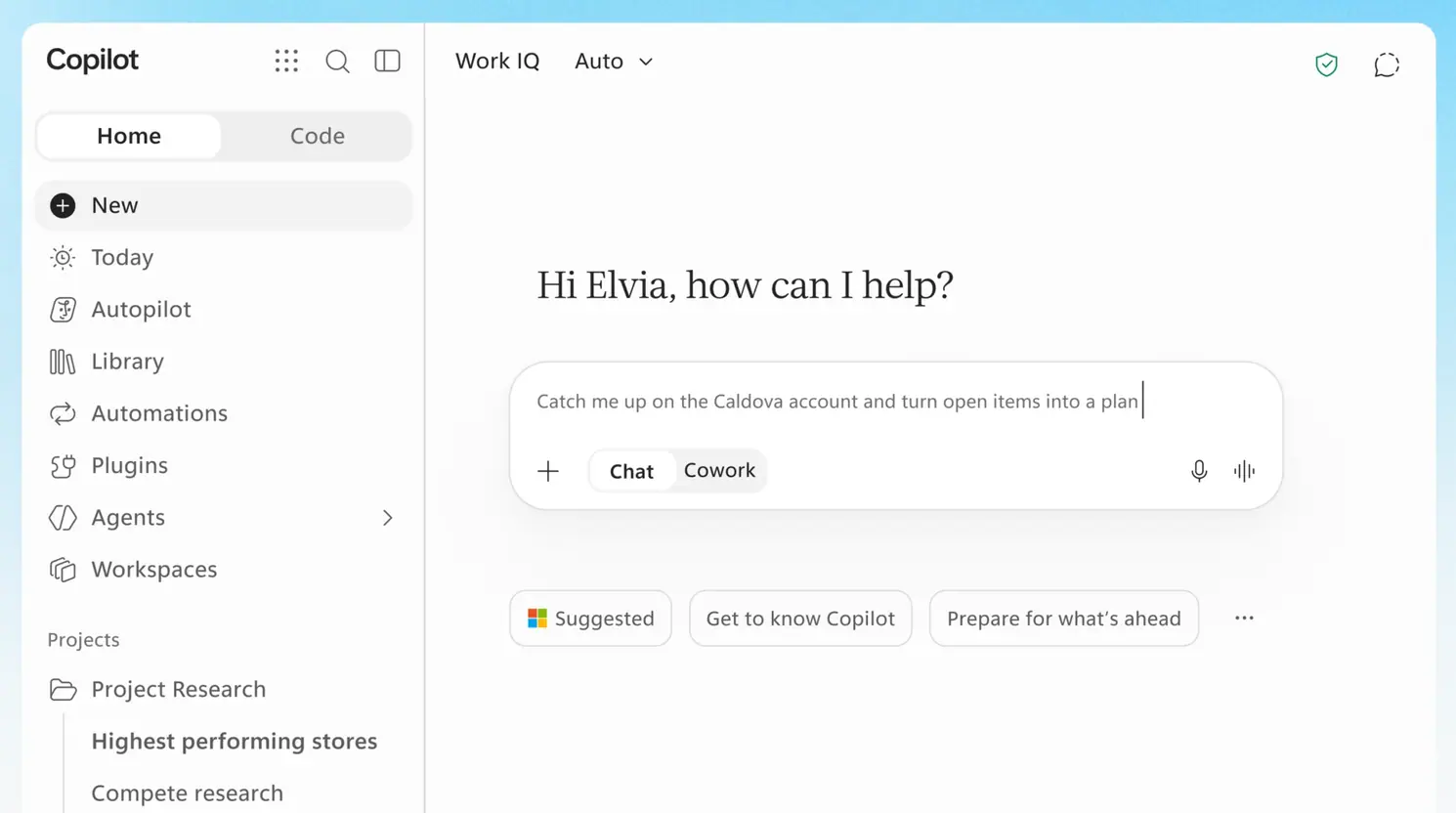
While WorkIQ sits under the hood, Spataro says, the average worker’s day will soon begin in “Home,” which is the new user interface for Copilot. Home merges traditional chat with a portal called Cowork, which is where people can start delegating different tasks to AI agents. Spataro said Home is like a grounding anchor, or a place where workers can log in each day to pick up where they left off.
Home’s key element is Auto, which is an intelligent composer that dynamically routes users’ requests and prompts to the most suitable AI model. It’s the place where most people will typically begin each new task.
“Tell Copilot what you want to accomplish and it intelligently routes the work to the right models and effort for the task,” Spataro explained. “For more complex work, Auto may recommend moving from Chat to Cowork. If you agree, Copilot transfers the tasks seamlessly, helping to deliver the outcome with the right level of investment.”
Another key part of Home is called Today. It’s a “proactive command center” that’s currently available in private preview that scans a user’s email, calendar and Teams threads in order to highlight the things they have to get done that day.
Best of all, it won’t leave users feeling overwhelmed, Spataro said, because it also helps them to complete that work. For instance, it can quickly draft replies to emails, propose alterations to someone’s schedule and queue other messages for the user to review.
How Copilot gets work done
Copilot’s ability to get work done has been advanced by its deeper integration with Microsoft’s Office suite. Spataro said the company is bringing the full capabilities of Office directly into the Copilot application.
As a result, users will be able to move effortlessly from ideation on a notepad or whiteboard to conjure up a completed Word document or Excel spreadsheet based on what they just outlined. Those files will live entirely within Copilot, which gains the ability to co-author alongside human colleagues. Because Office is now native to Copilot, every document and file will be secured by Microsoft 365’s strict security and compliance controls, Spataro said.
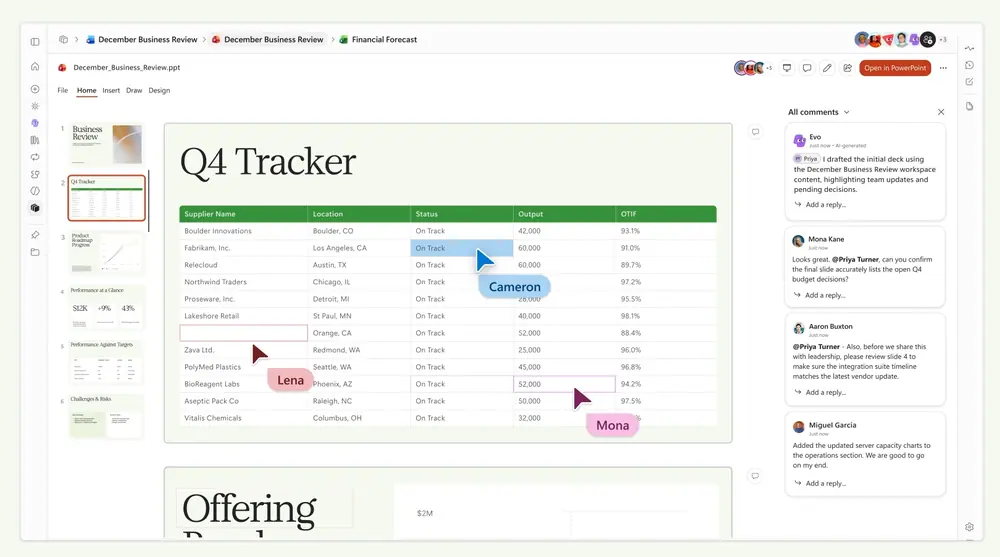
Human-to-agent collaboration is being boosted too with the arrival of Copilot Workspaces, which is a kind of canvas that both can access, Spataro said. Within Copilot Workspaces, an agent might draft a section of a document, then notify a human to come and review it when they get the chance. The human will be able to leave comments for other agents to address.
Further aiding Copilot in work automation is a new capability called Autopilot, which dramatically enhances what the tool can now do. Autopilot is available now to subscribers who have enrolled in Microsoft’s Frontier early-access program. It’s a fully autonomous and always-on AI agent that comes with its own Microsoft Entra identity, memory and an ecosystem of productivity tools.
Autopilot is very different from standard AI agents that are programmed to wait for a user’s prompts. It’s continuously available, watching various Teams channels and the user’s email inbox for updates. It can automate recurring work processes, and it can manage entire project pipelines, such as a multistep supplier review, fully autonomously, Spataro said.
Autopilot is powerful, but safeguards are in place. Information technology teams have complete control over what it can and can’t access, and if something goes wrong they can step in and block it from doing anything else at a moment’s notice.
“Its sign-ins and actions are logged under its own name, so security teams have a clear audit trail,” Spataro explained. “Powered by WorkIQ, it understands how your organization works within existing permissions. You decide what work Autopilot takes on and it will always check with you before key actions.”
More apps, more data
Coding continues to be a major focus, and now Microsoft is giving everyday knowledge workers the ability to build software that can help them get their work done even faster. With Copilot Code, launching in a few week’s time, users will be able to generate interactive dashboards, persistent desktop widgets and lightweight business applications from simple, natural language prompts.
All of these Copilot-generated apps will be hosted within Copilot Managed Runtime, which is a new, highly-secure environment that IT teams can monitor to ensure none of them pose a risk to the company’s data.
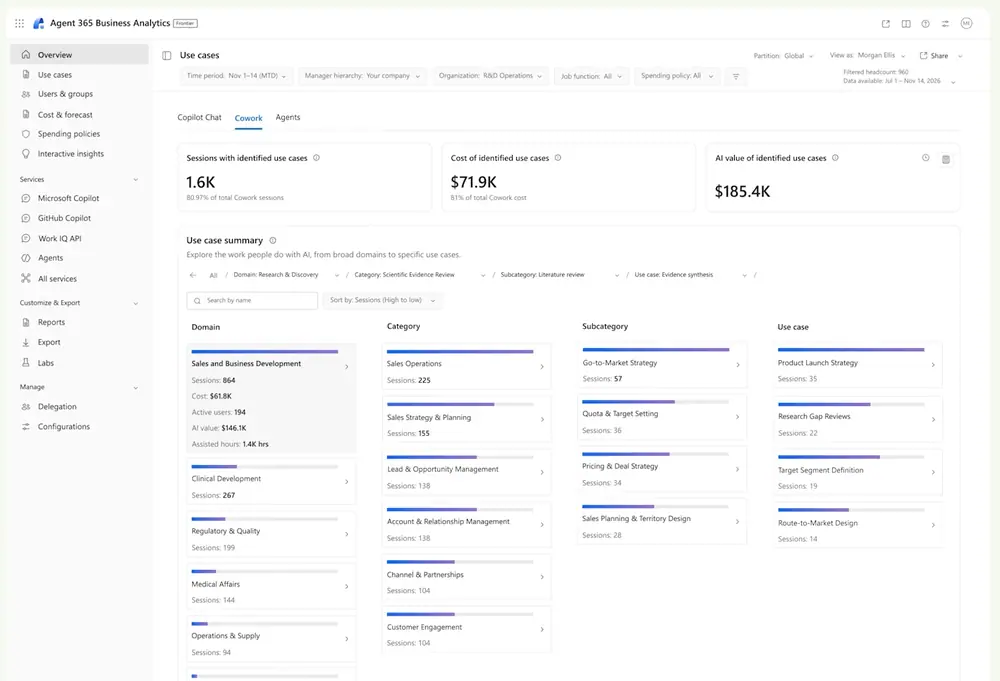
To reassure organizations that their AI agents are not only secure, but also providing real value, Microsoft has updated the Agent 365 platform to give teams more control and visibility into their AI spending. Agent 365 now comes with a Business Analytics feature that brings a FinOps-style approach to AI budgeting.
Whereas most platforms just track token consumption, it goes further, measuring each agent’s return on investment by looking at the “work completed” and the number of hours it took. According to Spataro, this will give companies a much clearer picture of the benefits of their AI investments.
Finally, there’s a lot going on in terms of business data connectivity. For one thing, Microsoft said, it’s making sure that Dynamics 365, its combined customer relationship management and enterprise resource planning platform, doesn’t live in isolation. With Dynamics 365 in Copilot, its AI agents gain more than 100 prebuilt “skills” that allow them to perform tasks in sales, service and finance.
But Dynamics 365 isn’t for everyone, and Microsoft recognizes that many of its customers prefer to use alternative CRM tools. That’s why it announced a major new partnership with Salesforce Inc. that gives Copilot unprecedented access to the Salesforce platform too.
Their new offering is called Copilotforce, and it’s enabled by two-way “Zero Copy” integrations between Microsoft Fabric and Salesforce Data 360. The idea is that Copilotforce will bring trusted context from Salesforce directly into Copilot and also productivity and collaboration tools like Teams and Office. The new platform has 38 prebuilt skills to help Copilot start automating sales-related tasks, allowing them to retrieve customer data, generate meeting follow-ups and update CRM records based on tasks they’ve just completed.
There’s a lot to digest, but the deluge of updates sends a clear message that AI agents are on the march, expanding their role as they take on much more complex enterprise work.
Images: Microsoft