
Initiative highlights the competitiveness of manufacturers supplying the European market.
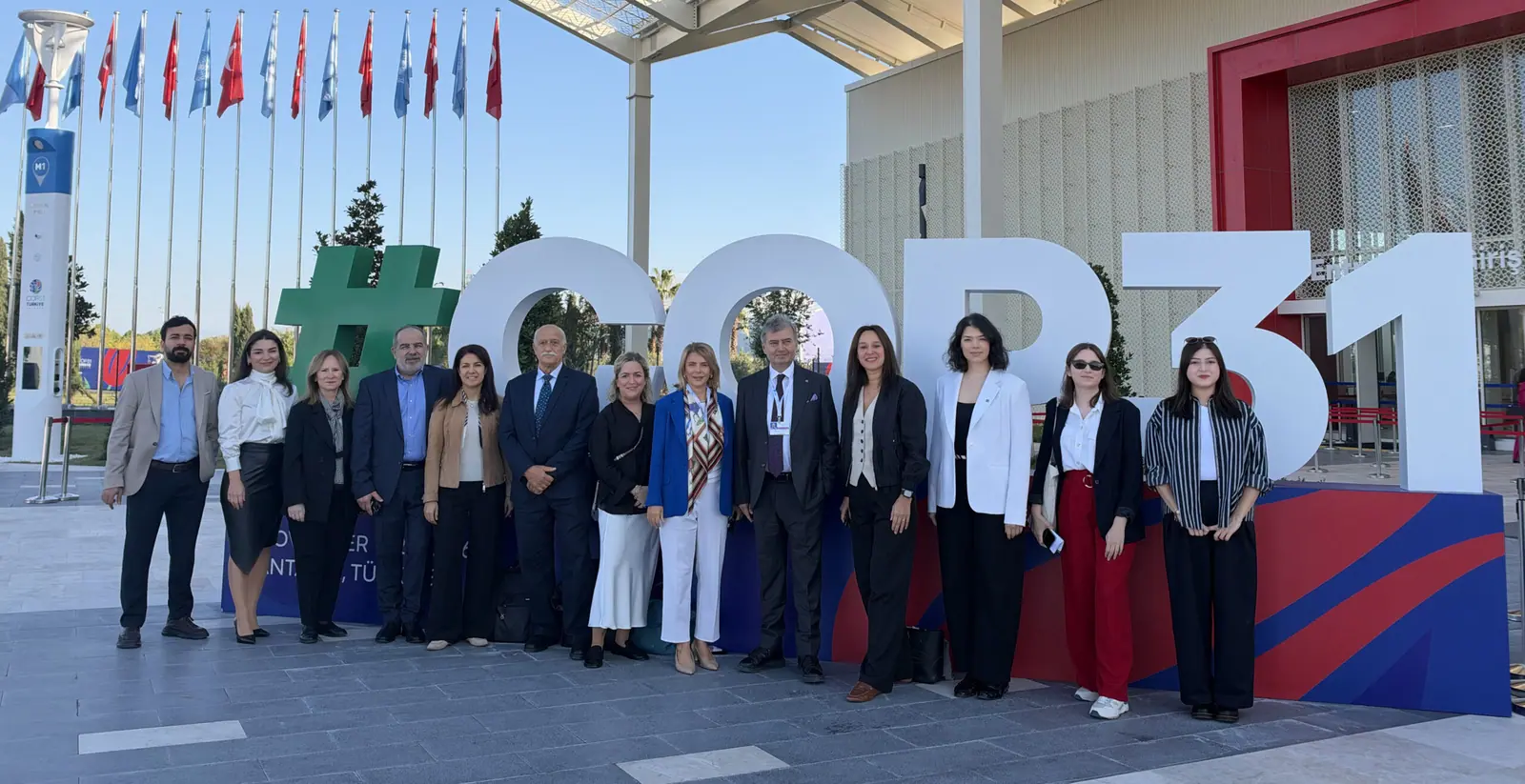
SUIT delegates at COP31.
© SUIT25th November 2026
Innovation in Textiles
| Antalya, Turkey
Sustainable, Clothing/Footwear
Turkey’s efforts to reduce the environmental impact of its textile and apparel industries were highlighted at the COP31 climate conference in Antalya, with a €7 million EU-backed programme now entering its second year of implementation.
The Sustainable Industrial Transformation (SUIT) Initiative is targeting carbon and water footprint measurement across the country’s export-oriented textile and apparel sectors, alongside the chemical and logistics industries that support them.
Launched in November 2025, the three-year programme is co-financed by the European Union and implemented in partnership with Turkey’s Ministry of Industry and Technology and the Istanbul Textile and Apparel Exporters’ Associations (ITKIB).
At COP31, the initiative organised ten events, including seven in the conference’s Blue Zone, highlighting the importance of environmental performance to the competitiveness of Turkish manufacturers supplying the European market.
A central element of the programme is the preparation of life cycle assessments for 60 products, alongside 200 corporate carbon footprint assessments and 200 water footprint measurements. These are intended to provide companies with a clearer understanding of their environmental impacts and identify opportunities for improvement.
During its first year, the initiative carried out value chain analyses and worked on the preparation of papers addressing the transition towards more sustainable industrial practices.
The second phase will concentrate on helping companies develop the technical capabilities needed to measure, report and ultimately reduce their environmental footprints. This will include sector-specific training, consultancy services and guidance on environmental reporting.
The programme is particularly relevant to Turkish textile and apparel manufacturers supplying the EU, where evolving environmental legislation and growing demands for supply chain transparency are placing additional requirements on exporters.